 |
 |
 |
 |
 |
 |
 |
 |
 |
 |
 |
 |
 |
|


|

| |

Page 6 Of Our CTP Units Collection
(Information & Images Courtesy Activision)
RAIL LAUNCHER 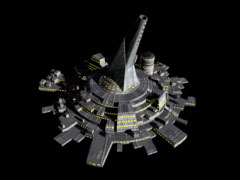 In the early 22nd Century, developments in superconductivity revolutionized the economics of space travel – with the invention of the Rail Launcher. With this new technology, an electrical current generated a directional magnetic field that propelled a vehicle out of the Launcher at several times the speed of sound. Additionally, the Launcher burned no propellants as it traveled through the atmosphere, protecting against Ozone Loss and Global Warming.
|
ASTEROID MINING 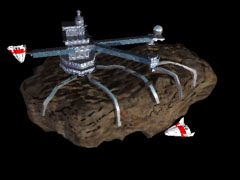 For Space Farming and for large space fleets, Space Colonies required materials harnessed from any source other than Earth. The Moon supplied materials at 3% of Earth costs, but dependence on one supplier left colonies vulnerable. By the late 21st and 22nd centuries, colonies had adapted intelligent robot vehicles to mine the stars. These robots traveled into the asteroid belt and flung asteroids back to the colonies at a steady rate. Using hollowed asteroids as a foundation, Cities created large orbital Farms, capable of supporting thousands. The iron and other metals became the backbone of two new classes of warship – the Battle Cruiser and the Space Bomber.
|
AIRCRAFT CARRIER 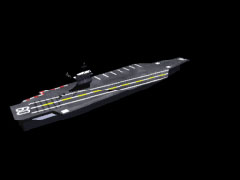 On August 2nd, 1917, British Commander E.H. Dunning piloted his Sopwith Pup to a safe landing aboard the H.M.S. Furious – the first recorded landing at sea. By World War II, the aircraft carrier dominated the seas. Though the U.S. lost two Battleships at Pearl Harbor, the loss proved inconsequential to the war's outcome. Instead, victory turned on the Battle of Midway, where the Japanese lost four carriers and three hundred and twenty-two planes to the Americans' single sunken carrier.
|
DESTROYER 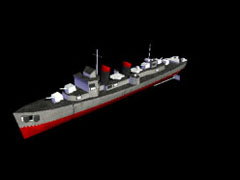 Essentially developed as an escort craft and anti-aircraft platform, the Destroyer traded firepower and armor for speed and savings. The first destroyers patrolled harbors searching for torpedo boats and engaging them with light guns. They proved so successful that the ship soon supplanted its prey, the torpedo boat. Later, as new technologies developed, navies evolved versions of the destroyer to deal specifically with submarines or aircraft.
|
SUBMARINE 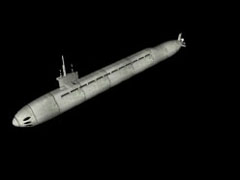 The first submarines operated as little more than manned torpedoes. By the 1900's, however, European and American companies developed a number of improved submarine designs. Powered by electric or oil engines, these craft lacked the speed needed to hunt surface vessels. However, in 1912, the Krupp firm introduced a diesel engine to its design, creating the dreaded German U-boat of WW I. Later designs added larger engines and later nuclear power.
|
NANITE FACTORY 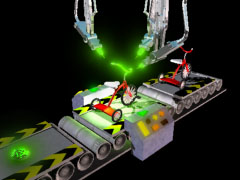 In the 23rd Century, discoveries in molecular biology and applied energy fields created the long-imagined nanite. The nanite was neither fully machine nor fully biological. Often smaller than a virus, nanites borrowed existing cell structures, which became the backbone of microscopic machines. At the same time, developments in neural networking allowed nanites to function as small thinking machines – each unaware of its greater goal, but on the highest level, a living organism. The Nanite Factory had become a reality.
|

Apolyton Civilization Site Copyright © 1998-9 Daniel C. J. Quick and Markos Giannopoulos
CTP Section maintained by Markos Giannopoulos and Dan Quick; Graphics created by Markos
Giannopoulos
Page Last Updated Wednesday, 17-Mar-1999 19:54:30 UTC
Civilization: Call to Power © 1998-9 Activision; CIVILIZATION computer games 1991-1999 MicroProse
Software.
All other trademarks and trade names are the properties of their respective owners.