|
| |
|

|
Paddy the Scot

|
 |
Hordeland
Mar 2001
time: 14:35
|
|
Cavalry Regiments
Regiment
Nickname
First Used
Reason for Nickname
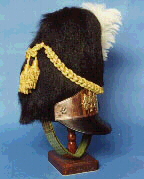
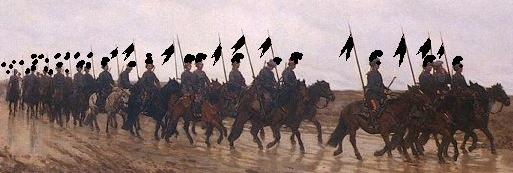
Household Cavalry
Unfortunate Gentlemen
Unknown
Unknown
The Life Guards
The Cheeses
1788
After a reduction in social qualifications for recruiting officers, the members of the regiment declared that they were 'no longer gentlemen but cheesemongers' ie 'tradesmen'
The Cheesemongers
1815
Same as above
The Piccadilly Butchers
1810
Were used to quell the Burdett riots during which one rioter was killed
Roast and Boil
Peninsula
Because they were part of the Guard & thought to be better fed than the Line
Royal Horse Guards
The Blues
1660
Color of uniform
1st Dragoon Guards
The Trades Union
1800s
Used to quell trade riots
The Royals
1800s
Regimental Name
2nd Dragoon Guards
The Bays
1600s/1700s
Color of Horses
Rusty Buckles
1700s
Because of a less than spectacular parade in Ireland
3rd Dragoon Guards
The Old Canaries
1600s/1700s
Color of facings
4th Dragoon Guards
The Blue Horse
1746
Color of facings
5th Dragoon Guards
The Green Horse
1700s
Color of facings
The Green Dragoons
1700s
Color of facings
The Old Farmers
1700s/1800s
Due to 80 years spent in Ireland
7th Dragoon Guards
The Black Horse
1700s
Color of facings
The Virgin Mary's Bodyguard
1700s/1800s
Sent by George II to assist Maria Theresa, of Austria.
1st Dragoons
The Bird Catchers
1815
Captured an Eagle at Waterloo
2nd Dragoons
The Greys
1700s/1800s
Color of uniforms when first raised. Also color of horses.
The Bird Catchers
1815
Captured an Eagle at Waterloo
6th Dragoons
The Old Inniskillings
1750s
Regimental Badge had Inniskilling Castle on it.
The Skillingers
1700s/1800s
Slang for Inniskilling
The Inniskillings
Peninsula
From Badge
7th Hussars
The Saucy Seventh
1809
Because of high uniform standards
11th Light Dragoons
The Cherry Pickers
1811
Detachment captured by French whilst picking cherries and had to fight dismounted
12th Light Dragoons
The Supple Twelfth
1812
Because of high standards of training that led to their superb performance at Salamanca
13th Light Dragoons
The Lily-Whites
1784
Due to white stripe on overalls.
The Ragged Brigade
Peninsula
Due to worn out equipment and clothing
14th Light Dragoons
Hawks
1812
Eagle on shako plate resembled a hawk
The Emperor's Chambermaids
1813
Captured King Joseph's chamberpot at Vitoria
15th Light Dragoons/Hussars
Eliott's Light Horse
1759
Reference to George Augustus Eliott, Lord Heathfield who raised them to help quell a strike by journeymen tailors - see next nickname.
The Tabs
1759
Reference to number recruits who joined the regiment when it was raised who were formerly journeymen tailors by trade; a Tab was a nickname for a journeyman (one who was employed by another) tailor and a reference to the small piece of cloth that the tailor used to incorporate into clothing to identify his work.
17th Light Dragoons
The Horse Marines
1795
Because a detachment served on the HMS Hermione
18th Light Dragoons
Drogheda Light Horse
1759
Originally from Ireland
Light Dragoons
Young Eyes
Peninsula
Given to them by Foot Guards
Infantry Regiments
Regiment
Nickname
First Used
Reason for Nickname
Foot Guards
Old Eyes
Peninsula
Given to them by Light Dragoons
1st Foot Guards
The Tow-Rows
Unknown
From the regimental march
The Coalers
1600s
The regiment's officers once hired the men out to 'heave' coal to raise money to refurbish the officers' mess at St James' Palace.
2nd (Coldstream) Foot Guards
Coldstreamers
1600s
Recruited from Coldstream, Scotland
1st Foot
Pontius Pilate's Bodyguards
1630s
It is the oldest regiment in the British army. Originally Régiment de Douglas; when in French service, the story goes that at a regimental 'function', to which officers of the Régiment Picardy had been invited, a dispute arose concerning which regiment was the oldest. An officer from the Régiment Picardy claimed that his regiment was the oldest in any army, anywhere, and that the Régiment Picardy had been on duty on the night following the Crucifixion. He then promptly passed out. An officer of the Douglas' replied that the Picardies must have been asleep at their posts, and that if the Régiment de Douglas had been on duty Christ would not have been crucified. Now, the flawed logic of this will not have escaped you, since on the night following the Crucifixion the deed was already done and, as a result they received the nickname.
2nd Foot
Kirke's Lamb
1682
Regimental badge is the Paschal Lamb and they were commanded by a Colonel Kirke
3rd Foot
The Buffs
1700s/1800s
Because of their facing color
The Resurrectionists
1810
Because of the large number of wounded men and those who escaped from the French who returned after Albuera
Resurrection Men
1810
Same as above
4th Foot
The Lions
1685
Regimental badge had a lion
5th Foot
The Fighting Fifth
Peninsula
Wellington's comment "The ever fighting, often tried, but never failing fifth."
Wellington's Bodyguard
Peninsula
Often served as the Army HQ guard
The Old and Bold
c1808
Because of service at Rolica
6th Foot
Saucy 6th
1790s
Because of high recruiting standards
7th Foot
The Elegant Extracts
1685
When the regiment was raised, the officers came from many different regiments
8th Foot
The Leather Hats
c1780
Used civilian hats during American War of Independence
9th Foot
The Fighting Ninth
c1808
Unknown
The Holy Boys
Peninsula
Spanish thought the figure of Britannia on their shako plate was the Virgin Mary
10th Foot
The Yellow Bellies
1700s/1800s
After the Yellow Belly frog that lives in the Lincolnshire Fens
The Springers
1776
Was used as light infantry during the American War of Independence
11th Foot
Bloody Eleventh
1812
Due to heavy casualties at Salamanca (340 of 412)
12th Foot
The Old Twelfth
1700s
Number of Regiment
The Old Dozen
1700s
Number of Regiment
14th Foot
Calvert's Entire
c1806
Colonel was Sir Harry Calvert and had three battalions from 1806 to 1824
15th Foot
The Snappers
1777
At the Battle of Brandywine the regiment ran short of ball which was distributed to the best shots, whilst the remainder 'snapped' powder charges only.
16th Foot
The Old Bucks
1700s/1800s
From Buckinghamshire and senior to the 85th Regiment
17th Foot
The Tigers
c1804
For service in India; its regimental badge was the Bengal Tiger.
18th Foot
Paddy's Blackguards
1684
Was an Irish Regiment
The Namurs
1695
For service at Namur
19th Foot
The Green Howards
1740
Because of facing color and their colonel was named Howard
20th Foot
Kingsley's Stand
1759
Having been stood-down by the Duke of Brunswick and placed in reserve due to casualties after Minden, Major General Kingsley, also Colonel of the regiment, declined to obey the order with the words "Kingsley's Regiment, at its own request will resume its portion of duty in the line."
The Two Tens
1700s/1800s
Because their regimental number was always shown in Roman numerals thus XX
The Minden Boys
1700s/1800s
Service at Minden
21st Foot
Grey Breeks
1600s/1700s
When first raised, wore grey trousers
22nd Foot
The Red Knights
1795
Uniform was entirely red: coat, waistcoat and trousers
The Two Twos
1800s
Because of regimental number
23rd Foot
Nanny Goats
1800s
Mascot was a goat
Royal Goats
1800s
Mascot was a goat
24th Foot
Howard's Greens
1737
To prevent confusion with 19th Foot, who also had green facings and a colonel called Howard
27th Foot
The Skins
c1800
Corruption of Inniskilling, from where they were recruited
28th Foot
The Slashers
1775
At the Battle of White Plains, the regiment had to leave its muskets behind to climb a cliff and drove the rebels from their positions with their short swords. Alternatively, soldiers of 28th are alleged to have cut off the ear of an anti-British magistrate in Montreal in 1764.
The Silver Tailed Dandies
Peninsula
Officers' coat-tails were apparently longer than regulation and had ornate silver decorations on them
29th Foot
The Firms
Peninsula
For standing Firm at Albuera
30th Foot
The Three Tens
1700s/1800s
Because of regimental number
31st Foot
The Young Buffs
c1760
Because of facing color they were mistaken by George II for 3rd Foot who greeted them with "Bravo Buffs" at Dettingen. On being told that they were not the 'Old Buffs' but the 31st Foot, he replied "then bravo Young Buffs."
33rd Foot
Havercake Lads
1700s/1800s
Corruption of 'have a cake lad'. Recruiting sergeants using the promise of oatcake to tempt recruits (apparently a great delicacy for those whose diet was somewhat limited)
34th Foot
Cumberland Gentlemen
Peninsula
Large officers from Cumberland
35th Foot
Prince of Orange's Own
1700s/1800s
William III (of Orange) gave them their orange regimental distinctives
36th Foot
The Grasshoppers
1700s/1800s
Facing color was grass green
39th Foot
The Green Linnets
1700s
Possibly because of facing color
40th Foot
Fighting Fortieth
1700
Unknown
The Exellers
1700s/1800s
The regimental number in Roman numerals was XL
41st Foot
The Invalids
1787
Was originally raised as an invalid regiment
42nd Foot
The Forty-twa
1700s/1800s
Because of regimental number
44th Foot
Little Fighting Fours
Peninsula
Because the regiment had a large number of short men
45th Foot
Old Stubborns
c1809
Because of service at Talavera
46th Foot
The Red Feathers
1777
At Brandywine Creek, the regiment's light company defeated a group of rebels who swore revenge. In order that they not be confused with another regiment the 46th stained their plumes red
47th Foot
The Cauliflowers
c1740
White facings
Wolfe's Own
1700s
Served under Wolfe at Quebec
50th Foot
The Dirty Half-Hundred
1700s/1800s
Because black facings ran after they got wet
The Blind Half-Hundred
1801
Because of large number of ophthalmia cases while serving in Egypt
53rd Foot
The Old Five and Threepennies
1700s/1800s.
Because of regimental number
The Red Regiment
1820
Name given by Napoleon to then when they guarded him on St. Helena
54th Foot
The Popinjays
1700s/1800s
Green shade of their facings
The Flamers
1781
Burned 12 privateers at New London
55th Foot
The Cattle Reavers
1700s/1800s
Recruited from border region of England and Scotland; reavers were cattle thieves
The Two Fives
1700s
Because of regimental number
56th Foot
The Pompadours
1755
Because of their purple facings
57th Foot
The Steelbacks
c1760
Had a reputation for being a flogging regiment
The Diehards
1811
Cry to men of regimental commander who laid serious wounded at Albuera
58th Foot
The Honeysuckers
1813
Were caught stealing beehives by Wellington and were flogged.
The Steelbacks
1813
Were caught stealing beehives by Wellington and were flogged.
59th Foot
The Lilywhites
1700s/1800s
Because of facing color
60th Foot
Jaggers
Peninsula
Regiment was mostly Germans; corruption of jaegers.
61st Foot
The Flowers of Toulouse
1814
Regiment's heavy casualties at Toulouse were very apparent due to new uniform coats on the dead
62nd Foot
The Springers
1776
Were used as light infantry to pursue rebels at Trois Rivières in Canada
62nd Foot
The Splashers
1758
Regiment had to use their buttons for ammunition when they ran out of ball at the defence of Carrickfergus; their buttons thereafter had a dent or 'splash' in them in commemoration
The Moonrakers
1700s/1800s
Moonrakers is a nickname of people from the county of Wiltshire in south-west England. Legend says that two smugglers were caught by excise officers retrieving kegs of brandy they had hidden in a pond and told the officers that they were attempting to retrieve a cheese, the reflection of the moon in the water (hence raking the moon).
63rd Foot.
The Bloodsuckers
1808
The Fleur-de-lys shako badge bore a similarity in appearance to the blood-sucking insects in the West Indies that spread the disease which virtually wiped out the regiment
64th Foot
The Black Knots
c1760
Had black facing color and regimental badge had heraldic device of Lord Stafford -- a knot
69th Foot
The Ups and Downs
1700s/1800
Because of regimental number
The Old Agamemnons
c1790
Served as marines on the HMS Agamemnon; nickname supposedly given to them by Admiral Nelson
71st Foot
The Assaye Regiment
1803
For service at Assaye where all 17 officers and 384 men out of 550 were casualties; the remnant being command by a sergeant-major
72nd Foot
The Wild Macraes
c1780
Originally recruited from the Clan Macrae
76th Foot
The Old Imortals
c1790
Because of high casualties during Lake's campaigns in India. The Seven and Sixpennies 1700s/1800s: after the number - seven shillings and a sixpence in pre-decimal currency.
The Seven and Sixpennies
1700s/1800s
Because of its number - seven shillings and a sixpence
77th Foot
The Pot Hooks
1700s/1800s
Their number '7' looked like a pot-hook
78th Foot
The King's Men
c1793
Because the regimental motto 'Cuidich'n Righ' means 'Help to the King'.
83rd Foot
Fitch's Grenadiers
c1795
Raised by Lieutenant Colonel Fitch
85th Foot
The Young Bucks
1700s/1800s
From Buckinghamshire, but junior to the 16th Foot which was also from that county
The Elegant Extracts
1811
A large number of officers were court-martialed and had to be replaced by officers from other regiments.
86th Foot
Royal County Downs
1792
An Irish Regiment
87th Foot
Blayney's Bloodhounds
1798
Hunted rebels in Ireland under Lord Blaney
The Faughs
1700s/1800s
From their motto "Faugh-a-Ballagh" (Clear the Way)
Aigle Catchers
1811
Captured an Eagle at Barosa
The Aiglers
1811
Captured an Eagle at Barosa
88th Foot
Devil's Own
1700s/1800s
Unknown
92nd Foot
Gay Gordon's
1790s
Unknown
95th Foot:
The Rifles
1800s
Becaused they carried a rifle.
Manningham's Sharpshooters
1800
When the unit was formed it did not have a regimental number.
The Sweeps
c.1802
The uniform was such a dark green they resembled chimney sweeps.
The Grasshoppers
Peninsula
Because of their green uniform
96th Foot
The Ups and Downs
1803
Because of their regimental number
97th Foot
The Celestials
1798
Because of blue facings
99th Foot
The Nines
1700s/1800s
Hence the expression 'dressed up to the nines'. The officers of regiment were considered particularly sartorial).
Brunswick Oels
Death or Glory Men
Peninsula
Death Head Skull on Shako
Owls
Peninsula
Corruption of Oels
Kings German Legion Light Battalions
Halkett's Green Germans
Peninsula
Halkett was brigade commander
|
|
| |
|
| |
|
| |
All times are GMT. The time now is 05:35.
Apolyton Time is 00:35. |
top of page
|
| archivepost |
|
Forum Rules:
You may not post new threads
You may not post replies
You may not post attachments
You may not edit your posts
|
HTML code is ON
vB code is ON
Smilies are ON
[IMG] code is ON
|
|
|
|
|
|





 06-06-2004 12:21


 Attachment:


 |
|