|

|
Standup
|
|
Ghostius and Ghouliums? It has a bit of a ring to it but sadly not the answer
|
|
| |
|
|
|
Standup
|
|
try again....
 Attachment: pix.jpg Attachment: pix.jpg
This has been downloaded 44 time(s).
|
|
| |
|
|
|
Standup
|
|
It's the box cover or at least the bit without the name. I'll see if i can scan a screen shot but for various reasons i have to unplug my modem to plug the scanner in. Hopefully back soon.
|
|
| |
|
|
|
Standup
|
|
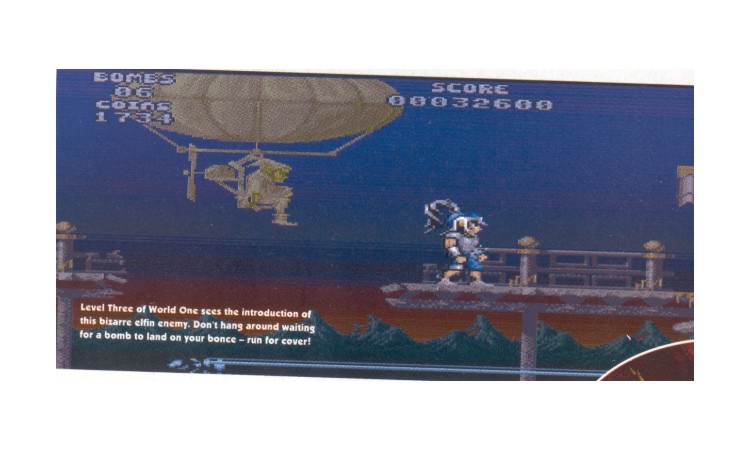
ingame shot
Attachment: screen.jpg
This has been downloaded 35 time(s).
|
|
| |
|
| |
|
|
|
CapTVK
|
 |
Voorburg, the Netherlands, Europe
Jan 1970
time: 05:36
|
|
Hmmm, I' don't know i've never done haiku before 
http://c2.com/cgi/wiki?HaiKu
quote:
Haiku is a Japanese structure poem format. It consists of three lines with five, then seven, then five syllables. Generally, they are meant to be expressions of sensation (usually of nature). That is, something you saw, or smell. Like little poetry photographs.
Didn't haiku develop from the final "answering" part of a longer structure, the renga: a thing rather like a sonnet, where an idea is introduced, developed then replied to, or thrown into a new light? So a haiku could be compared to the closing couplet of a ShakespeareanSonnet.
The RenGa consists of a waki (sp?) followed by a hokku (sp?). These forms have been translated into English as 7-7, 5-7-5. Also, the RenGa is a truly collaborative form of poetry - so a RenGa wiki page is much more ideal than a HaiKu wikki page. Also, wakki just so happens to sound a whole lot like wiki.
Haiku is usually spooged into its basic 5-7-5 format and then used to say anything. This is ok, provided you recognize that you're not really writing Haiku.
I've also heard that the 5-7-5 format is too easy in English to suggest the same kind of profound economy that a Japanese haiku would.'
More importantly, it is difficult to even count syllables in English. How many does 'file' have? What about '****'? In Japanese, syllables are always clearly delimited.
If you think the answer to both questions is One, understand that a Japanese speaker would normally pronounce them as fai-ru and shi-to.
''And even more, Japanese do not count syllables, but "uttering time". i.e.: DÔ (way), as it has a "long O", counts as TWO "syllables".''
|
|
|
| |
All times are GMT. The time now is 05:36.
Apolyton Time is 00:36. |
top of page
|
|
|
Forum Rules:
You may not post new threads
You may not post replies
You may not post attachments
You may not edit your posts
|
HTML code is ON
vB code is ON
Smilies are ON
[IMG] code is ON
|
|
|
|
|
|






 07-12-2004 01:04





 |
|