|
| |
|
| |
|

|
Boris Godunov
|
 |
Portland, OR
Aug 2001
time: 00:34
|
|
How could I forget... opera's evil villains!
-Baron Scarpia in Puccini's Tosca. Undoubtedly one of the nastiest heavies of them all. A raging mysoginist who blackmails the heroine Tosca into sleeping with him by threatening her lover Mario with hanging. She thwarts Scarpia with a knife in the chest after he's signed her pass to leave the country, but he gets the last laugh (I suppose) when the mock execution he's set up for Mario turns out to be real. Tosca flings herself from a castle roof in the end.
-Iago in Verdi's Otello. Closely follows the Shakespeare, except he gets a deliciously evil soliloquy ("Credo"), and in the end he gets away.
-Don Carlo in Verdi's La Forza del Destino. After his sister Leonora's lover, Alvaro, accidentally kills their father, Carlo spends his life hunting the duo in revenge. In the end he is mortally wounded by Alvaro in a duel, but as he's dying he manages to stab the grief-stricken Leonora in one last act of spite.
-The Queen of the Night from Mozart's Die Zauberflote. She's shrill, manipulative and just plain mean. She's tricked her daughter Pamina into thinking that the noble priest Sarastro is evil and then uses her to try and assassinate him. When Pamina catches on and joins forces with the good guys, mum decides to kill the whole lot and give Pamina to a slave who tried to rape her. Sarastro calls down the forces of light to vanquish the queen and her minions, however, and Pamina gets to marry hunky Tamino instead.
-The Duke of Mantua in Verdi's Rigoletto. Even though he gets the best tune ("La donna e mobile"), the Duke is an utter cad. He poses as poor student to seduce Gilda, daughter of his deformed jester, Rigoletto. The Duke's cronies kidnap Gilda and take her to the palace, and the Duke proceeds to rape her. Rigoletto plots revenge by hiring an assassin to lure the duke to a ramshackle Inn and murder him in his sleep. Alas, poor, stupid Gilda gets wind of the plan, intervenes and gets herself killed instead. The Duke gets away scott free.
-Hagen in Wagner's Gotterdamerung. He's a vile, greedy beast who is after the ring of the gods. He murders hero Siegfried and his own half-brother Gunther before being drowned in the Rhine while diving after the ring.
-Claggart in Benjamin Britten's Billy Budd. It's hard to envisage a more hateful character. He is the humorless, cynical master-at-arms aboard the H.M.S Indomitable who makes it his mission in life to destroy Billy Budd, a sailor, just because Budd is handsome and good. He conives to get Billy charged falsely with mutiny, but gets his comeuppance when the strong Billy strikes him dead in a fit of fury over the charges. All doesn't end well, though, as Billy gets executed for murder.
Kabanicha in Janacek's Katya Kabanova. The mother-in-law from hell. She torments her son's wife Katya to no end and eventually drives the young girl to throw herself into a raging river.
Alfio in Mascagni's Cavalleria Rustican. He's the quintessential bully. He's married to the beautiful Lola, but her true love is Turridu (whom she initially wanted to marry, but he left for the army so she jumped to the next fellah). Anyway, in the end Alfio brutally kills Turridu in a duel sparked by jealousy.
Rangoni in Mussorgsky's Boris Godunov. The snake-like Jesuit monk only appears in Act III, but he's evil enough to make his presence known. He entices the lovely Polish princess Marina to bed the young Russian pretender Dmitri in order to pave the way for Catholic missionaries into Russia. When she resists, he manipulates her by alluding to her fading beauty as well. He later manipulates Dmitri just as skillfully through his love for Marina. In the end he gets what he wants--a Polish army with Dmitri at its head ready to invade Russia to depose Tsar Boris.
Mrs. Lovett in Sondheim's Sweeny Todd. While the deranged Todd is the one slashing people's throats, it's Lovett who is the real ghoul, as she uses their remains for her meat pies. She eventuall causes Todd to kill his own wife, but Lovett herself ends up shoved into an oven to be baked.
The Grand Inquisitor in Verdi's Don Carlos. This evil, bitter and blind 90-year old man allows King Phillip II of Spain to condemn his son Carlos to death on the premise that God sacrificed his own son to save the world. However, the Inquisitor goes further and forces the king to give up his best friend, the Marquis de Posa, to the Inquisition. The Inquisitor has de Posa imprisoned and murdered.
Those are the most evil, at least. There are tons more villains, but those all tend to have at least a few redeeming features.
|
|
| |
|
|
|
beingofone
|
|
U.S.A.
Apr 2003
time: 05:34
|
|
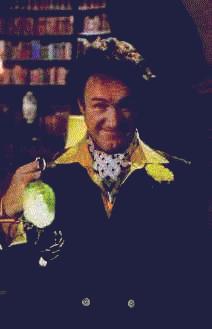
"I am a man of simple means, all I want is Australia"
- Gene Hackman as Lex Luthor
 Attachment: lex luthor.jpg Attachment: lex luthor.jpg
This has been downloaded 65 time(s).
|
|
| |
|
|
|
beingofone
|
|
U.S.A.
Apr 2003
time: 05:34
|
|
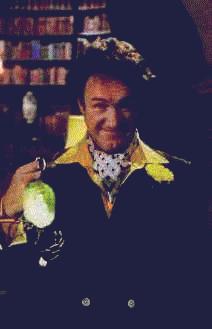
"I am a man of simple means, all I want is Australia"
"The greatest criminal mind the world has ever seen, and I am surrounded by idiots"
- Gene Hackman as Lex Luthor
Attachment: lex luthor.jpg
This has been downloaded 65 time(s).
|
|
| |
|
| |
|
|
|
Dr Strangelove
|
|
quote:
Originally posted by Boris Godunov
How could I forget... opera's evil villains!
-Iago in Verdi's Otello. Closely follows the Shakespeare, except he gets a deliciously evil soliloquy ("Credo"), and in the end he gets away. |
Yes, Iago has to be one of classic literature's great villains. quote:
-Hagen in Wagner's Gotterdamerung. He's a vile, greedy beast who is after the ring of the gods. He murders hero Siegfried and his own half-brother Gunther before being drowned in the Rhine while diving after the ring. |
What about Wotan himself? His theft of the Rhine maidens' gold started the whole tragedy. He took the stolen gold and used it to finance the construction of a new castle. I've always thought of the Niebelungreid as an allegory of political corruption, in which a single greedy act sets forth a series of events ultimately ending in ruin.
]
|
|
| |
|
|
|
Boris Godunov
|
|
Portland, OR
Aug 2001
time: 00:34
|
|
quote:
Originally posted by Dr Strangelove
What about Wotan himself? His theft of the Rhine maidens' gold started the whole tragedy. He took the stolen gold and used it to finance the construction of a new castle. I've always thought of the Niebelungreid as an allegory of political corruption, in which a single greedy act sets forth a series of events ultimately ending in ruin.
|
That's not quite how it happens. It's Alberich who steals the gold from the Rhine maidens, not Wotan.
Wotan is egged into building Valhalla by his wifey, Fricka. He has no means of paying for it, so he offers Fricka's sister Freia (at the suggestion of Loge, mind you) as payment to the giants building it (Fasolt and Fafner). But when the giants come to collect, Wotan tries to weasel out of it. Loge clues him in on the Rhine gold that Alberich has, so they go and steal the gold and the ring from Alberich. Wotan even gives up the ring to the giants to save Freia. So he doesn't act with evil, really.
The giants are evil, though. Fafner kills Fasolt (his own brother) on the spot to get the ring. He then turns into a dragon. 
|
|
| |
|
|
|
Dr Strangelove
|
|
quote:
Originally posted by Boris Godunov
That's not quite how it happens. It's Alberich who steals the gold from the Rhine maidens, not Wotan.
Wotan is egged into building Valhalla by his wifey, Fricka. He has no means of paying for it, so he offers Fricka's sister Freia (at the suggestion of Loge, mind you) as payment to the giants building it (Fasolt and Fafner). But when the giants come to collect, Wotan tries to weasel out of it. Loge clues him in on the Rhine gold that Alberich has, so they go and steal the gold and the ring from Alberich. Wotan even gives up the ring to the giants to save Freia. So he doesn't act with evil, really.
The giants are evil, though. Fafner kills Fasolt (his own brother) on the spot to get the ring. He then turns into a dragon. |
OK, first he offers his wife's sister as a barter item, then he offers twice stolen gold. Sounds pretty evil to me.
|
|
| |
|
|
|
Dr Strangelove
|
|
quote:
Originally posted by Boris Godunov
That was Loge's idea. And Wotan tells Fricka that he never intended to let the giants have Freia anyway--it was a just to get them to build the castle. So he was conning the giants, who are themselves evil.
But he only steals the gold and offers it to the giants to save Freia. If he were evil, he could have just let them have her and be done with it, keeping the gold for himself. Instead he gives them the gold AND the ring. Giving up the ring to save Freia was certainly selfless, as with it he could have wielded a great deal more power.
I'm not saying Wotan is a nice guy, but I don't think his actions qualify as "evil." |
Wasn't Wotan supposed to be the god of treaties? Wasn't the magic of his staff that it carried treaties binding the warring nations together? He was the law amongst the gods, but it seems he wasn't much of a role model. For a man of law and order to con evil people into working for him could be considered both stupid and corrupt.
|
|
| |
All times are GMT. The time now is 05:34.
Apolyton Time is 00:34. |
top of page
|
|
|
Forum Rules:
You may not post new threads
You may not post replies
You may not post attachments
You may not edit your posts
|
HTML code is ON
vB code is ON
Smilies are ON
[IMG] code is ON
|
|
|
|
|
|






 16-04-2005 10:19


 Frankychan




 |
|