Apolyton Archive  |  Preserved copy of the Apolyton Civilization Site and its forums as they stood in September 2005. Read-only; nothing here can be posted to or replied to.  |  Forum index |  About this archive |  The 1998–2001 UBB forums
Today on Apolyton WARDELL INTERVIEW PROMO A.C.S. HISTORY CHAPTER 4 GET CIV4 /w FREE PLUS! A.C.S. PHOTO GALLERY GET A.O.M. V1.1
Apolyton Civilization Forums
main| civ2| civ3| civ4| smac| ctp2| ron| moo3| galciv| galciv2| alt| about|
ApolytonPLUS | register | search | faq | new posts | pm (-/-) | upload | members
hall of fame new! | civgroups | civgroups news | interviews | the column | radio | chat | directory | news | store | PLUS
Apolyton Civilization Forums : Powered by vBulletin version 2.0.3 Apolyton Civilization Forums > Miscellaneous > Off-Topic > Recommend and discuss books on history and international relations!
Show a Printable Version | Email This Page to Someone! | Receive updates to this thread | Report this to Apolyton news!
20.Sep: FOURTH CHAPTER IN `HISTORY OF...` PUBLISHED
13.Sep: NEWS ON THE FLY
06.Sep: APOLYTON DONATES TO HURRICANE RELIEF

bottom of page
   - CIVILIZATION 3 $9.99 - CIVILIZATION 2 from $6.95 - CIVILIZATION 2 from $4.25 - ALPHA CENTAURI + ALIEN CROSSFIRE (laptop collection) from $19.99 - ALPHA CENTAURI PC $9.99 -->
Author
Thread   
Pages (2): [ 1   2   ]
< Last Thread     Next Thread > Post New Thread     Post A Reply
Ecthy is offline Ecthy
Emperor
Zhonghuà Rénmín Gònghéguó
Mar 2000
time: 06:37
  Old Post 15-09-2005 15:56
Edit/Delete Message Reply w/Quote
#31 Report this post to a moderator
Put an end to popups!

Seeker, elaborate? Any leaning on the author's side? I'm a bit picky about this these days.

molly bloom is offline molly bloom
Prince
Lundenwic
Oct 2001
time: 15:37
  Old Post 15-09-2005 16:21
Edit/Delete Message Reply w/Quote
#32 Report this post to a moderator
Inflate your Upload Space

Barbara Tuchman's 'The March of Folly'- on how you can always rely on politicians and the military to rescue defeat from the jaws of victory is always relevant- as is her 'A Distant Mirror'- the melancholy parallels between the 14th Century and the 20th Century never seemed so vivid.

I'd also recommend 'Trade and Dominion' by J. H. Parry, about the overseas European empires in the 18th Century, the cultural gulfs between them and between them and their trading partners.

Reading the accounts of meetings between the Europeans and the Chinese is almost like an account of an alien 'first contact' situation.

Reay Tannahill's 'Food in History' is also fascinating for the information it has on how eating habits shaped history- the insatiable European quest for spices and new foodstuffs, and it how it inexorably altered Western European history from the time of the Roman Empire until the expansion of the East India Company and the V.O.C. , and how Europe's gold and silver financed Indian and Chinese empires.

Seeker is offline Seeker
Emperor
London Ontario
Jan 1970
time: 00:37
  Old Post 15-09-2005 17:40 Visit Seeker's homepage!
Edit/Delete Message Reply w/Quote
#33 Report this post to a moderator
Support Apolyton, buy GURPS/ Alpha Centauri

LOL yes, not politically but personally.

She mentions that her grandfather was on Wilson's cabinet, and it becomes more and more obvious that she basically keeps favouring her relatives and their 'camp'.

Seemed pretty centrist to me in being between the 'vast economic forces that shape history' and 'great personalities/serendipity' poles.

Ecthy is offline Ecthy
Emperor
Zhonghuà Rénmín Gònghéguó
Mar 2000
time: 06:37
  Old Post 15-09-2005 19:47
Edit/Delete Message Reply w/Quote
#34 Report this post to a moderator
Support Apolyton, buy Civilization 2

Economic forces in structural history

Great personality bullshit

Thanks for the hint Seeker though, I'll have a go at it at some point

Molly, that Tuchman book was on the recommended list in some contemporary history semianr I took last year. Maybe I should have had a look into it (March of folly).

Food in history reminds me a bit about GGS. That Euro gold and silver part is interesting though. Thanks

Zulu Elephant is offline Zulu Elephant
Prince

Jun 1999
time: 05:37
  Old Post 15-09-2005 21:23
Edit/Delete Message Reply w/Quote
#35 Report this post to a moderator
Support Apolyton, buy GURPS/ Alpha Centauri

Mentioned it before but..."The Unconquerable World" by Jonathan Schell

VetLegion is offline VetLegion
Prince

Sep 1999
time: 06:37
  Old Post 15-09-2005 22:13
Edit/Delete Message Reply w/Quote
#36 Report this post to a moderator
Put an end to popups!

Echthy, are you interested in economic history? I have some links to online lectures I can look up.

Ecthy is offline Ecthy
Emperor
Zhonghuà Rénmín Gònghéguó
Mar 2000
time: 06:37
  Old Post 16-09-2005 00:19
Edit/Delete Message Reply w/Quote
#37 Report this post to a moderator
Support Apolyton, buy Civilization: The Boardgame

Hmm.... well yeah that'd be interesting. can't guarantee I'll take the time to read them though.

VetLegion is offline VetLegion
Prince

Sep 1999
time: 06:37
  Old Post 16-09-2005 00:29
Edit/Delete Message Reply w/Quote
#38 Report this post to a moderator
Support Apolyton, buy Civilization: The Boardgame

No reading, online video lectures.

Saras is offline Saras
King
Vilnius, Lithuania
Apr 1999
time: 06:37
  Old Post 16-09-2005 00:32
Edit/Delete Message Reply w/Quote
#39 Report this post to a moderator
Support Apolyton buy from Amazon

Cash Nexus by Ferguson. Econ stat heavy, but good.

Ecthy is offline Ecthy
Emperor
Zhonghuà Rénmín Gònghéguó
Mar 2000
time: 06:37
  Old Post 16-09-2005 00:47
Edit/Delete Message Reply w/Quote
#40 Report this post to a moderator
Support Apolyton buy from Amazon

Alright Vet, I might still have a look at them

VetLegion is offline VetLegion
Prince

Sep 1999
time: 06:37
  Old Post 16-09-2005 01:03
Edit/Delete Message Reply w/Quote
#41 Report this post to a moderator
Full PM-box? Change here!

OK, here are the links from my archive:

quote:
Kenneth Pomeranz Explores Reasons Why the Industrial Revolution Succeeded in Europe But Failed in East Asia

"The economies of the most advanced regions of East Asia and Europe were surprisingly similar as late as 1750, which suggests we need some rethinking of the traditional stories of industrialization," says Kenneth Pomeranz, chair of the history department at the University of California at Irvine. In a lecture sponsored by the Weatherhead East Asian Institute, Pomeranz explores the reasons why the Industrial Revolution took off in Europe but failed in East Asia.

http://www.columbia.edu/cu/news/vfo...meranz_lecture/

quote:
CES Internet Lecture

The Industrial Revolution and the Great Divergence:
World Economic Growth since 10,000 BC
(3 lectures)

with Gregory Clark (University of California, Davis)

http://www.cesifo-group.de/link/_vi...t-clark2002.htm

quote:
An Introduction to Global Economy History
(3 lectures)

with Patrick O'Brien

http://www.cesifo-group.de/link/_vi...-obrien2003.htm

quote:
October 9, 2002 - Louis Clark Vanuxem Lectures
Jared Diamond, UCLA: "Collapses of Ancient Societies and their Lessons for Today"

http://www.princeton.edu/WebMedia/lectures/

Ecthy is offline Ecthy
Emperor
Zhonghuà Rénmín Gònghéguó
Mar 2000
time: 06:37
  Old Post 16-09-2005 02:42
Edit/Delete Message Reply w/Quote
#42 Report this post to a moderator
Get a bigger avatar today!

Ah, I spot Diamond's name, as expected

I will have a look at those as soon as I can, might be a week though. Thanks

Bereta_Eder is offline Bereta_Eder
Prince

Oct 2000
time: 07:37
  Old Post 16-09-2005 03:26 Visit Bereta_Eder's homepage!
Edit/Delete Message Reply w/Quote
#43 Report this post to a moderator
Support Apolyton, buy GURPS/ Alpha Centauri

echty german thug. you ask a angloamerican gay **** off topic forum and their jenisaries for advice. of course theyr'e going to give you their books.

hell even mein kampf or what's it's called it's better than theirs.
so go find your own books dufus

Dr Strangelove is offline Dr Strangelove
King
USA
Jan 1970
time: 00:37
  Old Post 16-09-2005 03:52
Edit/Delete Message Reply w/Quote
#44 Report this post to a moderator
Increase Your PM Length

quote:
Originally posted by Ecthy
"the RAND corporation" soooo reminds me of Dr Strangelove


I would not classify myself as right wing.

Traianvs is offline Traianvs
Prince
Belgium, land of plenty (corruption)
Jan 2000
time: 06:37
  Old Post 16-09-2005 04:20
Edit/Delete Message Reply w/Quote
#45 Report this post to a moderator
Put an end to popups!

quote:
Originally posted by molly bloom
Barbara Tuchman's 'The March of Folly'- on how you can always rely on politicians and the military to rescue defeat from the jaws of victory is always relevant- as is her 'A Distant Mirror'- the melancholy parallels between the 14th Century and the 20th Century never seemed so vivid.


I liked Tuchman's March of folly too, though it became kinda boring and repetitive after a while in the american independance and vietnam parts. After a while I got the impression all those top diplomats and secretaries were utterly incompetent fat bastards! (... though admittedly that was so in Dulles' case )

Of course hindsight proves invaluable in analyzing world events, some of these people were plain evil

molly bloom is offline molly bloom
Prince
Lundenwic
Oct 2001
time: 15:37
  Old Post 16-09-2005 15:41
Edit/Delete Message Reply w/Quote
#46 Report this post to a moderator
Inflate your Upload Space

quote:
Originally posted by Ecthy


Food in history reminds me a bit about GGS. That Euro gold and silver part is interesting though. Thanks


quote:
An enthralling world history of food from prehistoric times to the present. A favorite of gastronomes and history buffs alike, 'Food in History' is packed with intriguing information, lore, and startling insights--like what cinnamon had to do with the discovery of America, and how food has influenced population growth and urban expansion.


http://www.amazon.com/exec/obidos/t...975000?v=glance


I can't remember off-hand, but some talking head was on television saying something about how European civilizations were 'always' rediscovering India- as a source of luxury finished goods, and as a source of foodstuffs and science/philosophy.

Either directly, as conquerors (Alexander) or Romano-Greek-Egyptian traders who established a presence in Calicut and in Sri Lanka (especially after Trajan's time).

Huge amounts of Roman silver bullion were being traded either directly or indirectly with China and India, and although Rome also traded finished goods and raw materials such as glassware, metal goods and coral, there was definitely an economic imbalance.

quote:
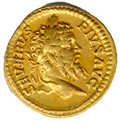
Ancient India had considerable trade links with the Middle East, Europe (Greece and Rome) as well as China. This trade was carried out over land partly along what came to be alluded to as the silk route and partly through maritime trade. By the time of Pliny, the Roman historian, Roman trade with India was thriving, and indeed creating a balance of payments problem for the Roman Empire. In South India, which had a thriving maritime trade, Roman coins even circulated in their original form, albeit slashed at times as a gesture disclaiming intrusions of foreign sovereignty.


http://www.rbi.org.in/currency/museum/c-ancient.html

Roman Find in South India:

Attachment: tromanseptimiusobv.jpg
This has been downloaded 66 time(s).

Last edited by molly bloom on 16-09-2005 at 16:31

VetLegion is offline VetLegion
Prince

Sep 1999
time: 06:37
  Old Post 16-09-2005 15:50
Edit/Delete Message Reply w/Quote
#47 Report this post to a moderator
Increase the size of your Attachments

That is true. Romans whined about loosing hard currency every year on luxury imports from the east. Later, Europe's deficits with Asia were financed by the Potosi silver. Europe simply had nothing else to trade. It's cloth and manufactures were of inferior quality to those produced in the east until the industrial revolution.

molly bloom is offline molly bloom
Prince
Lundenwic
Oct 2001
time: 15:37
  Old Post 16-09-2005 16:26
Edit/Delete Message Reply w/Quote
#48 Report this post to a moderator
Browse Apolyton AD-FREE

quote:
Originally posted by VetLegion
That is true. Romans whined about loosing hard currency every year on luxury imports from the east. Later, Europe's deficits with Asia were financed by the Potosi silver.

It's cloth and manufactures were of inferior quality to those produced in the east until the industrial revolution.


One thing that did interest me was talking with a doctor friend about some of the possible effects of lead poisoning- diarrhoea, depressed appetite, colic- and then thinking about the passion the Romans had for highly spiced foods, and combinations of salt and sour and sweet.

quote:


WINES
Peppers were known as an important import from India in biblical times. These spices were used in wine as medications for stomach pain, and similar spiced wines were used therapeutically for centuries afterwards by Greeks, Romans and medieval Europeans.


http://unitproj.library.ucla.edu/bi...displayswitch=0

quote:
Many pungent spices are unattractive to animals (excepting most, humans, many birds and some rodents), and they do have some antimicrobial, gastrointestinal, and mucus-loosening properties. Modern studies suggest that garlic, onion, allspice and oregano are the most potent antibacterial and antifungal agents; thyme, cinnamon, cloves and chile peppers are among the next best, while cardamon, black and yellow pepper, ginger, anise and celery seeds are less effective. However, there is lack of uniformity in findings, and this may reflect non-uniformity in source material.


I suspect it wasn't all about conspicuous consumption, although giving the most lavish banquets seems to have been definitely a nouveau riche Roman thing to do, sourcing the most bizarre and outre and costly ingredients.

It's fascinating as well that there was definitely a gourmet side to them- they shipped fresh mussels and oysters from the British Isles and were avid consumers of cured ham from Gaul.

I recall from reading Mary Seacole's autobiography that she used spices in tonic drinks in the Crimean War to combat intestinal upsets:

quote:
For centuries, people have been fascinated by cinnamon as a healing potential as well as its unique flavor. The use of cinnamon can be traced back to Egypt around 3000 B.C., where it was used as an embalming agent, to China around 2700 B.C., where it was used medicinally by herbalists. It was also mentioned in the Old Testament. Cinnamon has the distinction of being one of the first commodities traded on a regular basis from the East to the Mediterranean.

Cinnamon, Cassia: antiseptic, anti-diarrhoea

Clove: topical anesthetic, anti-dyspeptic


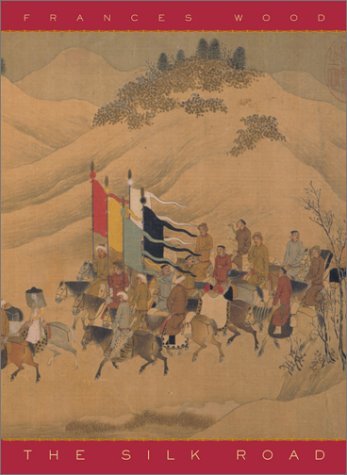
As for what the Romans traded, I'd recommend reading 'The Silk Road' by Frances Wood which contains a wealth of information:

quote:
And although a lot of silk did pass down the road(s), it was by no means the most prized commodity -- by the mid-nineteenth century the trade in rhubarb was so great that, when Britain flooded China with opium, the Emperor threatened to ban the export of the laxative, condemning Britons to eternal constipation. (He did not know that an Oxford gardener had been growing the stuff commercially since 1777.) Richthofen could, with some justification, have called it the Rhubarb Road.


http://www.powells.com/review/2003_11_09.html

It certainly acts as a necessary corrective to the old idea of the Chinese simply exporting everything and sucking up money- their eagerness for foreign novelties and foodstuffs at times rivalled the Roman epicures and gourmands:

quote:
Musk, rubies, diamonds, pearls, Baltic amber and jade joined the caravans, as did horses, elephants, lions and ostriches -- like their Roman counterparts, Chinese Emperors were fond of unusual fauna. Food was a prosaic bulk cargo, and medicinal plants made a tidy profit. (If the Chinese purged the West with rhubarb, they still relied on Persian spinach to cure their hangovers.)


It's a great read.

Attachment: silkroad.jpg
This has been downloaded 61 time(s).

VetLegion is offline VetLegion
Prince

Sep 1999
time: 06:37
  Old Post 16-09-2005 16:47
Edit/Delete Message Reply w/Quote
#49 Report this post to a moderator
Support Apolyton, pre-order Civilization IV

quote:
by the mid-nineteenth century the trade in rhubarb was so great that, when Britain flooded China with opium, the Emperor threatened to ban the export of the laxative, condemning Britons to eternal constipation.


Didn't know that.

I am going to read a book on The Silk Road some day, but there are many of them and I'd like to read the best one, so I've postponed it for now. In the near future I need to find a good economic history of USA and a good study of economic history of some east asian economy. I'm looking into causes and circuimstances of economic growth and especially the role of government intervention.

molly bloom is offline molly bloom
Prince
Lundenwic
Oct 2001
time: 15:37
  Old Post 17-09-2005 17:22
Edit/Delete Message Reply w/Quote
#50 Report this post to a moderator
Get a bigger avatar today!

quote:
Originally posted by Ecthy

That Euro gold and silver part is interesting though. Thanks


I thought I might be able to find it for you:

quote:
...spices at first remained scarce, pepper at one stage reaching the astronomical price of £ 50.00 per Roman pound (12 oz).

[...]

With trading conditions eased, Rome's avidity for the luxuries of China became insatiable. By the 2nd Century a.d. caravans regularly left the Chinese city of Lo-yang with silk, ginger, cassia, and malabathrum (cassia leaf), winding their way over the hundreds of miles by Tunhuang, Lop Nor, and Kashgar to the Stone Tower, a great meeting point somehwere north of the Pamirs.

There, in the wilds of Centarl Asia, exquisite Chinese silks and exotic spices were bartered for all that Rome could provide in exchange: glassware, pottery, asbestos cloth, coral beads, intaglio gems, grape wine for the emperor, and above all, gold and silver.

Pliny estimated that Rome was losing the equivalent of roughly £ 10 000 000 of today's money to Asia every year. *


* 'Food in History' was written in 1973.


The trade in coral:

quote:


“Since the period of the Former Han dynasty coral had been an extremely valuable commodity....

From where and on what route did coral – so highly valued by the Chinese – come to China? Red coral from the western Mediterranean and the Red Sea was one of the major items shipped to the East from the time of the Periplus (28, 39, 49). The histories of the Later Han (HHS: LXXXVIII, 2919), the Three Kingdoms (SKC: XXX, 861) and the Chin (CS: XCVII, 2544) mention coral as a product of Ta-ch’in, i.e. the Roman empire. A later Chinese account gives a detailed description of how coral was collected from the sea in Ta-ch’in: the Romans dropped iron nets on the coral reefs so that the yellowish young coral would grow on them. Three years later they came back to collect the coral once it had turned red (Hsin T’ang-shu: CCXXI, 6261).

Those records definitely refer to Mediterranean red coral. There were three possible routes to ship the coral to China. The most frequented route was the Southern Route to India. In the time of the Periplus the primary destination of coral in Roman cargo ships was India. Pliny mentions that coral was as highly treasured in India as pearls were in Rome (XXXII, 11). Coral beads along with beads of other precious materials have been found in north-Indian sites, for example at Rajghat in the level of the pre-Kushan period (Narain 1976-8: II, 12)....


http://depts.washington.edu/uwch/si...hu/notes12.html


The trade with southern India:

quote:
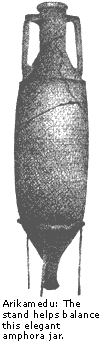
These sorts of jars were used to hold wine, sauce or olive oil. These things might have been shipped to Arikamedu for foreign traders who lived here and missed the kind of things they were used to at home. But things like wine could just as well have been bought by well-to-do Indians.

Ancient Tamil poems talk in several places about people they call "yavanas." They talk of yavana merchants bringing in merchandise like fine lamps, gold, and wine and buying cargoes of pepper at the ports of South India. At this time, the word yavana was a general word used for foreigners such as Greeks, Romans, and West Asians. There also some old books in Greek and Latin that tell us about trade between the Roman empire and India between about 200 B.C. and 200 A.D.. They give us the names of ports and lists of goods. Hundreds of Roman gold coins, most of them belonging to the reigns of the Roman emperors Augustus and Tiberius, have been found at many places in India, mostly in the south. All these clues tell us that during this period, there was brisk trade going on between the Roman empire and India.


http://www.4to40.com/discoverindia/...laces_arikamedu

An amphora from Arikamedu:

Attachment: amphora_jar.gif
This has been downloaded 56 time(s).

Ecthy is offline Ecthy
Emperor
Zhonghuà Rénmín Gònghéguó
Mar 2000
time: 06:37
  Old Post 19-09-2005 02:16
Edit/Delete Message Reply w/Quote
#51 Report this post to a moderator
Lose 30 kilos (of popups)

That's some damn good stuff, molly! Now I must get my hands on that stuff!

molly bloom is offline molly bloom
Prince
Lundenwic
Oct 2001
time: 15:37
  Old Post 19-09-2005 15:05
Edit/Delete Message Reply w/Quote
#52 Report this post to a moderator
Support Apolyton buy from Amazon

quote:
Originally posted by Ecthy
That's some damn good stuff, molly! Now I must get my hands on that stuff!


I warn you though- before you start reading some chapters of 'Food in History' make sure you've eaten.

On the other hand, before you read about garum and liquamen manufacture, make sure you haven't. Unless you're really keen on the 'aroma' of South East Asian fish sauce or shrimp paste...

http://www.romans-in-britain.org.uk...es-liquamen.htm

Traianvs is offline Traianvs
Prince
Belgium, land of plenty (corruption)
Jan 2000
time: 06:37
  Old Post 19-09-2005 17:55
Edit/Delete Message Reply w/Quote
#53 Report this post to a moderator
Put an end to popups!

o m g

they must've had a strong digestion system

Velociryx is offline Velociryx
Moderator
of Candle'Bre
Apr 1999
time: 05:37
  Old Post 20-09-2005 02:56 Visit Velociryx's homepage!
Edit/Delete Message Reply w/Quote
#54 Report this post to a moderator
Support Apolyton buy from Amazon

Hmmm....international relations?

Well, for starters, I highly recommend:

How to Build A Coalition of the Willing
~ George, "Dubya" Bush

and

The Big Book of Making Friends, the Old Fashioned Way (Bribe Them)
(also a US title)

and from France, you may want to check out the WWII classic

Surrender Tactics

Most insightful.

There are lots of others tho...

-=Vel=-

Felch is offline Felch
Prince
Germantown, Maryland
Sep 2001
time: 00:37
  Old Post 20-09-2005 04:22
Edit/Delete Message Reply w/Quote
#55 Report this post to a moderator
Support Apolyton, buy Civilization 2

I enjoyed Paul Johnson's "Modern Times," although some might not like its right wing tone.

Rufus T. Firefly is offline Rufus T. Firefly
Prince
is one way of saying it, though I prefer "mensch"
Sep 2000
time: 07:37
  Old Post 20-09-2005 06:36
Edit/Delete Message Reply w/Quote
#56 Report this post to a moderator
Lose 30 kilos (of popups)

quote:
Originally posted by Seeker
Paris 1919

an excellent book for understanding modern politics, particularly when it comes to 'buffers, gatekeepers, and handlers'.


I just started this one a couple of days ago; so far, it's excellent!

Uncle Sparky is offline Uncle Sparky
King
Winnipeg
Jan 1970
time: 23:37
Thumbs up  Old Post 21-09-2005 12:38
Edit/Delete Message Reply w/Quote
#57 Report this post to a moderator
Increase Your PM Length

quote:
Paris 1919


Navigating A New World by Lloyd Axworthy, Random House.

Its from a center/left Canadian perspective.

Last edited by Uncle Sparky on 21-09-2005 at 12:43

Dr Strangelove is offline Dr Strangelove
King
USA
Jan 1970
time: 00:37
  Old Post 21-09-2005 16:55
Edit/Delete Message Reply w/Quote
#58 Report this post to a moderator
Remove this text

quote:
Originally posted by Ecthy
"the RAND corporation" soooo reminds me of Dr Strangelove


The Mad Viking is offline The Mad Viking
King
of the Great White North
Feb 2000
time: 05:37
Arrow  Old Post 21-09-2005 17:51
Edit/Delete Message Reply w/Quote
#59 Report this post to a moderator
Tired of ads?

Europe: A History, by Norman Davies.

Odin is offline Odin
Prince
Biology Nerd at Minnesota State University Moorhead
Sep 2000
time: 23:37
  Old Post 21-09-2005 19:11
Edit/Delete Message Reply w/Quote
#60 Report this post to a moderator
Support Apolyton, buy Civilization 2

quote:
Originally posted by The Mad Viking
Europe: A History, by Norman Davies.

 
Pages (2): [ 1   2   ]
< Last Thread     Next Thread > Post New Thread     Post A Reply
All times are GMT. The time now is 05:37.
Apolyton Time is 00:37.
    top of page
Rate This Thread:
Forum Jump:
Forum Rules:
You may not post new threads
You may not post replies
You may not post attachments
You may not edit your posts
HTML code is ON
vB code is ON
Smilies are ON
[IMG] code is ON


Contact Us - Apolyton Civilization Site - Support Us!

Building a better Apolyton through better information. Click here and take our poll!
Non-US visitors, click here!

Powered by: vBulletin Version 2.0.3
Copyright ©2000, 2001, Jelsoft Enterprises Limited.

Page generated in 0.0642 seconds (89.01% PHP - 10.99% MySQL) with 30 queries
Page Loading Time:

Support Apolyton: Amazon USA | Amazon UK | Amazon DE | Amazon FR |
Support Apolyton and get FREE PLUS, Buy from Chips&Bits: Galactic Civilizations | Galactic Civilizations: Deluxe Edition | Call to Power 2 | Civilization: The Boardgame | GURPS/ Alpha Centauri | Alpha Centauri | Civilization IV | Civilization III: Complete |


Front Page | Civilization IV | Civilization III | Civilization II | Call to Power II | Alpha Centauri | Master of Orion III
Rise of Nations | Galactic Civilizations | Galactic Civilizations II | Misc
Alt.Civs | Civ I | C:CtP I | About | News | Directory | Apolyton Store | Forums | Chat | Columns | Interviews | Newsletter
Scenario League | CSC | Clash of Civs | Spanish Site | CtP Maps | Cradle of Civ | WesW's Ctp1/2 Site | Civ3 Haven

apolyton.net | apolyton.com | civilization2.net | civilization3.net | civilization4.net | civilizationiv.info | calltopower.net | galciv.net | galciv2.net | moo3.net