|
| |
|

|
Mountain Sage
|
|
One small problem:
When I try to attach a screenshot through the Upload service, it tells me it's not a valid .JPG file, even when I created it as .JPG and I can view it in the Upload service.
Any quick fix? Thanks
|
|
| |
|
|
|
Mountain Sage
|
|
It's jpg. It's a normal screenshot (but not downsized).
|
|
| |
|
|
|
Mountain Sage
|
|
Once upon a time there was a young lady called Joan, but since her womanhood rites her father Franciscus, the chieftain of a nomadic tribe, and all her kin used to call her Joan of the Arc because of hers skills with the bow (*). Over the years, Joan became a no-nonsense, energetic and ambitious woman, driven to perfection and hard work, full of projects and ideas.
Joan was not very happy with the way of living of her tribe. Moving constantly from a place to another once the game became scarce meant long treks fraught with perils and discomfort, and the price other tribes extracted for passage and hunting rights kept her tribe poor and on the verge of starvation. Often, during the long watches at night by a campsite, she dreamt about a different, better future.
Therefore, the day when her father sadly passed away, she gathered all her tribe around her and said to them: ‘Listen I have a vision. I am fed up with travelling and hardship. This is a lush country, with rivers and wild grain and tame beasts. Let’s stop here and make a permanent encampment. This encampment will become a village, and when this village will become too big we will build another one, not far away, and then another one still. We will grow and prosper. We will build things, learn and research and we will become the marvel of this world. From this day on, we will call ourselves the French, after my father (**), and this village will be called Erin, after her late wife. Are you with me (***)?’
And so it all began.
Excerpts from: ‘An Illustrated History of the Rise of the French Empire’ by Mountain Sage, AC 935.
(*) It should not surprise you if the English language uses two different words (archer and bowman) to designate the same military functionality. This is a classical example of the French superior culture, already achieved during the ancient times. (MS, ditto).
(**) One could wonder how Joan would have called her tribe if her grandfather, the venerable Firaxis, had called his son Helveticus instead of Franciscus. (MS, ditto).
(***) The legend says that the roar of approval was so deafening that a flight of crows passing overhead fell down to earth, stone dead. (MS, ditto).
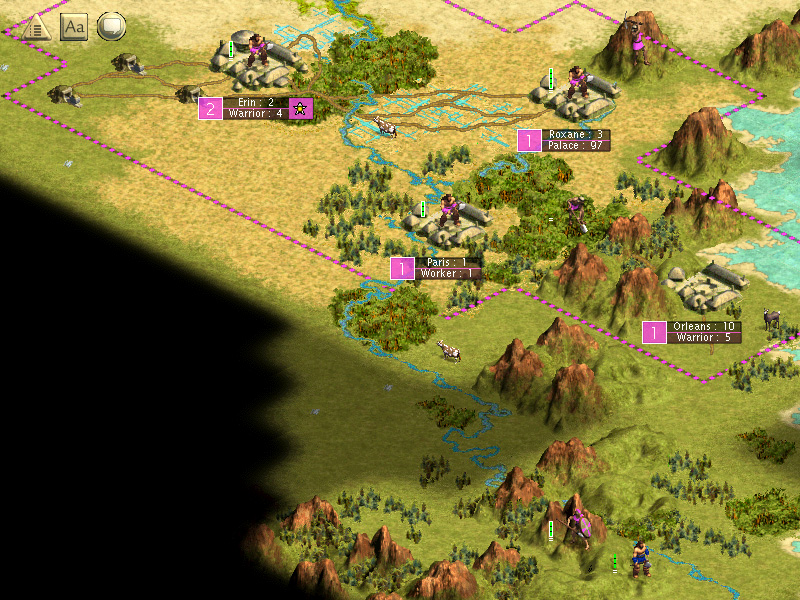
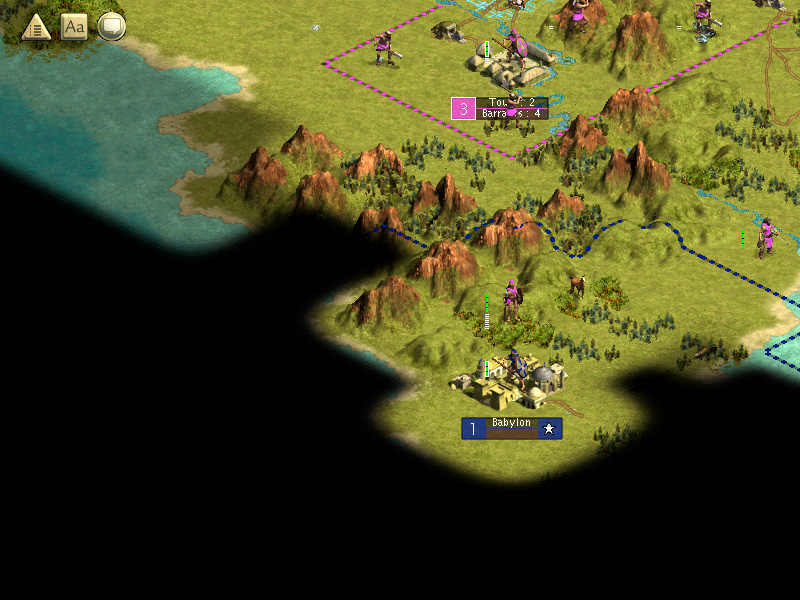
The following ancient engraving shows you our valorous troops preparing to ambush an unwary Babylonian settlers caravan, in order to stunt their expansion. Our international grading went unfortunately a bit downhill afterwards. (MS, ditto)
 Attachment: au207 2030.jpg Attachment: au207 2030.jpg
This has been downloaded 181 time(s).
|
|
| |
|
|
|
Mountain Sage
|
|
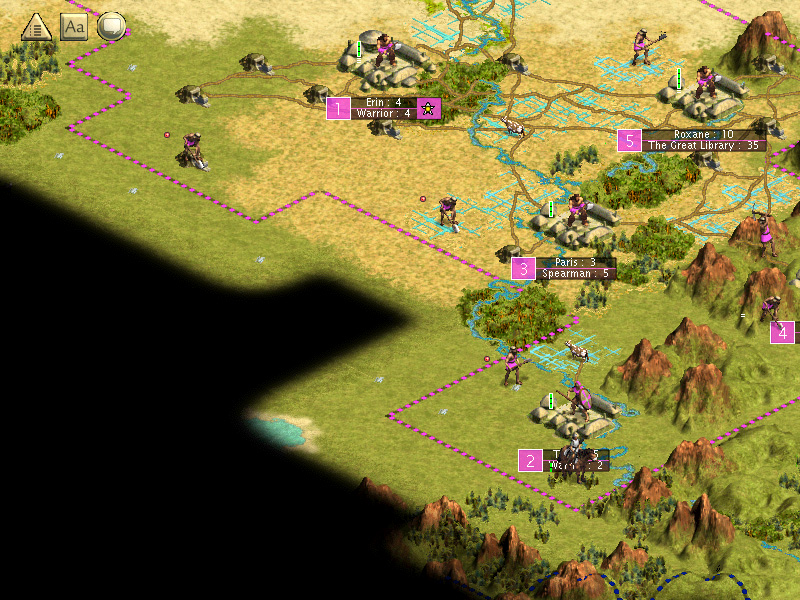
The archers' rush it's on its way. The French assembled in Roxane all the wisest men they could gather...
Attachment: au207 1175 bc.jpg
This has been downloaded 179 time(s).
|
|
| |
|
| |
|
|
|
vulture
|
 |
Leeds, UK
Jun 2001
time: 05:26
|
|
French, Emperor level, PTW 1.14
The Dawn of the French Nation
4000 BC Paris is founded, and the curious little people living in huts next door decide to move in with us as well. Don't know why, since they have maps of the area and we can't even write yet. To rectify this, Joan embarks on researching writing ("oh, so that's what you're meant to do with all those letters in the alphabet..."). The workers build roads and mines on the bonus grassland, and then go an irrigate the cow, which complains. The maps we have been given show ivory to the east, coastline to the west, and another goody hut to the north.
Warrior production begins. Upon completion he heads north to go and visit the small tribe. Unfortunately he learns the wrong lessons from the first hut, and wanders in demanding to see their map. Three warriors appear and try to kill him (the last one succeeds).
Meanwhile a second warrior is built to guard the capitol. Our worker, building a road eastwards towards the ivory, sees another hut just in time to see a Babylonian spearman go in and come out with a friendly warrior in tow. Contact is thus made with the Babylonians, and we give them masonry and alphabet in return for bronze working, ceremonial burial and 10 gold.
After churning out a stream of warriors, we eventually get around to producing our first settler, just as the road to the ivory is finished. For reasons never adequately explained, the settler shuns the ivory and heads off to the west coast. Meanwhile we have failed to learn out lessons and produced more barbarians from huts.
Finally, in 2190 BC, the glorius day arrives, and the wise men unveil the secret of writing, to great acclaim. An embassy is estabilshed with the Babylonians (who have accumulated all the shield for a settler in Babylon, which is size 1, and doing nothing until it reaches size 3...). We start to research literature at 40 turn pace, although in retrospect, it might have been wiser to up the rate a bit here. Although the choice appears to be between getting a tech in 40 turns with good cash flow or 37 turns with no excess cash, the AI will always do the latter, so you often find yourself beaten to the tech by a few turns. You can't afford to buy the last bit because you are nowhere near the number of beakers required, and when you do finally get it, it has already been traded to everyone else, so you are stuck behind in the tech race.
Luckily, it didn't turn out quite that bad. The turn I got literature, two other civs also finished researching it, so there were still trading opportunities. But I'm getting ahead of the story.
2150 BC saw Frances third city appear on the east coast, and the nation celebrated the acquisition of ivory, not to mention the completion of the coast-to-coast highway, and the blocking-off-of-the-perfidious-Babylonians-with-our-culture. And also we persuaded a tribe of savages to teach us pottery (and we call then savages?).
Shortly therearfter, the Babylonians got hold of warrior code, so we traded that (and all their 25 gold) in return for writing. Not long after that they got mysticism, which we traded for pottery, but had to give up 174 gold.
The question now for us was whether to attack Babylon or not. We had three cities, two of which had barracks, so building a strike force for an early crushing blow was a possiblity. In the end we decided on peaceful aggression, settling right up against their borders, whilst expanding more loosely towards the chokepoins we had found to the northwest and northeast.
|
|
| |
|
|
|
vulture
|
|
Leeds, UK
Jun 2001
time: 05:26
|
|
1790 BC proved to be another good year for the French nation, as we discovere the Zulu hanging around by the NE chokepoint. A quick flurry of trading gave us contact with everyone, all techs and lots of gold. The order of trading was (for those who care):
Zulu: Contact with America ** France: Alphabet, 30 gold
America: Iron working, contact with Germans ** France: Writing, 8 gold
Germany: Contact with Japan, Mongols ** France: Alphabet
Mongols: 26 gold ** France: Contact with Zulu
Zulu: The wheel, 33 gold ** France: Iron working
Germans: 28 gold ** France: Masonry
Mongols: Horseback riding ** France: Writing, 10 gold
Japan: 16 gold ** France: Alphabet
Zulu: 20 gold ** France: Mysticism
Mongols: 87 gold ** France: Contact with Babylonians
America: 45 gold ** France: Contact with Babylonians
Babylon: 198 gold ** France: The wheel, contact with Zulu, Germans, Japan
Net result: France gains 372 gold, Iron working, The wheel and Horseback riding, while most other countries are broke (Babylon has 1 gold, America 11, Mongols 62 - the rest are all broke and lacking a few techs). The joys of succesful trading...
France promptly built embassies with all the other nations, and still had about 300 gold left over.
Next task was to find out where our local strategic resources were hiding. Horses to the west and iron to the north were immediately visible and nearby, and we also discovered the furs between us and Babylon. The next three cities, planted shortly after this, were all located next to one of these resources, and jammed us hard up against Babylonian borders. There was a single tile between my fur town and the northern-most Babylonian town.
The first of the new towns, next to the horses and lots of bonus grassland, was immediately set to work on the colossus, in anticipation of a switch to the great library once literature was researched (and that's only town number 4 overall - if you can get a wonder with a town starting that early, then when can you get one?).
Since we were getting close to literature, I knew this was the first danger area of the tech race. I kept contacting everyone each turn to make sure that I knew what the situation was and so as not to miss out on the trading windows of opportunity. Philosophy appeared two turns before literature, but only for one civ, so it was too expensive to buy. Then three of us got literature the same turn. Since I couldn't get the monopoly bonus from being the only civ with the tech, I couldn't trade it for philosophy (without giving away a huge amount of gold), so I waited. One turn later all the literature civs had philosophy, but the philosophy civ didn't have literature. Easy trade for me, saving a lot of cash.
I decided to use my cash reserves to research maths at 100% science, knowing that the time of 40 turn techs was past. I upgraded all my warriors to swordsmen first. Somewhere along the line, map making and code of laws appeared and were traded for. Map making as usual provided a cash cow with judicious trading of world maps. I ended up with more cash and a complete map of the continent. Maths was completed, although one civ beat me to it by a turn. Fortunately I was still ablle to trade it profitably.
|
|
| |
|
|
|
vulture
|
|
Leeds, UK
Jun 2001
time: 05:26
|
|
The first Babylonian anti-climax^H war
With my new pile of swordsmen and horsemen, thanks to our new resources, I decided to go for a quick pruning of Babylon, especially since they had had the cheek to sneak one settler through my land and towards Zulu territory. They had to be stopped, since I could see two more settler teams on the move. I targetted two small towns on the border - the one next to my fur town, and one on the west coast. One got a small force of 2 swordsmen and 2 horsemen, the other got 4 swordsmen and 2 horsemen, since it looked to be more heavily defended. It seems I miscalculated.
The first attack, expecting to find one spearmen, but armed for two, found two very tough spearmen. Although one defender was killed (and the victorious swordsman became elite), the rest of the attack died, and out wounded survivor fled from the elite spearmen left in the town.
the second attack expected two spearmen, but it seems that the two settler teams took refuge there, as we actually found 4 spearmen. Two surviving swordsmen, on 1 hp, beat an inglorious retreat back to safety. After brief healing episode, the now woefully inadequate troops went back to the front to discover that the elite spearman was in between towns. He was pounced on and killed, and the elite swordsman went back to his objective and killed the lone defender there - the elite had been replaced with a regular. When this town fell, Babylon was prepared to give up the other town we'd attacked in return for peace. Since we were in no position to continue the war, this was fine for France, and we managed to proclaim victory depsite almost complete disaster and the death of 80% of our attack force.
Now we are in a building phase. Libraries are being produced as we research currency, and we are trying to rebuild a military presence, whilst continuing to fill out the land between our two chokepoints. If we get the great library, now nearing completion, then a supply of horsemen upgraded to knights may be the best way forwards now to wipe out Babylon.
|
|
| |
|
| |
|
|
|
Mountain Sage
|
|
875
Excerpts from: ‘An Illustrated History of the Rise of the French Empire’ by Mountain Sage, Keeper of the Records and Official Historian, AC 935.
Another drawing called ‘The Calm Before the Tempest’ by the great painter Marquis d’Aureillac. It shows our military laying siege to the Babylonian capital, which will soon fall into our hands. As you all are aware, the few survivors fled towards the frozen wastes of our continent to found a new city. However, since then, the Babylonian civilization was but a footnote in history, before being utterly destroyed later on by the Chinese.
(Excerpts from the personal diary of MS: as I am looking at this drawing, I sense a dark and forbidding presence behind me. It is a flitting shape, one moment like a man holding a spear sitting on a warhorse, the other like a man all clad in black wearing a mask. I tried to dispel this ghost with garlic and making the sign of the Holy Joan, but to no avail.)
875BC
Attachment: au207 875 bc.jpg
This has been downloaded 125 time(s).
|
|
| |
|
|
|
Mountain Sage
|
|
Excerpts from: ‘An Illustrated History of the Rise of the French Empire’ by Mountain Sage, Keeper of the Records and Official Historian, AC 935.
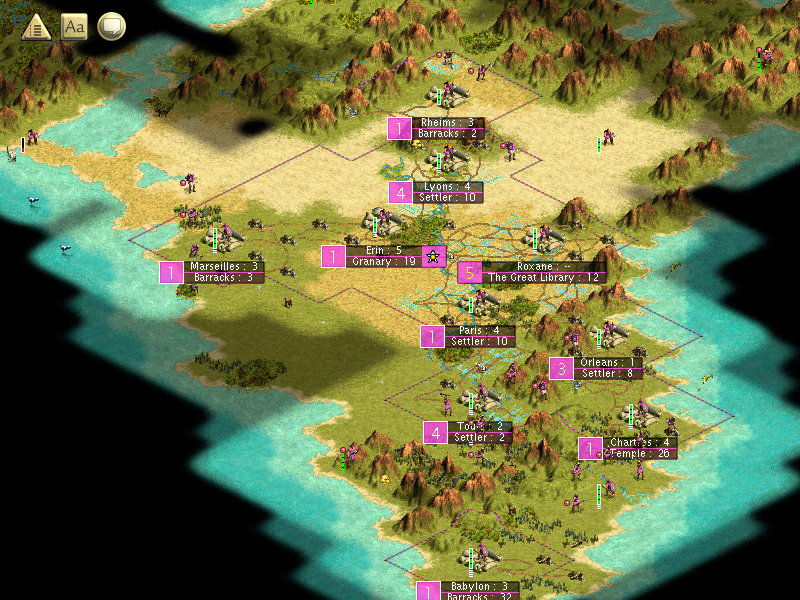
This fresco is a copy of the one adorning the south wall of the Great temple of Joan in Erin. It depicts our lush CoreLand and the barbarian wastes encircling it. Thanks to our Milady’s policy of ‘one baby a year’ (per family of course, Editor’s Note), we will soon be able to reclaim this land and make it a Garden of Joan.
Attachment: au207 710 bc.jpg
This has been downloaded 139 time(s).
|
|
| |
|
|
|
Mountain Sage
|
|
450 BC
Excerpts from: ‘An Illustrated History of the Rise of the French Empire’ by Mountain Sage, Keeper of the Records and Official Historian, AC 935.
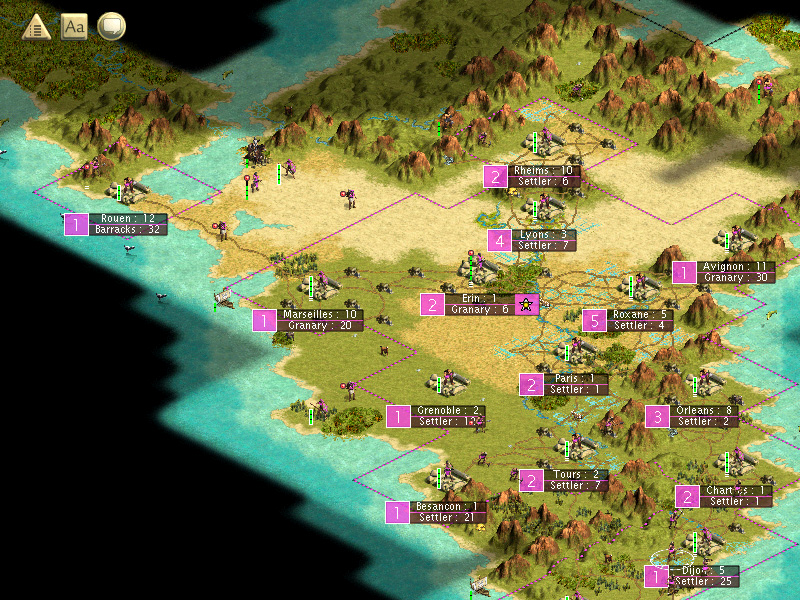
Another fresco, this time from our Milady’s Great Library in Roxane. See how we expanded far and fast! If you pay attention to the details, you can see the look of utter dismay and horror in the face of the barbarian in the west, whose camp will be soon overrun by our valiant troops.
Attachment: au207 450 bc.jpg
This has been downloaded 176 time(s).
|
|
| |
|
|
|
Mountain Sage
|
|
190 BC
Excerpts from: ‘An Illustrated History of the Rise of the French Empire’ by Mountain Sage, Keeper of the Records and Official Historian, AC 935.
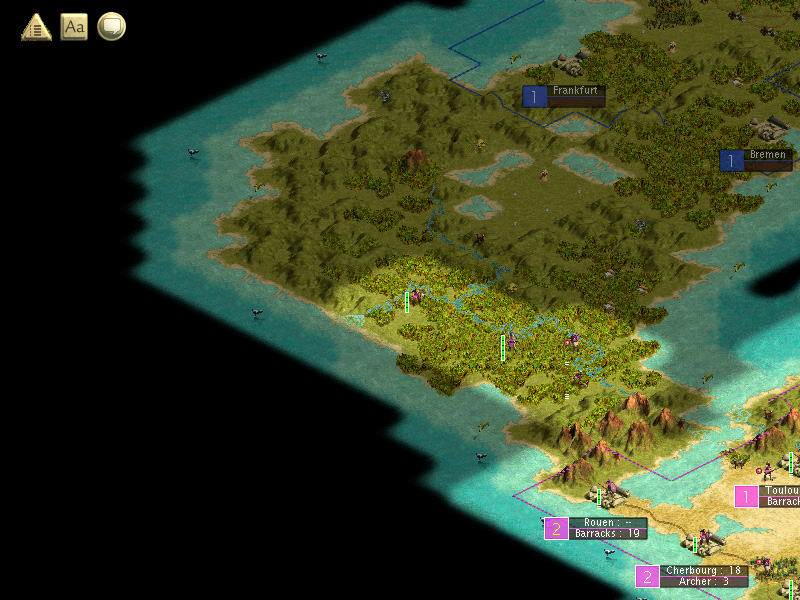
A rare glimpse of a military map dated 3805 showing our Central Command’s strategic planning. You see N-W, near the German border, some wild Spices groves. Our Seabees (Conquest Battalions) are already laying down a military road network, as to enable our settler caravans to rush to the spot and to move military units to face the ever-present threat of barbarian tribes.
(Excerpts from MS’s personal diary: ‘how the military came up calling basically a road-building worker team a marine bee, when we are scores of miles from the sea and don’t even have a navy, it’s really beyond me’).
Attachment: au207 190 bc.jpg
This has been downloaded 133 time(s).
|
|
| |
|
|
|
Mountain Sage
|
|
400 AD
Excerpts from: ‘ Chapter 29: An Economic Survey through the Ages of our Forbidden Palace, by Prof. Laurent De L’Argentière, University of Erin:
‘As you are well aware, our blessed country has roughly the shape of a ‘Y’, with our capital Erin in the middle of the two ‘arms’. Our Milady (may she be blessed every day) decided in her great wisdom to build the Forbidden Palace south of her capital instead of in a town situated in one of the two ‘arms’. With this genial move, she created in fact what we call our CoreLand, the heart of our most productive cities and….
Attachment: au207 400 ad.jpg
This has been downloaded 133 time(s).
|
|
| |
|
|
|
Mountain Sage
|
|
740 AD
Excerpts from: ‘An Illustrated History of the Rise of the French Empire’ by Mountain Sage, Keeper of the Records and Official Historian, AC 935.
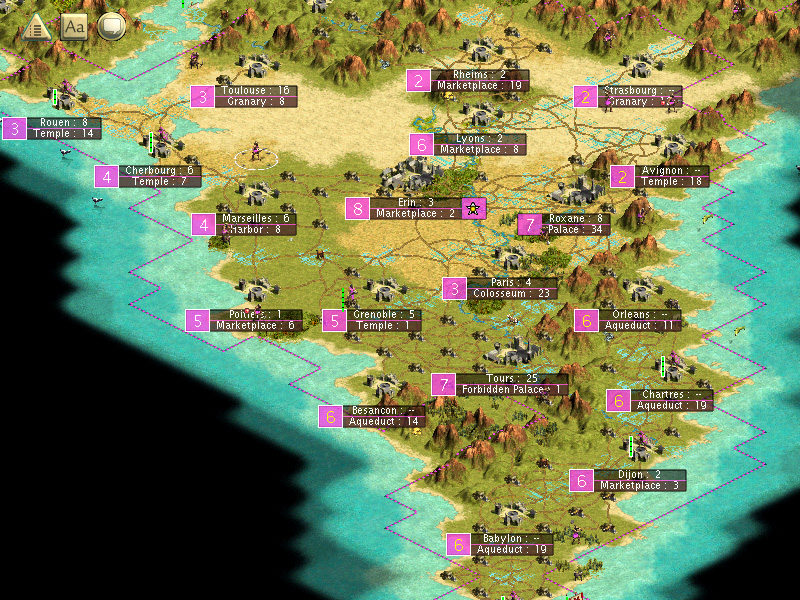
The frescoes adorning the Great temple of Joan in Erin are a vivid illustration of the evolution of our beloved country over the years. This one illustrates our CoreLand in 4740 FR, just a few years before our Golden Age. Our productivity is so high that we can afford building two World Wonders simultaneously. Also note building of our first specialized military unit, the Musketeer, which will shortly inspire shock and awe in our enemies’ hearts.
Attachment: au207 740 ad.jpg
This has been downloaded 127 time(s).
|
|
| |
|
|
|
Mountain Sage
|
|
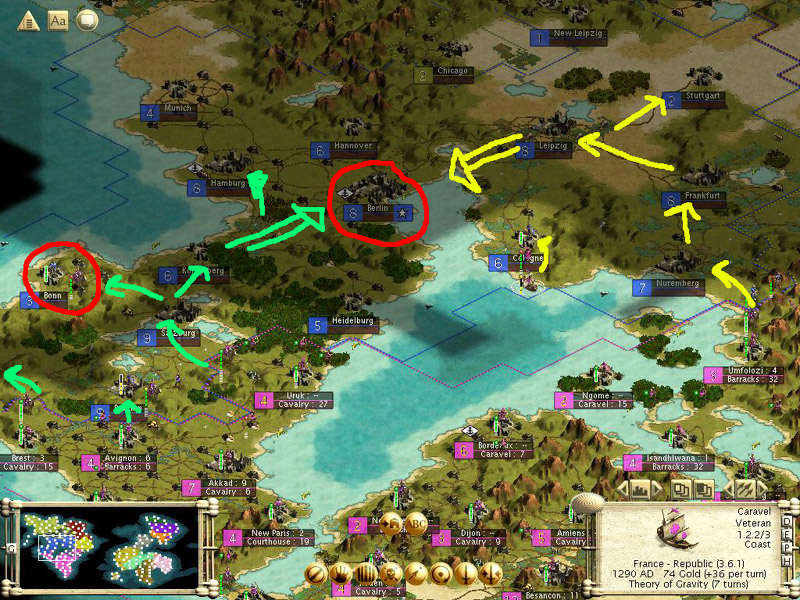
860 AD
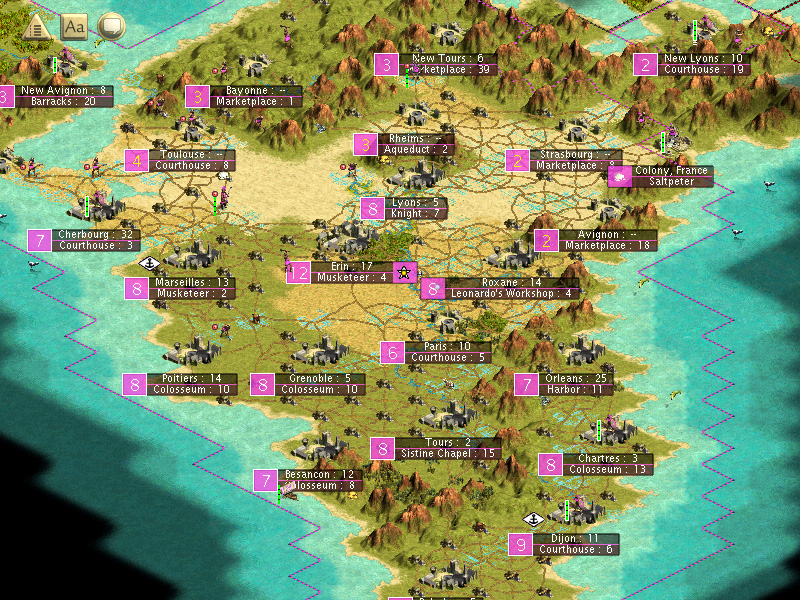
Military Academy of Tours, First Year Strategy Exam, Question B29:
Please analyse the following military map describing the treacherous attack of the Zulus upon our homeland. Special attention should be given to the following topics:
a) Zulus: number of attacking units, composition of these units, technology employed.
b) French: number and disposition of defensive units, technology employed.
c) Strategy: effectiveness of luring enemy troops deep into one’s territory.
Question B29 should be linked to question B52: ‘The wisdom of NOT going to war footing during an invasion. Political and Economical consequences’.
Attachment: au207 860 ad.jpg
This has been downloaded 108 time(s).
|
|
| |
|
|
|
Mountain Sage
|
|
860 AD
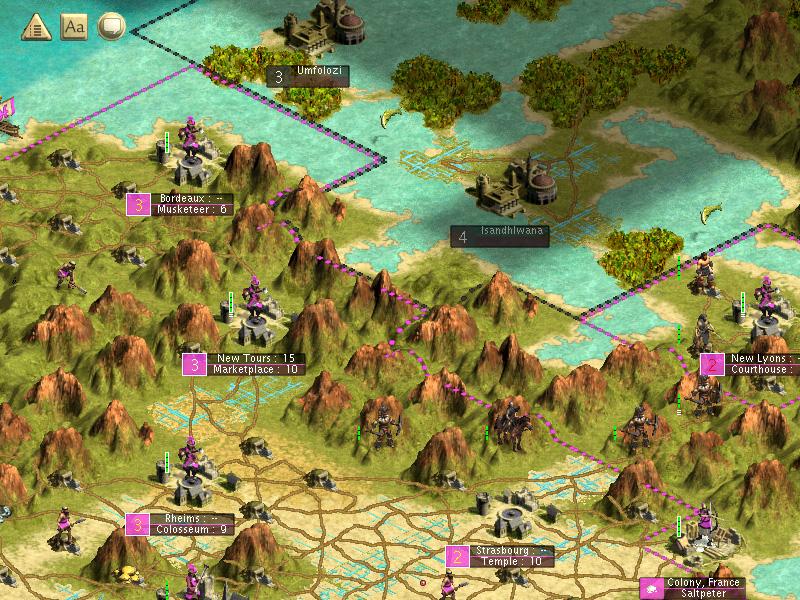
Excerpts from Monseigneur de Richelieu’s speech at the 860 FR promotion day of the Royal Diplomats’ High School:
‘The whole concept of MAR, Massive Allied Retaliation, as some of you might remember, is to punish anybody who has the gall of declaring war on us by forming an international coalition of the willing against said offender. The beauty of this concept, which incidentally was developed by myself, your most humble servant, is threefold: first of all, the invasion, if such should occur, will be small, since the enemy has to fight on several fronts simultaneously. Then, the disruption of our economy will be minimal, since we won’t have to go on war footing and build many military units. Finally, it should teach all potential enemies the foolishness of declaring war on the glorious French…’
Attachment: au207 860d ad.jpg
This has been downloaded 107 time(s).
|
|
| |
|
|
|
Mountain Sage
|
|
950 AD
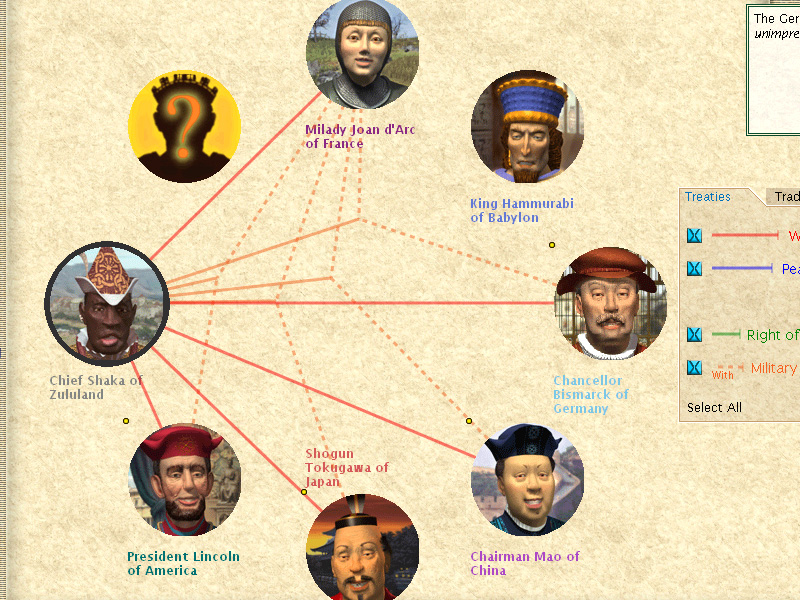
Excerpts from: ‘An Illustrated History of the Rise of the French Empire’ by Mountain Sage, Keeper of the Records and Official Historian, AC 935.
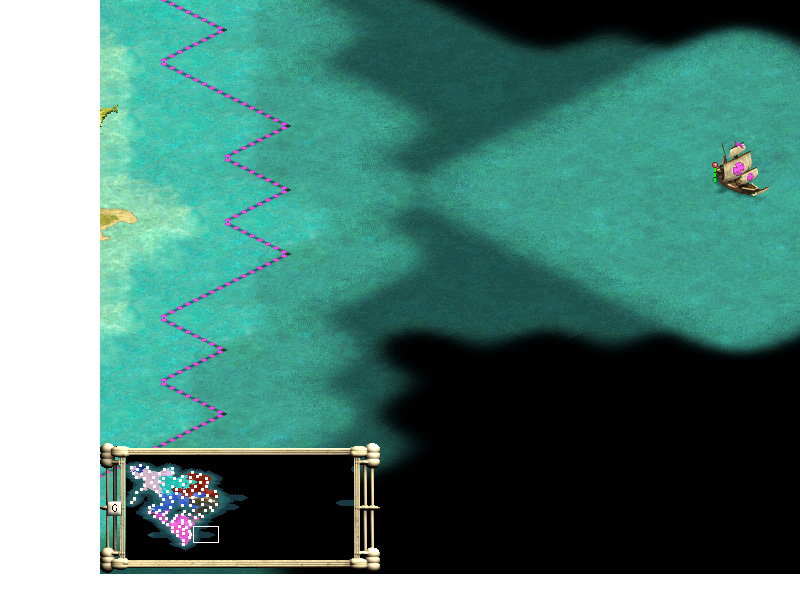
The discovery of Navigation and Magnetism enabled our Marine Royale to explore our wide oceans, which led to the stunning discovery of many previous unknown civilisations.
Marquis de Sade painting ‘Alinghi races the unknown’ perfectly illustrates the spirit and boldness our captains and crews.
Attachment: au207 950 ad.jpg
This has been downloaded 106 time(s).
|
|
| |
|
|
|
Mountain Sage
|
|
1080 AD
‘It was so good to be young then
In the season of plenty…
Folk ballad (translated in French from the original American version)
Attachment: au207 1080 ad.jpg
This has been downloaded 106 time(s).
|
|
| |
|
|
|
Mountain Sage
|
|
1250 AD
‘… when the cattle was jumping
as high as the sky’
Folk ballad (translated in French from the original American version)
Attachment: au207 1250 ad.jpg
This has been downloaded 104 time(s).
|
|
| |
All times are GMT. The time now is 05:26.
Apolyton Time is 00:26. |
top of page
|
|
|
Forum Rules:
You may not post new threads
You may not post replies
You may not post attachments
You may not edit your posts
|
HTML code is ON
vB code is ON
Smilies are ON
[IMG] code is ON
|
|
|
|
|
|






 25-03-2003 03:47


 Attachment:


 I don't see a path across the ocean that made it to the other continent. Did they find you first?
  You're farther behind than I thought.
 With the war and all I'm really busy and really stressed right now. Also I think I've been playing a little much and need a breather. But I'm still gonna be lurking around here. There's a lot of dull moments at work where I can follow what's going on here. But hopefully I'll be recharged and ready to go for the next AU course. Good luck on this one...
 |
|