Apolyton Archive  |  Preserved copy of the Apolyton Civilization Site and its forums as they stood in September 2005. Read-only; nothing here can be posted to or replied to.  |  Forum index |  About this archive |  The 1998–2001 UBB forums
Today on Apolyton WARDELL INTERVIEW PROMO A.C.S. HISTORY CHAPTER 4 GET CIV4 /w FREE PLUS! A.C.S. PHOTO GALLERY GET A.O.M. V1.1
Apolyton Civilization Forums
main| civ2| civ3| civ4| smac| ctp2| ron| moo3| galciv| galciv2| alt| about|
ApolytonPLUS | register | search | faq | new posts | pm (-/-) | upload | members
hall of fame new! | civgroups | civgroups news | interviews | the column | radio | chat | directory | news | store | PLUS
Apolyton Civilization Forums : Powered by vBulletin version 2.0.3 Apolyton Civilization Forums > Miscellaneous > Off-Topic > what we don't know about the world
Show a Printable Version | Email This Page to Someone! | Receive updates to this thread | Report this to Apolyton news!
20.Sep: FOURTH CHAPTER IN `HISTORY OF...` PUBLISHED
13.Sep: NEWS ON THE FLY
06.Sep: APOLYTON DONATES TO HURRICANE RELIEF

bottom of page
   - CIVILIZATION 3 $9.99 - CIVILIZATION 2 from $6.95 - CIVILIZATION 2 from $4.25 - ALPHA CENTAURI + ALIEN CROSSFIRE (laptop collection) from $19.99 - ALPHA CENTAURI PC $9.99 -->
Author
Thread    < Last Thread     Next Thread > Post New Thread     Post A Reply
C0ckney is offline C0ckney
Prince
Big Up The Macedonian Massive
Apr 2000
time: 05:32
  Old Post 11-05-2005 21:38
Edit/Delete Message Reply w/Quote
#1 Report this post to a moderator
what we don't know about the world Suffering from ads?

i read this a little while ago and found it fairly interesting, so i thought i'd post it here

from the bbc

quote:


What we don't know about the world

By Jonathan Duffy
BBC News Magazine

While no corner of earth remains uncharted, there are still millions of species that have yet to be discovered and documented. The quest to complete a comprehensive directory of all life on earth goes on.

It's a good job monkeys don't understand us, else you'd fear for the newly discovered Callicebus aureipalatii.

The creature is one of about 30 varieties of titi monkey which can be found in the dense tropical rainforests of South America. There's Callicebus brunneus (Brown titi), Callicebus personatus (Masked titi), Callicebus moloch (Dusky titi) and then there's the new arrival, Callicebus aureipalatii - Golden Palace titi.

This latest species had the dubious fate of being discovered in an era of strident global capitalism - hence its name, the result of a charity auction eventually won by the online gambling emporium GoldenPalace.com.

Novelty names aside, though, it's surprising that on a planet which has been so comprehensively researched, circumnavigated and trampled over there are still new sorts of primate which have evaded human detection.

Elsewhere, recently, there have been reports of:

a new species of fox in Indonesia;

a hitherto unknown "vampire" fish in the Amazon;

and a long-lost ivory-billed woodpecker in the US.

This week, Kew Gardens announced plans to recolonise the globe with the Woolemi pine a tree that was thought to have died out at least two million years ago, before it was discovered by accident in 1994 in Australia.
While Mother Nature wrestles with the effects of industrialisation, prompting fears about extinction rates, there are still huge gaps in our knowledge about the natural world that surrounds us.

In fact, even by conservative estimates, there are more living species on the planet that haven't been identified and documented than have.

Stock-take

For 250 years taxonomists - biologists who specialise in identifying and classifying life - have been busy conducting a sort of stock-take of the world's seemingly countless species.

The current tally, from the tiniest plankton to the mighty blue whale hovers around the 1.75 million mark.

But even that's just an estimate. The Catalogue of Life programme, a UK-US partnership, is consolidating all the various specie databases around the world, with the aim of producing a single, definitive directory of life.

The task should be completed by 2011, when the catalogue will then begin to absorb all subsequent discoveries - of which there are many thousands every year.

In the animal kingdom alone there are 15,000 to 20,000 new species identified annually. But barring the odd South American monkey, few of these have the sort of mass appeal that would prompt an online bidding war for the right to name them.

"Over the past 10 to 15 years there have been a host of surprises as we explore previously inaccessible habitats," says Professor Frank Bisby, of Species 2000, a partner in the Catalogue of Life project.

"High in the atmosphere, deep in the soil, in the thermal vents on the ocean floor and within animals themselves, there are new species to be found."

He notes a recent discovery of 200 new species of yeast found living in the guts of beetles.

The tropics are widely acknowledged as fertile ground for all forms of life, but only now are biologists starting to seriously explore rainforests at canopy (treetop) level, and finding new varieties of wildlife.

Oceans too are a rich seam of undocumented life - the Census of Marine life uncovered 500 new species of fish in the first three years of this decade. It estimates there could be 10 times more waiting to be logged.

Pioneering spirit

By comparison, the plant world is more familiar. About 75% of the world's plants have been chronicled, says Simon Owens of the Royal Botanic Gardens in Kew, and about 2,000 new species are discovered every year.

New Guinea, the world's second biggest island, is viewed with the sort of pioneering spirit that botanists once had for Madagascar. There's also a lot of interest in the jungles of central Africa, although civil wars have hampered further exploration.

Political changes in the old communist world have helped clear a path for Kew's army of freelance researchers, says Mr Owens, who notes some beautiful new discoveries of slipper orchids - which have a pouch rather than a lip - in remote parts of China.

While such discoveries may delight the human eye, the overall challenge of charting the undiscovered world stretches way into the future. One study estimates that at the past rate it will take another 1,500 to 15,000 years to complete the global inventory of life.

But the pace is stepping up, says Dr Andrew Polaszek of the International Commission on Zoological Nomenclature, thanks to the internet, rapid exchange of high quality images and DNA sequencing - which is faster than the traditional technique for documenting species.

Barriers

All of which begs one last question - why bother? After all, these unknown species have existed for thousands, sometimes millions of years without occupying a line in a notebook.

In a globalised world, says Dr Polaszek, nothing can cross international barriers without a name and official documentation. Plants and animals have numerous benefits, such as helping us conquer diseases. If we don't know something exists, we won't know when it's on the verge of extinction.

And in a globalised world, species can quickly thrive in areas where there are no natural predators, killing indigenous life. The discovery of a species of parasitic wasp (each no more than 1mm in length) is promising to bring under control a plant killing white fly on the Canary Islands, says Dr Polaszek.

"We're almost there," says Dr Polaszek. "The wasp has been identified, and shipped over. It's in quarantine and about to be released any day now."

Immortal Wombat is offline Immortal Wombat
Prince
in perpetuity
Dec 2000
time: 05:32
  Old Post 12-05-2005 02:29 Visit Immortal Wombat's homepage!
Edit/Delete Message Reply w/Quote
#2 Report this post to a moderator
Support Apolyton, buy GURPS/ Alpha Centauri

It's almost embarassing how many projects there are trying to catalogue all the species on Earth. It's probably quite a clever move for those concerned though, since rather than then putting themselves out of a job, they get to spend the next 30 years arguing about whose comprehensive list is correct.

Donegeal is offline Donegeal
King
Apolyton's Resident Law Enforcement Officer. Founder of the Glory of War, Champions of Apolyton!
Jul 2002
time: 05:32
  Old Post 12-05-2005 03:00
Edit/Delete Message Reply w/Quote
#3 Report this post to a moderator
Support Apolyton or Terrorists Win

I think they go alittle over bored with the numbers there. I mean that monkey they were talking about, they listed several different species, yet the only thing that I could tell that made them different from each other was appeareance. Do we classify different humans based on their appeareance? No. We are all just Homo Sapiens, not Homo Sapian Caucation or Homo Sapian Orientalius or Homo Sapien Africus.

pchang is offline pchang
King
Cupertino?
Aug 1999
time: 05:32
  Old Post 12-05-2005 03:07
Edit/Delete Message Reply w/Quote
#4 Report this post to a moderator
Full PM-box? Change here!

I thought the definition of species is that if they cannot produce viable offspring, then they are different species.

Immortal Wombat is offline Immortal Wombat
Prince
in perpetuity
Dec 2000
time: 05:32
  Old Post 12-05-2005 03:50 Visit Immortal Wombat's homepage!
Edit/Delete Message Reply w/Quote
#5 Report this post to a moderator
Browse Apolyton AD-FREE

That is the usual definition; the other slightly broader one is that if individuals do not produce viable offspring [in the wild], then they are of different species. It is quite tricky. Sometimes humanity's endless need to partition continuous data into discrete little parcels is very frustrating.

quote:

I think they go a little over board with the numbers there. I mean that monkey they were talking about, they listed several different species, yet the only thing that I could tell that made them different from each other was appeareance.

With all due respect, I imagine that the biologists involved have studied the morphology, genetics and breeding habits of those monkeys in sufficient detail as to make an informed decision as to their taxonomic status.

Dis is offline Dis
Emperor
Las Vegas, Nevada
Feb 2000
time: 21:32
  Old Post 12-05-2005 08:22 Visit Dis's homepage!
Edit/Delete Message Reply w/Quote
#6 Report this post to a moderator
Get a bigger avatar today!

a horse and a mule can produce offspring (donkeys), of course those offspring are sterile. But I'm sure they are 2 separate species.

Imran Siddiqui is offline Imran Siddiqui

Deity
The Potterverse
Jan 1970
time: 00:32
  Old Post 12-05-2005 08:23
Edit/Delete Message Reply w/Quote
#7 Report this post to a moderator
Support Apolyton buy from Amazon

quote:
Originally posted by Dissident
a horse and a mule can produce offspring (donkeys), of course those offspring are sterile. But I'm sure they are 2 separate species.


You got it backwards. A horse and donkey produce a mule.

Dis is offline Dis
Emperor
Las Vegas, Nevada
Feb 2000
time: 21:32
  Old Post 12-05-2005 08:41 Visit Dis's homepage!
Edit/Delete Message Reply w/Quote
#8 Report this post to a moderator
Support Apolyton, buy Galactic Civilizations: Deluxe Edition

that's what I said

edit: I guess not.

Barinthus is offline Barinthus
King
A Magical Moment...
Jan 2004
time: 21:32
  Old Post 12-05-2005 09:09
Edit/Delete Message Reply w/Quote
#9 Report this post to a moderator
Support Apolyton buy from Amazon

From what I understood, different species under same genus can produce offsprings but those will be sterile.

But again few weeks ago in Hawai'i, a wholpin (whale-dolphin) produced an offspring.

Dis is offline Dis
Emperor
Las Vegas, Nevada
Feb 2000
time: 21:32
  Old Post 12-05-2005 09:31 Visit Dis's homepage!
Edit/Delete Message Reply w/Quote
#10 Report this post to a moderator
Support Apolyton, pre-order Civilization IV

and it's funny most people say neanderthals and homo sapiens couldn't produce offpsring, but I bet they could. Again, the offspring were probably sterile.

Bill3000 is offline Bill3000
King
of Soloralism
Jul 1999
time: 00:32
  Old Post 12-05-2005 09:45 Visit Bill3000's homepage!
Edit/Delete Message Reply w/Quote
#11 Report this post to a moderator
Increase Your PM Length

quote:
and it's funny most people say neanderthals and homo sapiens couldn't produce offpsring, but I bet they could. Again, the offspring were probably sterile.


For the most part, they never interacted. Homo sapiens stayed in Africa (Not including nearly went extinct ) and had no contact with Homo neanderthalis.

Classification of species are quite tricky, as it is really completely artifical.

quote:
I think they go alittle over bored with the numbers there. I mean that monkey they were talking about, they listed several different species, yet the only thing that I could tell that made them different from each other was appeareance. Do we classify different humans based on their appeareance? No. We are all just Homo Sapiens, not Homo Sapian Caucation or Homo Sapian Orientalius or Homo Sapien Africus.

There's a reason for this, however; the genetic diversity of humans is extremely low. Most other species/genuses of the world have genetic diversity to merit subspecies and species, but not humans. We havn't had enoguh time to fully diversify yet (And with our international intermingling now, probably won't diverge at all.) Therefore, one human race, even though many other mammals such as cats and dogs can have different subspecies and whatnot.

Kassiopeia is offline Kassiopeia
Emperor
Jyväskylä, Finland
Jul 2001
time: 07:32
  Old Post 12-05-2005 09:54 Visit Kassiopeia's homepage!
Edit/Delete Message Reply w/Quote
#12 Report this post to a moderator
Inflate your Upload Space

quote:
Originally posted by Barinthus
From what I understood, different species under same genus can produce offsprings but those will be sterile.

But again few weeks ago in Hawai'i, a wholpin (whale-dolphin) produced an offspring.


IIRC, one of the two is actually misnamed, and both are really whales, or dolphins.

Edit: Yes, the "whale" was actually a false killer whale, which is just a large Oceanic dolphin.

Winston is offline Winston
King
Danmark
Mar 1999
time: 06:32
Lightbulb  Old Post 12-05-2005 16:48
Edit/Delete Message Reply w/Quote
#13 Report this post to a moderator
Remove this text

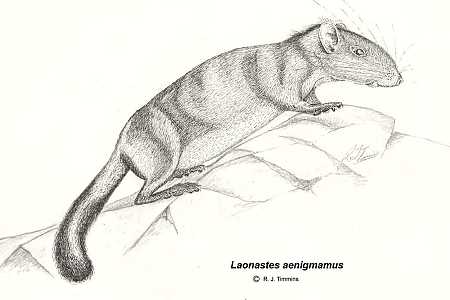
This is a funny coincidence, just today it's being reported in Jyllands-Posten (in Danish) that an unknown family of mammals, i.e. not just a new species, has been discovered in Laos. The experts say it may well be the last family of mammals to be discovered ever.

The animal is a 30 cm-long rodent which lives in forested areas and limestone formations. Its meat is often sold for human consumption at markets in Laos, and it was at such a market that biologists first saw the animal and discovered that it belonged to a hitherto unknown group of mammals. The locals call it Kha-nyou, and its taxonomical name will be Laonastes Senigmamus.

It says that the discovery has just been published in the periodical "Systematics and Biodiversity", and that studies of its DNA and cranium characteristics show that the species developed along its own path compared to other rodents millions of years ago.

They say that the last time a new group or family of mammals was discovered is assumed to be in the 1970's when a new group of bats was identified in Thailand.

Here's an image of what it looks like:

Attachment: 141866_large.jpg
This has been downloaded 99 time(s).

DeathByTheSword is offline DeathByTheSword
King
soon to be a major religion
Nov 2001
time: 05:32
  Old Post 12-05-2005 16:58
Edit/Delete Message Reply w/Quote
#14 Report this post to a moderator
Get a bigger avatar today!

it looks like a rat to me

Immortal Wombat is offline Immortal Wombat
Prince
in perpetuity
Dec 2000
time: 05:32
  Old Post 12-05-2005 21:29 Visit Immortal Wombat's homepage!
Edit/Delete Message Reply w/Quote
#15 Report this post to a moderator
Inflate your Upload Space

Looks nothing like a rat. That's awesome

Winston is offline Winston
King
Danmark
Mar 1999
time: 06:32
  Old Post 20-05-2005 09:05
Edit/Delete Message Reply w/Quote
#16 Report this post to a moderator
Tired of ads?

So has anyone seen any other reports on the new group of rodents in Laos? I'm a bit surprised that it hasn't been reported more widely.

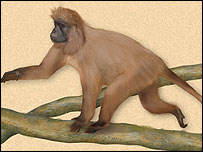
Also, it seems they've found a new species of monkeys in Tanzania, BBC has an article on it.

Here's a picture of it, looks a bit leftist to me.

Attachment: _41163567_monkey_203.jpg
This has been downloaded 61 time(s).

Agathon is offline Agathon
Prince
Leafs 4TW!! - CPA
Dec 2002
time: 00:32
  Old Post 20-05-2005 09:22
Edit/Delete Message Reply w/Quote
#17 Report this post to a moderator
Support Apolyton or Terrorists Win

That vampire fish sounds pretty cool.

DaShi is offline DaShi
Prince
The Taste of Japan
Sep 2000
time: 05:32
  Old Post 20-05-2005 09:35
Edit/Delete Message Reply w/Quote
#18 Report this post to a moderator
Support Apolyton, buy Alpha Centauri

What we know about the world could fill an encyclopedia.

C0ckney is offline C0ckney
Prince
Big Up The Macedonian Massive
Apr 2000
time: 05:32
  Old Post 20-05-2005 12:31
Edit/Delete Message Reply w/Quote
#19 Report this post to a moderator
Remove this text

any UK people been watching 'deep jungle' on itv recently (8pm tuesdays), the show last week focused on the brazil nut tree and the little eco system it whixh supports it. they explained why it can't be grown in places other than the rainforest.

it's all interesting stuff and great for people like me who know next to nothing about biology.

Urban Ranger is offline Urban Ranger
Apolyton Duke of Off-Topic

Donate to the Red Cross
The City State of Noosphere, CPA special envoy
May 1999
time: 13:32
  Old Post 20-05-2005 12:47
Edit/Delete Message Reply w/Quote
#20 Report this post to a moderator
Enter the AD-FREE zone

quote:
Originally posted by Winston
So has anyone seen any other reports on the new group of rodents in Laos? I'm a bit surprised that it hasn't been reported more widely.


Saw it on The Panda's Thumb

Immortal Wombat is offline Immortal Wombat
Prince
in perpetuity
Dec 2000
time: 05:32
  Old Post 20-05-2005 19:19 Visit Immortal Wombat's homepage!
Edit/Delete Message Reply w/Quote
#21 Report this post to a moderator
Avatar Enlargement: We've got the solution

quote:
Originally posted by Winston
So has anyone seen any other reports on the new group of rodents in Laos? I'm a bit surprised that it hasn't been reported more widely.

The NYT ran an article at least. Probably others as well, try Googling "Laotian rock rat". The Wikipedia entry is fairly comprehensive.

  < Last Thread     Next Thread > Post New Thread     Post A Reply
All times are GMT. The time now is 05:32.
Apolyton Time is 00:32.
    top of page
Rate This Thread:
Forum Jump:
Forum Rules:
You may not post new threads
You may not post replies
You may not post attachments
You may not edit your posts
HTML code is ON
vB code is ON
Smilies are ON
[IMG] code is ON


Contact Us - Apolyton Civilization Site - Support Us!

Building a better Apolyton through better information. Click here and take our poll!
Non-US visitors, click here!

Powered by: vBulletin Version 2.0.3
Copyright ©2000, 2001, Jelsoft Enterprises Limited.

Page generated in 0.0558 seconds (92.67% PHP - 7.33% MySQL) with 30 queries
Page Loading Time:

Support Apolyton: Amazon USA | Amazon UK | Amazon DE | Amazon FR |
Support Apolyton and get FREE PLUS, Buy from Chips&Bits: Galactic Civilizations | Galactic Civilizations: Deluxe Edition | Call to Power 2 | Civilization: The Boardgame | GURPS/ Alpha Centauri | Alpha Centauri | Civilization IV | Civilization III: Complete |


Front Page | Civilization IV | Civilization III | Civilization II | Call to Power II | Alpha Centauri | Master of Orion III
Rise of Nations | Galactic Civilizations | Galactic Civilizations II | Misc
Alt.Civs | Civ I | C:CtP I | About | News | Directory | Apolyton Store | Forums | Chat | Columns | Interviews | Newsletter
Scenario League | CSC | Clash of Civs | Spanish Site | CtP Maps | Cradle of Civ | WesW's Ctp1/2 Site | Civ3 Haven

apolyton.net | apolyton.com | civilization2.net | civilization3.net | civilization4.net | civilizationiv.info | calltopower.net | galciv.net | galciv2.net | moo3.net