|
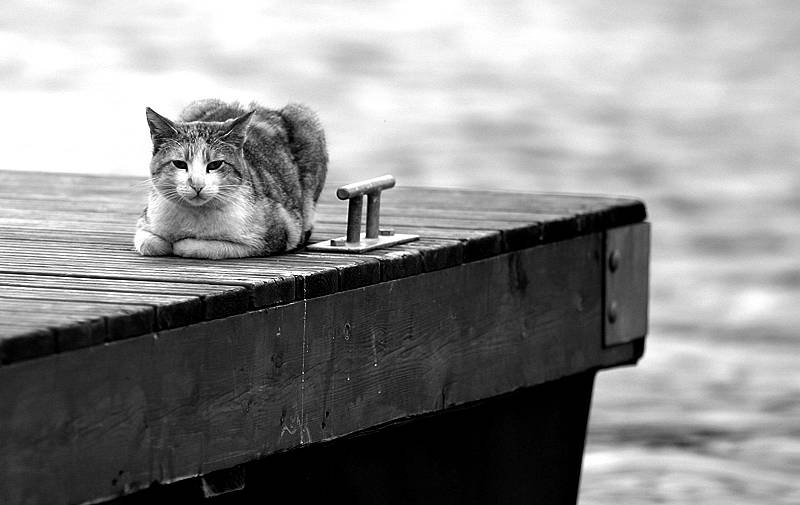
rush
|
 |
Tokyo
Jul 2002
time: 12:23
|
|
From Wikipedia, the free encyclopedia, some history about Shogun Tokugawa Ieyasu.
----------------------------------------------------------------------
Tokugawa Ieyasu
From Wikipedia, the free encyclopedia.

Tokugawa Ieyasu (January 31, 1543 - June 1, 1616) was the founder of the Tokugawa shogunate of Japan, and is commonly known as one of the "three great unifiers" of feudal Japan (the other two are Oda Nobunaga and Toyotomi Hideyoshi).
Ieyasu, the son of Matsudaira Hirotada, was originally daimyo of Mikawa (eastern part of present-day Aichi prefecture) but was displaced to the Kanto region during Hideyoshi's rule. Ieyasu's influence made him an important ally of Nobunaga. After Nobunaga died and Hideyoshi became Japan's dominant ruler, Ieyasu was named as one of five regents (tairo) with the responsibility of looking after Hideyoshi's son, Toyotomi Hideyori.
When Hideyoshi died in 1598, Hideyori was only five years old. The boy was placed in the care of Toyotomi's closest ally, Maeda Toshiie, also on the Council of Five Regents. It is often said that Ieyasu at this point saw a chance to usurp power from the Toyotomi "loyalists," and assembled an "eastern army" to take on the supposedly "loyal" Ishida, a member of the Five Commissioners. But of this we cannot be certain, however likely it may seem. Wether these allegations are true or not, Ieyasu had the responsibility to maintain the unity that Hideyoshi had achieved, which was in question what with the rather precarious balance of power after Hideyoshi's death (there was no real leader of the country such as when Hideyoshi was alive). In fact, Ishida schemed to ostracize Ieyasu from the rest of the council of five regents, and after various attempts, deaths, and occurences, assembled his "western army" in open revolt against Ieyasu (who had not abandoned or betrayed the Council), representing his own cause as the cause of Hideyori (for more detail about the situation and turmoil before, during, and after the Battle of Sekigahara, as well as the role of the Council of Five Regents, A History of Japan 1334-1615 by George Sansom is suggested reading).
The ensuing Battle of Sekigahara (1600) ended in a crushing defeat for Ishida's "western army." In 1603, Ieyasu became shogun of an almost entirely unified Japan, a concept that had been abandoned by Oda Nobunaga and Toyotomi Hideyoshi, establishing a stable government that would last more than two hundred fifty years. He abdicated in 1605 in favor of his son Tokugawa Hidetada. In 1614 and again in 1615 Hidetada as shogun, and Ieyasu as retired shogun, seiged Hideyori at Osaka Castle to prevent him from disrupting his stable new form of government, eventually breaking through and destroying the Toyotomi clan.
The Tokugawa shogunate he founded would endure until the mid-19th century. The foundation of this political stability lay in institutional changes enacted by Ieyasu, some of which he drew from the policies of Hideyoshi. Like Hideyoshi, Ieyasu allowed his vanquished enemies to retain their titles in return for oaths of allegiance. He also institutionalized the daimy¨ in the han domainal system, which provided greater incentive for stability to those in power. These institutional changes, coupled with his grandson Iemitsu's implementation of the sankin kotai (alternate attendance) system, layed the foundation for political stability in Japan that would last for over two centuries. While it was a time of strict seclusion from the outside world, it was also blessed with peace and stability.
Ieyasu had many sons. He established three of them as the heads of collateral (shimpan) households that would be the daimyo of major han and would, if necessary, supply future shoguns. The senior house was the Owari Tokugawa, with its castle at Nagoya, a strategically important location on the Tokaido in present-day Aichi Prefecture. Next was the Kii (or Kishu) Tokugawa, at Wakayama. This location, south of Osaka and Kyoto (where the shogunate maintained strongholds) provided a significant presence in Kansai and on the Seto Inland Sea. The eighth shogun, Yoshimune, was born into the Kii line. Third was the Mito Tokugawa, its domain controlling a major part of the Kanto along the Pacific coast. Other sons took the Matsudaira surname (Ieyasu's hereditary surname) and became daimyo of lesser han.¡¡Yet another was born to a mother who was related to the Takeda clan (of which Takeda Shingen was the most famous member) and took the name Takeda Nobuyoshi.
Following the custom of the times, Ieyasu used strategic marriages to further his aims. For example, Toku-hime, his second daughter, married H¨j¨ Ujinao to secure peace in and near the Kanto region; on his death, she married Ikeda Terumasa, a daimyo of the Chugoku region, and their sons Ikeda Tadatsugu and then Ikeda Tadakatsu in turn became daimyo of Okayama.
Though his descendants prohibited Japanese from traveling abroad or interacting with foreigners on punishment of execution or exile, Ieyasu actively involved in foreign trade. During his time, many Japanese went to Southeast Asian ports on board red seal ships, while all foreign merchants, including Chinese, Portuguese, Spanish, Dutch, English, and Siamese, were welcomed in Japanese ports. William Adams, who was shipwrecked on Japan from a Dutch ship, was a foreign adviser to the first shogun.
Ieyasu's rise is among the most famous stories in Japanese history. It was adapted by James Clavell for the novel Shogun. In the novel (and subsequent mini-series), Ieyasu was portrayed as a fictional Shogun named Toranaga.
Ieyasu was enshrined in Nikko after his death, and his mausoleum, Nikko Toshogu is a popular tourist destination today. Sargent (1894; The Forest Flora of Japan) recorded that a daimyo who was too poor to offer a stone lantern at the funeral requested instead to be allowed to plant an avenue of sugi, 'that future visitors might be protected from the heat of the sun'. The offer was accepted; the avenue, which still exists, is over 65km (40 miles) long, and 'has not its equal in stately grandeur'.
|






 01-06-2005 19:24


 Attachment:



 |
|
 |
|