 |
| |
|
| |
|
| |
|

|
Asher
|
 |
Calgary, Alberta
Nov 1999
time: 22:36
|
|
Good article.
quote:
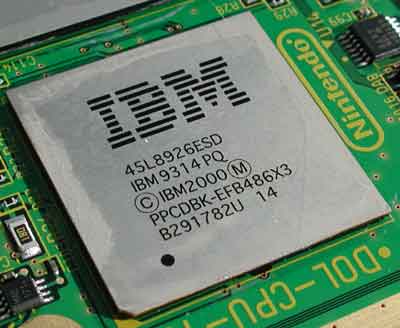
Now Jobs is angry at IBM, and an angry Jobs is not pleasant to deal with. But things could be patched up, right? Maybe, but maybe IBM didn't see any reason to smooth things over and kiss the ring, as it were. Apple buys a lot of chips, but IBM CPUs are in every one of the three major upcoming game consoles. The market-share winner alone will assure tens of millions of CPU sales.
And IBM doesn't really care who wins because they get paid for every single unit sold: Sony, Nintendo, or Microsoft. What's 5 million Macs a year compared to 20 million game consoles? And over 5 years, IBM can sell the "same chip" (maybe with fabrication refinements that save IBM money anyway) up to 100 million times. It's a lot harder to do that with a Mac (although Motorola sure tried...)
It's a simple equation really: angry Jobs plus an IBM that doesn't feel like it needs Apple anymore equals no more IBM CPUs for future Macs. The only remaining question is how much weight to assign to each component of the equation. I think Jobs was by far the biggest factor—not just his anger, but also how the Motorola experience shaped his thinking. |
Ding ding ding, we have a winner. 
|
|
| |
|
|
|
Asher
|
|
Calgary, Alberta
Nov 1999
time: 22:36
|
|
IBM didn't wait too long to start putting the G5 into other devices. 
http://news.com.com/IBM+brings+Powe...ml?tag=nefd.hed
quote:
IBM brings Power blades to telcos
Published: June 7, 2005, 11:38 AM PDT
By Stephen Shankland
Staff Writer, CNET News.com
TrackBack Print E-mail TalkBack
IBM's JS20 blade server, a model based on Big Blue's PowerPC 970FX processor, now is available for use in the BladeCenter T chassis designed for telecommunications customers, the company said Tuesday. The BladeCenter T is a version of the blade chassis that meets telecommunication industry needs for withstanding shock, smoke and extreme temperatures; previously IBM only sold blade servers with Intel's Xeon chips for the chassis.
In addition, IBM will load versions of Linux on the systems and integrate it with software from Motorola, Fujitsu Siemens and Clovis. The move puts more pressure on Sun Microsystems, which counts telephone companies and financial services companies as core customers. |
|
|
| |
|
| |
|
|
|
Asher
|
|
Calgary, Alberta
Nov 1999
time: 22:36
|
|
http://www.beyond3d.com/forum/viewt...der=asc&start=0
It's official: No harddrive on the PS3.
You'll still be buying overpriced memory cards for tiny storage.
No level caching, crippled downloadable content...
quote:
Ken Kutaragi Interview by Hiroshige Goto - pt.1 : "We Change Computing by PLAYSTATION 3"
The Reason Why PLAYSTATION Is In Capitals
Goto: PS3 is, if you look at just the spec, a full-spec computer. Why did you make it so rich?
Kutaragi: Since the beginning, we've been trying not to do a game console for children, but to do a computer for entertainment that grownups around the world can enjoy. We've been thinking about doing a computer thoroughly. Meanwhile, finally, PC has come to the dead end. So, this time, we want to do the next computer with partners such as IBM in an ensured way.
What we are thinking about this time is to change computing itself thoroughly. We want to change the paradigm. We want to set PS3 as the benchmark of everything.
G: Though its goal is a general computer, you took a game console as its form in the beginning.
K: A game console... maybe. At E3, it's a game console, and its applications are games. We really want to do computer entertainment. Other companies may call theirs game consoles, but we've been calling it as computer entertainment in press releases all along. It's entertainment and computer as well. It's important.
At this '3', for the first time we made the word PlayStation all capital "PLAYSTATION". We named it "PlayStation" at first, as workstations were our dream computers. We added the "PS" logo to it as PlayStation is a trademark and starts with P and S. But this time we use "PLAYSTATION" in capitals.
It's because, basically, with PC and all going to the dead end, it leads to nowhere if you ask whether it's a PC or a game console. I think we've entered the era in which you ask what is the next playstation. So PLAYSTATION is "The playstation". We do it for a bit of pride too.
Until now, it's said "let's take functions in arcade boards or workstations", or in the case of Microsoft, they said they'd use a cutting-edge PC as a game console. But it's no more. PLAYSTATION will develop as PLAYSTATION.
Calculations by A Cell Processor Will Produce Difference
G: So PS3 is a computer and its purpose is entertainment.
K: Of cource, in the beginning, it's about what's interesting as a game console, and as computer entertainment.
In PS1, making 3D or not was the biggest differentiation factor. In PlayStation 2, it was the mission to bring 3D in the complete single-standard format - complete NTSC and PAL - in full color. This time, it'll be the crucial difference from other platforms that we make it all computing. In the background of graphics, it does vast calculations, and it produces difference.
G: It does various simulations such as physics simulations, and operations such as AI, synthesis, in its background.
K: You can't see by just a glance if it's calculated by a Cell Processor or not even though it can show a beautiful HD video. But, if you look at it carefully, calculated things and only converted things are clearly different. You can feel it as an awesome thing when you see it, as it's calculated. You can do thing you've never seen, you can enjoy contents themselves.
In the case of other companies, the inside is the same even though its graphics becomes HD. They hardly calculate things. Like hardly doing physics and just adding a motion by a motion capture. Even though you can't tell by just a glance, such differences can be seen quickly.
G: Do software developers understand that point?
K: I think developers have an undestanding of it. At E3 demo, they tried to do it in real time on the spot rather than prerendering and precalculation. At E3, many demos do various calulations in the background. Also in graphics, how it moves is all done by calculations. Things that couldn't be calculated without huge time until now, they can be done on Cell (in realtime). They'll try to create games that take advantage of it.
Also for audio, it's natural that it doesn't have an audio chip. It's because we calculate it (with Cell). The audio is not like how many voices you have - the audio itself becomes an object.
Between our demo and their demo, such contriving is the difference. They are different more than just the look. I think most people who attended the E3 press conference understood it. A certain famous journalist let slip a word that XBOX is 1.5 while PS is 3.5 as it was above the expectation, they are different like that.
The Difference Between PS3 and XBOX 360 You Can't See From The Specs
G: The messages are clearly different between XBOX 360 and PS3. XBOX 360 pushed the image that they could prepare a solid game console as a platform. PS3 emphasized the possibility of the technologies.
K: This time, Microsoft clearly profess that they are chasing PlayStation. However, what they are chasing are not PLAYSTATION 3 but PlayStation 2. Because they don't know PS3 we are just making now. They become like that as they look at PS2. The goals are different. However, most people can't tell the difference just by looking at the specs. We got mistaken in a similar way in the time of PS1. We'd been evaluated that the both were 3D, along with 3DO. Even though we argued that PS1 calculated 3D while 3DO didn't, we were said that the both were 3D and had CD-ROM, it's terrible like that.
This time, either, they may not be able to see the difference between PS3 and XBOX 360 if the spec sheets are shown side by side. But, at E3, many people said it was good to be able to come and see it, not by the spec. It'll be more infected and understood when it's released.
G: By PC getting to the dead end, do you mean with PC dragged by legacies innovation is difficult and you can't go nowhere?
K: (Current computers) can't make the most of it as a total even though individual devices have their performances. Various bottlenecks are found when you assemble them. If you can make the most of it, you ought to be do decent things if you combine 3.X Ghz Pentium 4 and boards by NVIDIA or ATI, but you can't.
What I call total is the buses, the loads, and other factors when they work together. You can't know it unless you do games (that have a high load). We made the architecture considering all those things. For instance, each SPE works indepedently, and SRAM is attached there, also large GPR (general purpose registers) are attached too. Because of that it can do huge calculations in realtime. Such an architecture is important.
Ken Kutaragi Interview by Hiroshige Goto - pt.2 : "Put a full-blown Linux on PS3 HDD"
The Age of Network Drive
G: PLAYSTATION 3 doesn't have a local HDD even though it boasts that much spec. Why?
K: We don't put an HDD in default. It's because it runs short no matter how much you add it. The next thing that will come is, without a doubt, a network drive. (A storage is) on a Cell server, you can access it via the network from anywhere. In your home, in your friend's home, from anywhere, you can see logically (the same network drive). Such a world.
However, the console itself requires HDD sometimes. So this time you can put a 2.5 inch HDD in there, 80GB and 120GB. It's very short, but it's for running an OS in a single console. Even though you have a tera-byte storage somewhere with a network drive, you have to have a drive in which an OS can run when you get an authentication as a single computer.
Put an OS To Be Seen As A Computer
G: Is it that you run an OS to use it as a computer?
K: What I find strange is that while we've been calling it as a computer all the time, in the same business world Nintendo affirms it's a toy, it's a toy, to the outside world. So, even though we make supercomputer-class things that require an export control, the offices regard it as a toy.
Even PlayStation 2 is seen as a game console though we made an awesome chip such as EE and run Linux on it. I'd thought it might become a bit better as Microsoft came from the IT world. But the awkward thing is that they don't say that as they don't want to break their own business. As they are thinking that it becomes a trouble for them if Xbox runs Windows, they are insisting that XBOX is a game console. What a troublesome thing.
This time, we position it as a supercomputer. However, as there are people who don't see it as a computer if it's not filed as a computer, we make it run an OS. Cell can run multiple OSes simultaneously. So, to run an OS as it is and to say it's a computer, it needs an HDD.
So, I think we'll put Linux (on an HDD) from the beginning... as a bonus. To file it as a computer.
G: For an OS to be run on Cell, Linux comes to mind.
K: Though Linux is also a legacy, it can be a initial lead. For Cell, an OS is merely an application (laugh). The kernel runs on Cell (Cell OS hypervisor) and it takes the style in which multiple OSes as applications run on top of that (virtual machine). Linux will be put of course. If Linux can be put, Lindows or anything can be put.
Also other PC OSs, if the vendors think they want, Windows or Tiger (Mac OS X 10.4), can be put on it. Perhaps even a different OS may emerge.
Drive The Ecosystem By PLAYSTATION 3
G: With an OS, people who write programs on it will appear. To make Cell succeed as a computer, an ecosystem must be run on Cell. It needs the establishment of an ecosystem where many people spontaneously write programs to impel further permeation of Cell.
K: Just like Apple Computer was open back then, if PLAYSTATION 3 is released and becomes open, an ecosystem will be driven. When it became Macintosh, even though Apple didn't do everything, Adobe came and someone came, the ecosystem took off. PC was like that originally. But they absorbed everything (into MS Windows)... Well, it may be their aesthetic, but it's become uncomprehensible even what an OS is.
Until now, we'd provided libraries and game makers had made things in-house, it's not possible anymore though. To do anything, you need a larger expansion. But it'll turn out like that I think. For example, what surprised us is that an iTunes-syncronization software for PSP was released quickly. If it's evaluated as interesting, various things that run on it appear.
G: Non-game softwares that take advantage of Cell will be released in a stream.
K: It'll be about what kind of software on what. For instance an HD video authoring software is basically the same as a non-linear authoring system in TV stations. What we want to do on PS3 is a software of that level. A non-linear authoring system is amazing, but it'll be more amazing if you bring it on Cell. You can manage to do it on a PC, but on PS3 it can be done with ease, you'll see the difference like that. Also, various applications that have been on PC, for example, a photo retouching software. Such softwares will be released rapidly. User interfaces will be interesting too. On PC, you have to wait for years from the XP UI to the next Longhorn. But, ours develop faster. For example, with an interface controlled by gestures and speech like Eye-toy, it becomes Minority Report. Of course such development will be reflected in games too.
G: Will the Cell computer of that time retain the PS3 form factor?
K: This form will prevail first. A keyboard can be connected, it has all of the interfaces required. You can do anything media and network. A thing as much general as this is open.
For instance, you can use everything openly with Linux, so everything is possible (for programmers). Also for graphics, it's the same as it has Shader (with its programmability). |
I cringe while reading most of that interview. It's just such blatant PR work.
But it had that useful nugget of information.
Last edited by Asher on 10-06-2005 at 19:05
|
|
| |
|
|
|
Atahualpa
|
 |
Hawthrone
Mar 1999
time: 06:36
|
|
What's this got to do with Apple and Intel?
quote:
K: We don't put an HDD in default. It's because it runs short no matter how much you add it. The next thing that will come is, without a doubt, a network drive. (A storage is) on a Cell server, you can access it via the network from anywhere. In your home, in your friend's home, from anywhere, you can see logically (the same network drive). Such a world.
However, the console itself requires HDD sometimes. So this time you can put a 2.5 inch HDD in there, 80GB and 120GB. It's very short, but it's for running an OS in a single console. Even though you have a tera-byte storage somewhere with a network drive, you have to have a drive in which an OS can run when you get an authentication as a single computer. |
So, if you have an old notebook (that you cannot sell anymore) you can scrap it and reuse the HDD in the PS3.
|
|
| |
|
|
|
Gatekeeper
|
 |
United States of America
Feb 2000
time: 23:36
|
|
quote:
Originally posted by Agathon
quote:
I, for one, will likely not get an iMac G5 now. Geez. Wait for Tiger to come o[ut, and look what I get. "Oh, hey, now we're going to switch to a different chip maker, buty, hey, don't worry, we'll think about you PPC-based Mac users. Yeah, sure we will. Yep. You betcha." |
It won't make much of a difference. Programs will be compiled as fat binaries for both architectures. There's no way software manufacturers could afford not to support any current new PPC mac for the next 4 years at least. There will be no compatibility problems with OS X compatible software. |
Good. I skipped a generation — G4 — so I'm not really keen on sticking with my trusty G3 for another two years. Sure, the machine runs fine, but it's all but impossible to get "modern" software to run effectively on it.
quote:
But it will probably be worth waiting a year to see what the Intel ones are like. If you want to play Civ II fork out now, since the Intel machines will probably not be classic compatible (a problem for about 2% of the mac using population). |
I'm leaning toward spending now, although I heard 10.4.1 no longer enables the Classic environment, so playing Civ II might already be a moot question. At least Civ III for the Mac is full "vanilla" (i.e. all the PC patches ported over ... 1.17[included], 1.21 and 1.29). Better than nothing, since the expansion packs aren't coming over.
quote:
Frankly some of the comments on various sites border on the idiotic. One guy thinks that switching to Intel will mean the mac becomes vulnerable to the viruses that plague X86 PCs. I don't know what drugs that dude is on. Some Wintel users seem to think they can buy a Dell and install OS X on it. I don't consider myself as really well informed on the issue, but these people are 'tards.
It's a new processor. Big deal. In 2 years no-one will care. Frankly, it looks to be less of a hassle than the move to OS X. |
Did you hear the latest rumor? The Earth is flat. No, really!
Gatekeeper
|
|
| |
All times are GMT. The time now is 05:36.
Apolyton Time is 00:36. |
top of page
|
|
|
Forum Rules:
You may not post new threads
You may not post replies
You may not post attachments
You may not edit your posts
|
HTML code is ON
vB code is ON
Smilies are ON
[IMG] code is ON
|
|
|
|
|
|





 07-06-2005 22:25





 |
|