|

|
Vince278
|
|
I heard of some in Iran.
|
|
| |
|
| |
|
| |
|
|
|
Alexander01

|
|
quote:
Originally posted by Lord Nuclear
That's a pretty small number, albeit larger than I thought. |
Small but thriving Zoroastrian communities are found in India, Pakistan, Iran and Afghanistan, and throughout a worldwide diaspora. Zoroastrian communities in the diaspora comprise two main groups of people: those of South Asian Zoroastrian background, who are known as Parsis (or Parsees), and those of Iranian background.
Zoroastrians in Iran have, like other religious minorities, survived centuries of persecution. Communities exist in Tehran, as well as in Yazd and Kerman, where many still speak an Iranian language distinct from Persian. They call their language Dari (not to be confused with the Dari of Afghanistan). Their language is also called Gabri (a derogatory term derived from the word for an unbeliever in Islam) or Behdinan (literally "Of the Good Religion"). Sometimes their language is named for the cities in which it is spoken, Yazdi or Kermani.
Parsis in South Asia have, by contrast, enjoyed relative tolerance. While the communities there are socioeconomically diverse, Parsis have gained a reputation for their education and widespread influence in all aspects of (especially Indian) society.
In addition, there is a growing interest among Kurdish people of various national backgrounds, as well as peoples in various Central Asian countries such as Tajikistan and Kazakhstan, in their ancient Zoroastrian heritage; many people in these countries now consider themselves Zoroastrian. In fact, UNESCO (at the instigation of the government of Tajikistan) declared 2003 a year to celebrate the "3000th Anniversary of Zoroastrian Culture," with special events throughout the world.
Small but fast growing Zoroastrian communities exist in major urban areas in the United States, Canada, England, Australia, and other countries.
Until 2002 the worldwide population figures for Zoroastrians had been estimated at anywhere between 180,000 and 250,000. NOTE: diaspora or worldwide population figures include both Parsis and Iranians; there is no way to estimate numbers of Parsis alone except when referring only to India. India's 2001 Census found 69,601 Parsi Zoroastrians. North America is thought to be home to 18,000-25,000 Zoroastrians of both Parsi and Iranian background. Iran's figures of Zoroastrians have ranged widely.
Since 2002 estimates have been sharply increased. According to www.adherents.com, which estimates the worldwide population of Zoroastrians at 2.6 million,
More recent publications of many major encyclopedias an world alamanacs include population estimates of 2 to 3.5 million... Since the terrorist attacks of September 11, 2001 and subsequent U.S.-led intervention in the Middle East, the Parsees of Iran, Iraq, Pakistan and Afghanistan have been receiving less persecution than before, and have been less reticent about identifying themselves, and there seems to be an increased respect for and interest in this classical Persian religion which was once one of the largest in the world.
|
|
| |
|
|
|
Alexander01
|
|
Zoroastrianism is uniquely important in the history of religion because of its formative links to both Western Abrahamic and Eastern Dharmic religious traditions.
Zoroaster's writings suggest a metaphysical dualism, but devotional monotheism (see henotheism), requiring adherence to Ahura Mazda. Many modern scholars believe that Zoroastrianism had a large influence on Judaism, Mithraism, Manichaeism, and Christianity because of Persia's connections to the Roman Empire and because of its earlier control over Israel under rulers such as Cyrus II the Great, Darius the Great and Xerxes I.
The timing of Zoroaster's life is significant for understanding the development of Judeo-Christian beliefs. Should it be before 1300 BCE (prior to Akhenaten) then Zoroaster would be the earliest monotheist known in any religion. Even a later date could make Zoroaster a template for Biblical figures who introduce monotheism over henotheism. More specifically, Zoroastrianism has been proposed as the source of some of the most important post-Torah aspects of Judaic religious thinking, which emerged after the Babylonian captivity, from which Jews were liberated by Cyrus the Great. As King and Moore wrote in The Gnostics and Their Remains (1887) "it was from this very creed of Zoroaster that the Jews derived all the angelology of their religion... the belief in a future state; of rewards and punishments, ...the soul's immortality, and the Last Judgment - all of them essential parts of the Zoroastrian scheme." Such arguments have been repeated many times since.
Because Zoroastrianism is thought to have emerged from a common Indo-Iranian culture that preceded Vedic Hinduism, scholars also use evidence from Zoroastrian texts to reconstruct the unreformed earlier stage of Indo-Iranian beliefs, and therefore to identify the culture that evolved into the Vedic religion. This has also informed attempts to characterise the original Proto-Indo-European religion (e.g. the god Dyeus who became Jupiter, Sabazios, Zeus, and Tyr).
By the way, all this is coming from an encyclopedia.
|
|
| |
|
|
|
Lord Nuclear

|
|
Nevermind.
Last edited by Lord Nuclear on 26-06-2005 at 22:06
|
|
| |
|
| |
|
|
|
molly bloom
|
 |
Lundenwic
Oct 2001
time: 15:33
|
|
quote:
Originally posted by Lord Nuclear
Erm, what people still practice the teachings of Zoroaster? |
Freddie Mercury's parents and other Parsees.
quote:
Parsis: The Jews of India (New Society 22/1/88) |
The Parsis are the oldest establishes Asians in Britain, but traditionally they have never drawn attention to themselves. Estranged from their communal roots, can they survive?
Take three men: a Liberal (Dadabhai Naoroji - MP for Finsbury 1892-95), a Tory (Mancherjee Bhownagree - MP for Bethnal Green 1895-1905) and a Socialist (Shapurji Saklatvala - MP for Battersea 1922-29). These men, Britain's first Asian MPs, all belonged to the small and highly influential Indian community known as the Parsis.
The Parsis are a community with a long tradition in public life in India itself. Wherever its members have settled, they have endeavoured to carry on that tradition. In recent years, for example, the Parsis in South Africa have emerged as the most eloquent critics of apartheid.
Parsis have been coming to Britain for over 200 years - longer than any other Asians. Yet how many people could say with any certainty what a Parsi was? Parsis in Britain have never drawn attention to themselves, or had much attention drawn to them. Among Parsis well-known here today are Freddie Mercury of Queen, Farrukh Dhondy (the Channel 4 editor and scriptwriter) and Zerbanoo Gifford (Liberal candidate for Harrow East at last election). None of them, however, is known as a Parsi, although Gifford at least is proud to be one. The oldest established Asian people in Britain remain a hidden minority.
From:
http://www.pemcom.demon.co.uk/queen/parsi.html
|
|
| |
|
|
|
sophist
|
|
quote:
Originally posted by molly bloom
Take three men: a Liberal (Dadabhai Naoroji - MP for Finsbury 1892-95), a Tory (Mancherjee Bhownagree - MP for Bethnal Green 1895-1905) and a Socialist (Shapurji Saklatvala - MP for Battersea 1922-29). These men, Britain's first Asian MPs, all belonged to the small and highly influential Indian community known as the Parsis.
|
It is believed that Feroze Khan, aka Mr. Indira Gandhi, had a Parsi father.
|
|
| |
|
|
|
evilnerd15
|
|
I would suggest adding the Temple of Solomon to the list of wonders.
|
|
| |
|
|
|
molly bloom
|
|
Lundenwic
Oct 2001
time: 15:33
|
|
quote:
Originally posted by LordShiva
great idea.
i definitely think an indian civ should be in there, but it's going to be hard. "King Rama" won't work - Rama is an Aryan/Vedic name that came with the invaders who replaced the indus valley civ. So are the ramayana and other vedic epics. And "Harappa," "Mohenjo-daro" are actually modern names of the towns near which the ruins were found. Noone knows the names of the original settlements. Including a "Vedic" civilization would be alot easier - city names, leader names, wonders, etc. are all readily available. |
If there's one thing I've felt that Civilization has lacked, it's been a sufficient amount or variation in non-European civilizations, or at least civilizations viewed as an integral part of Judaeo-Christian culture.
The Cholas might be a good Indian dynasty, I think.
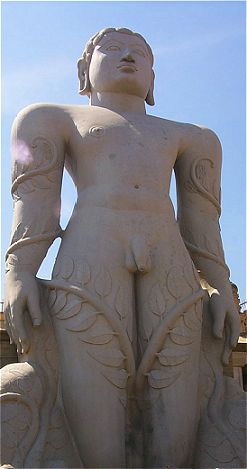
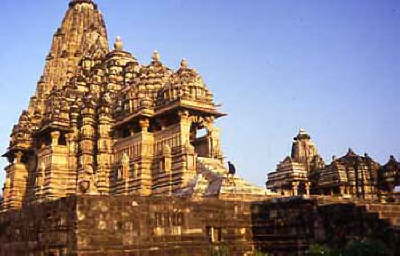
It would be pleasant to see early wonders that weren't Graeco-Roman or Hellenistic- like the temple complexes at Khajuraho, or Pagan, Borobudur or Polonnaruwa or the Jainist site at Sravanabelgola- with the 17 metre high statue of the sage, Gomateshwara, larger than any statue of Rameses II.
 Attachment: jainstatuesravanabelgola.jpg Attachment: jainstatuesravanabelgola.jpg
This has been downloaded 53 time(s).
|
|
| |
|
|
|
Alexander01
|
|
quote:
Originally posted by molly bloom
If there's one thing I've felt that Civilization has lacked, it's been a sufficient amount or variation in non-European civilizations, or at least civilizations viewed as an integral part of Judaeo-Christian culture.
The Cholas might be a good Indian dynasty, I think.
It would be pleasant to see early wonders that weren't Graeco-Roman or Hellenistic- like the temple complexes at Khajuraho, or Pagan, Borobudur or Polonnaruwa or the Jainist site at Sravanabelgola- with the 17 metre high statue of the sage, Gomateshwara, larger than any statue of Rameses II. |
Well, considering that the scenario is from 3250 BC to 1000 BC, the Chola are out, as they didn't exist for at least another millenium.
Since Jainism was started by Vardhamana Mahavira, who was roughly contemporary with the Buddha, their stuff is also too late.
As far as Graeco-Roman wonders are concerned, the Romans are too late as well. I think I only listed one proto-Greek wonder too. All the "classical" wonders would be too late, excluding the Pyramids.
The point of the scenario was to create a really archaic world, before the ancient (really the "classical") world that most people think about (Greek/Roman city-states, Maurya, Qin/Han Dynasties) actually existed.
In fact, it's pushing the limits to even include people like the Mycenaeans.
|
|
| |
All times are GMT. The time now is 05:33.
Apolyton Time is 00:33. |
top of page
|
|
|
Forum Rules:
You may not post new threads
You may not post replies
You may not post attachments
You may not edit your posts
|
HTML code is ON
vB code is ON
Smilies are ON
[IMG] code is ON
|
|
|
|
|
|






 26-06-2005 03:06








 |
|