 |
| |
|
| |
|

|
Waku
|
 |
Cádiz, Spain
Nov 2000
time: 06:14
|
|
That's a really hard job!
Mainly because I don't know exactly what to look for: Hesperides, fortunated islands, golden apples...
But you're a lucky guy JB 'cos this is the part of History I really really love: ancient sailors.
Here's the oddest description; according to Pausanias:
Un tal Eufemos de Caria relata que navegando hacia Italia fue desviado de su rumbo por un ventarrón y empujado hacia el Mar Exterior, donde nunca se navega y en el que hay muchas islas, unas desiertas y otras habitadas por salvajes. Los tripulantes no querían arribar a ninguna de éstas islas, a las que, como también a sus pobladores, conocían. Al fin se vieron obligados a acercarse a unas que los marineros denominaban de los Sátiros. Los indígenas estaban ennegrecidos y llevaban sobre las nalgas una cola algo más pequeña que la de los caballos. En cuanto vieron aproximarse el barco, corrieron a su encuentro sin proferir ningún ruido. Asustada la marinería, desembarcaron a una mujer bárbara, y los sátiros la violaron, no sólo por el conducto natural, sino por todo el cuerpo.
Source: Los Grandes Periplos de la Antigüedad by J.E.Casariego.
|
|
| |
|
|
|
Jay Bee
|
 |
Valladolid, CA
Jan 1970
time: 06:14
|
|
Here are a few keywords:
Macaronesia, Atlantis, guanche, Tyterogatra, Chenech, Jean de Bethencourt..
I''ll think of a few more. You may also want to use the names of the greek guys I gave, Colaios (Kolaios?), Strabo, and Herodotus
One day you've got to tell us what your secret ways are. I generally get very frustrated after trying a web search. Clearly I have no clue as to how do it right.
PS. Very descriptive paragraph. Yes, very descriptive. Cpoulos may want to use the translator. It's worth the effort.  You sure it refers to the Canary Islands? I did not know the guanches were so... uhm... hooliganistic. You sure it refers to the Canary Islands? I did not know the guanches were so... uhm... hooliganistic.
|
|
| |
|
|
|
Waku
|
|
Cádiz, Spain
Nov 2000
time: 06:14
|
|
and dusted off from my files...
Periplo de Hannon:
[i]"Periplo de Hannon, Caudillo cartaginés, por las costas de Libia, más allá de las Columnas de Hércules, puesto en ofrenda en el templo de Cronos, y que dice así:
1.Parecioles conveniente a los cartagineses que Hannon navegase más allá de las Columnas de Hércules y crease poblaciones de libiofenicios. Navegó, pues, llevando 60 pentecónteros y una muchedumbre de alrededor de 30.000 hombres y mujeres, mantenimientos y demás cosas precisas.
2.Después de haber pasado frente a las Columnas y navegado dos días fuera de ellas, fundamos (en una planicie grande) la primera ciudad, a la que llamamos Thymiaterion.
3.Proseguimos siguiendo hacia Occidente y llegamos a Soloeis, promontorio de Libia muy cubierto de arboleda.
4.Habiendo erigido allí un templo a Poseidon, continuamos rumbo al sol de levante durante medio día, hasta que llegamos a una laguna situada cerca de la mar, llena de juncos altos y apretados: había pastando
elefantes y gran número de animales bravos.
5.Un día más allá de esta laguna fundamos (¿repoblamos?) las ciudades marítimas llamadas Karikon-Teichos, Gytte, Akra, Melitta y Arambys.
6.De allí llegamos después al río Lixos, grande y que procede de Libia. Allí apacientan sus ganados los lixitas, que son gentes nómadas. Demoramos algún tiempo y entablamos amistad con ellos.
7.Más arriba viven los inhóspitos etíopes, en una tierra llena de fieras que estaban separadas por unas grandes montañas en las cuales dicen que nace el Lixos. También habitan en torno a esas montañas unos hombres de singular aspecto: los trogloditas, que son más veloces que un caballo a la carrera, según contaban los lixitas.
8.Tomamos intérpretes entre ellos y costeamos el desierto rumbo al Sur durante dos días, y después, hacia el sol levante, durante un día. Llegamos a un golfo, en el cual encontramos una pequeña isla de cinco estadios de bojeo, en la cual dejamos colonos. La llamamos Kerne. Por el viaje que hicimos juzgamos que estaba situada en la línea recta de Cartago y que era igual la distancia de las Columnas a Cartago que a Kerne.
9.Navegando por un río muy grande que se llama Xetes fuimos a dar a una ensenada fluvial que contenía tres islas mayores que Kerne, desde las cuales llegamos en un día al fondo de la ensenada, dominada por unas montañas altas en las que había hombres salvajes vestidos con pieles de animales, que nos arrojaron violentamente piedras y no nos dejaron desembarcar.
10.Navegamos hasta entrar en otro río grande y ancho lleno de cocodrilos y caballos de río (hipopótamos). De allí tornamos hacia atrás y llegamos de regreso a Kerne.
11.Después navegamos hacia el Sur durante doce días costeando un litoral poblado por etíopes que huían cuando nos acercábamos. Su lengua (sus gritos) no era comprensible ni para los lixitas que nos acompañaban.
12.El último día fuimos impulsados hacia unas grandes montañas cubiertas de bosques. La madera de los árboles era olorosa y de diversas clases.
13.Habiendo bordeado esas montañas durante dos días, llegamos a una ensenada muy grande; a su alrededor se extendía una llanura. Durante la noche vimos con intervalos brillar fuegos, que unas veces eran más intensos que otras.
14.Después de haber hecho aguada, proseguimos nuestra navegación de costeo durante cinco días, hasta que llegamos a un gran brazo de mar que los intérpretes dijeron que se llamaba Cuerno Hespérico. En él existe una isla grande que tiene una bahía en la cual hay otra isla. Habiendo desembarcado durante el día sólo vimos bosques, pero de noche surgieron muchos fuegos y oímos sonar flautas y ruido de timbales, tambores y gran griterío. Nos sobrecogió el temor y los sacerdotes-augures dispusieron que abandonásemos la isla.
15.Nos alejamos precipitadamente y costeamos un litoral abrasado, lleno de emanaciones y arroyos de fuego que desembocaba en la mar. La tierra resultaba inaccesible a causa del calor.
16.Atemorizados por ello, nos separamos con rapidez. Durante cuatro días de navegación vimos por las noches la tierra llena de llamas. En medio había un fuego mucho más grande que los otros que parecía llegar a las estrellas. De día percibimos que era una montaña muy alta llamada Trono (Mansión, Carro) de los dioses.
17.Durante tres días costeamos arroyos de llamas y llegamos a un golfo nombrado Cuerno del Sur.
18.En el fondo de éste había una isla semejante a la anterior que tenía una bahía y en ella otra isla llena de hombres salvajes. Las mujeres eran muy numerosas y de cuerpo muy peludo. Los intérpretes las llamaron gorillas. Perseguimos a los varones sin poder apresar a ninguno, pues todos huían trepando por las escarpaduras y se defendían firmemente con piedras (¿flechas?, ¿subiéndose a lo alto simplemente?). Pero cogimos tres mujeres que mordían y arañaban a los que las traían, pues no querían seguirlos. Las matamos y llevamos las pieles a Cartago. No continuamos la navegación por falta de mantenimientos".
|
|
| |
|
| |
|
| |
|
|
|
Chris 62
|
 |
But I'm feeling MUCH better now
Jan 2001
time: 00:14
|
|
This is an idea (that it was a black nation) recently, but the historical evidence is against it. The Cartaginians were a samidic people, from their ancestors, the Phonecians. Coins from Carthage confirm this, as does the Roman historian Livy, but his works are incompleat. It is certainly possible that it was a mixed kingdom, but the physical evidence (such as the sculpture) tells a different story. Many historians believe that north africa was uninhabited from 12,000 B.C. to roughly 2,500 B.C. If that is the case, then they were not black kingdoms, but this is hotly disputed, from both sides. I think the truth is somewhere in the middle, but we may never know.
------------------
All knowledge begins with the phrase: I don't know.
|
|
| |
|
| |
|
| |
|
| |
|
| |
|
|
|
Masis
|
 |
London
May 1999
time: 05:14
|
|
Lets not deviate from the subject, but I can assure you that the Numidians were not Negroid as for example like a Nigerian is, this is only used for Hollywood fiction to actract wider audiences like plays such as 'Othello' or 'Tytos Andronikos'.
Seen the film?
Here is a Link to find out about that shocking film.
Though the population of North Africa is in varying degrees mixed, take Morroco, you could find charcters who resemble Arabs, ones who resemble Iberians, and then of course the Berbers.
The same principle goes across all of north Africa.
Numidia comprised of inland Tunisia, the Numidians who were Hamitic (like Ethiopians) being the natives and the Semetic Phonecians being the new-comers to the area.
Certainly the possiblity that the Atlantic was crossed, or that Africa was circumnavigated exists in historical and Archaeological evidence.
As in the recently discovered human remains in Brazil, which when reconstructed facially, the person resembled a west African.
During the era of the Persian empire, a Phonecian captain as punishment was ordered by the Shah to sail around Africa (to gain knowledge of possible new resources) but the Captain found that Africa is huge, and stopped sailing down about the region of Cameroon and then sailed back.
In the meantime here is a link to some information on the Gaunches
And Here is some information on ancient Mauritania-not to be confused with Numidia, Mauritania comprised of modern north coastlines of Morroco and Algieria.
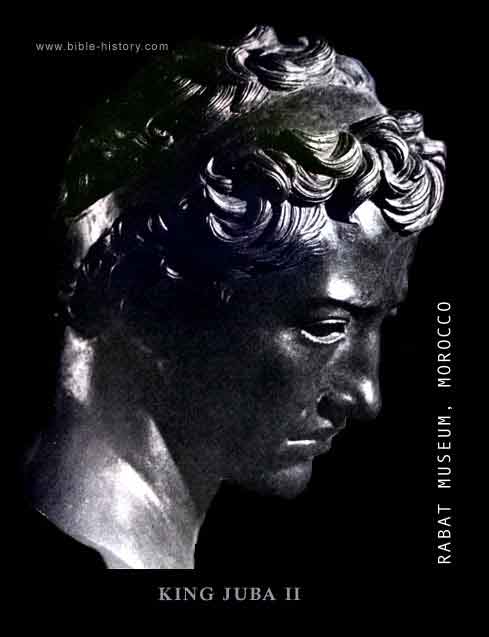
The parentage of Juba II, if you look him up on a Search Engine will explain to you for example that his mother was from the Ptolomaic dynasty that ruled Egypt after the death of Alexander the Great, Ptolomy being one of Alexander's generals.
Just like today, many monarchys were of foriegn origin.
P.S. Self promotion is no bad thing, others do it in extremes and if you don't shout in this World no one will Hear you...
------------------
MRP
|
|
| |
|
|
|
Prometeus
|
 |
of Old Europe - "In America we don't trust"
Jun 2000
time: 06:14
|
|
quote:

Originally posted by Masis on 03-02-2001 01:46 PM
Lets not deviate from the subject, but I can assure you that the Numidians were not Negroid as for example like a Nigerian is...
Though the population of North Africa is in varying degrees mixed, take Morroco, you could find charcters who resemble Arabs, ones who resemble Iberians, and then of course the Berbers.
|
I'm not deviating from the subject... Gomeros Berbers ( Gomera ) still exist today in Morocco - three tribes - but they live in a deeply arabized land, so their language and culture will be cancelled soon.
As a matter of fact, Iberi, Ligures, Sardi, Libi and Mauri are grouped together into ancient Mediterranean western languages. 
|
|
| |
|
|
|
Masis
|
|
London
May 1999
time: 05:14
|
|
No no, Prometheus i am not saying -YOU- are deviating from the subject of ancient knowledge of the Canary Islands, I am accusing MYSELF of deviating, it is a problem I have, but then again history is inter-related and so it is impossible to understand one area of it without having to resort to looking into the history of another area of it-like north Africa and Hispania.
The above quotes appear to say that I simply state that north Africans were not Negriod, it is important to read the original source of those quotes in order not to mislead yourself into thinking this is somekind of Rascist comment.
The reason why it is not likely that the people of north Africa were purley Negriod can be summoned up like this-the distance from Cadiz to Oslo is the sam as the distance from Tunis to Lagos in Nigeria.
Now the intervening distance carries with it changes in climate and thus in the appearances of the people who live in those regions, be it the difference in clothing to the difference in physic.
The Scandinavians are of marked difference to the Andalusians.
The same goes for the Numidians (natives of Tunisia) and the Negroes of western and southern Africa.
If this statement hurts the simplistic idea that everyone in the huge continent of Africa is Negroe, then so be it, because not everyone is, just as not everyone in Asia is Chinese, some are Indian, for example.
However-the possibility that the Olmecs were Negroid is viable...
------------------
MRP
|
|
| |
|
| |
All times are GMT. The time now is 05:14.
Apolyton Time is 00:14. |
top of page
|
| archivepost |
|
Forum Rules:
You may not post new threads
You may not post replies
You may not post attachments
You may not edit your posts
|
HTML code is ON
vB code is ON
Smilies are ON
[IMG] code is ON
|
|
|
|
|
|





 02-03-2001 02:39


 Please help me out!




 |
|