|
| |
|

|
Harlan

|
|
Berkeley, CA, USA
Aug 2005
time: 21:15
|
|
Aaagh - too many Jesuses!  Jesus M, when you emailed me with a city list, I thought it was Jesus B, cos he'd emailed me with a city list earlier. I sent Jesus M the lastest of the map I'm working on, thinking it was going to Jesus B. Jesus M, when you emailed me with a city list, I thought it was Jesus B, cos he'd emailed me with a city list earlier. I sent Jesus M the lastest of the map I'm working on, thinking it was going to Jesus B.
So, to make sure that all the Jesuses of the world (and anyone else interested) can see what I'm doing I'll post the map here instead of emailing.
Note this is just part of the larger map, which goes all the way to and includes Greece.

Some problems I'm having. Regarding Tartessos (oh no, not again!), I understand the last estimates of its existence as some kind of political unity was in 510 BC. Probably earlier. Rome, however, only became independent in 509 BC. Most of my data is for 500 BC exactly. So, should I move back the scenario starting time a few decades, to include the destruction of Tartessos war, or have it start in 500 BC with Tartessos already destroyed and maybe Turdetanians in their place?
What to do with Olisipo is also bothering me. I think its a total shot in the dark if its Tartessian, Phoenician or Iberian, and I can't make up my mind. I have to give it to somebody!
How should I break up the non-Greek and Carthaginian element of Iberia into civs, given I have a limited number of slots? I could add one or two more civs in Iberia, if there's good reason to.
Finally, regarding the cities in Iberia in 500 BC. Thanks a ton for everyone's help so far. Kindal, I haven't included any from your most recent list (yet) cos you didn't tell me which one if any from that list is IMP IMP!
But this is a general problem I have, that we could probably come up with lots of candidates, probably more than I'd want to add (I could add some more to the map, but who knows, there may be dozens more lurking out there and that's too many). So which ones really are THE biggest and best city candidates for 500 BC? What's the evidence for the ones on the map right now that they even existed in 500 BC? The Greek and Carthaginian ones on the map right now I'm confident in, but for the others I mostly have nothing but a city name from someone's list, and would like to know more.
|
|
| |
|
|
|
kIndal
|
 |
de la taifa de Almería, Spain.
Oct 2000
time: 06:15
|
|
Olisipo...I believe it was a celt iberian city.
About my list the biggest were Malaca, Sexi, Abdera, Basti, Urci and Castulo, other ones with some importance were Ilorci (it had a important siege agaisnt Romans), Masti (but their situation is unkwoned), Baria (was a middle phoenician village), Ilici ( I amnot sure but UI believe it was a important one, I dont remember why)
|
|
| |
|
| |
|
| |
|
|
|
Harlan
|
|
Berkeley, CA, USA
Aug 2005
time: 21:15
|
|
Kindal,
I'll be happy to add some more of those cities, but please tell, what exactly is the evidence making you mark some cities with IMP? For all I know, you could be completely mad, and just marking cities IMP at random.  We especially need to be careful of the 500 BC date, and not just have cities that were big a few hundred years later when the Romans came. We especially need to be careful of the 500 BC date, and not just have cities that were big a few hundred years later when the Romans came.
Prometheus,
Here's some text I posted earlier in this thread, from some kind of La Coruna history website I found. I gathered from this that Brigantium was the name the Romans gave it, and the name prior to that was Corunna or something close to it (Crunna, perhaps).
"La Coruña, has always been a city with a rich sense of history. Due to this historians often dispute the various possible origins and changes with which the city's name has undergone. Differing ancient civilizations always recognized it, but refered to it by different names. "Brigantia" for the Romans, "Far" according to documented Viking sagas of the VII century. By the way, "Faro" in Spanish means lighthouse - furthering the belief that there is a probabe nexus there. In the Latin age La Coruña was called "Clunia or Crunia." According to the evidence of that historical period, King Breogan supposedly founded the city at the start of the XII century BC... The first name registered as legend has it was "Crunna" - which is but another derivative of name of the city... Other historians believe that the name of the city originates from the god "Cronos" , a possible derivative of either Cronia, Crunia, or Coruña."
Jay Bee,
I will make the Cordoba change - you sure though, that that was the name way back then? That would be really incredible consistency. Also, you mentioned something about having a Tartessos city list - I'm not interested in the whole thing, but which ones were clearly the biggest (that we know of)? Or, to put it another way, how would you change that part of the map, keeping in mind that I can't have two cities only a few miles from each other.
Marquis,
About Olisipo. Since Civ3 is different from Civ2, I can do some different things. There's the cultural aspect, so I can have some citizens in Olisipo be Tartessian, others Iberian and still others Carthaginian. That way, whichever of the three civs conquer it, they have some friendly and some hostile population to deal with. Perhaps what happened in real life was that it changed hands several times through the centuries.
|
|
| |
|
| |
|
|
|
Harlan
|
|
Berkeley, CA, USA
Aug 2005
time: 21:15
|
|
Here's some info Firaxis has released:
Every population point that gets built in Civilization III has a nationality. If you're France, every person that's born in one of your cities is French, and they have cultural ties to France.
When a city is conquered by a civ, the citizens in the conquered city will retain their nationality, even as new citizens are born with the nationality of the conquering civ. For example, if the Greeks capture Paris, a pop 5 city, all five of those existing citizens retain their French nationality, even though new citizens that appear in the city will be Greek. These "foreign nationals" may "resist" for many game turns, depending on the cultures of the conquering civ and the conquered civ. Resisters do not generate any output and can throw your cities into revolt.
This can have dramatic effects upon the game, especially during times of war. Say, for example, the Romans capture a Babylonian city, the Babylonian people will become resistors. Not only will they refuse to work, but they will lower the defense value of the city so that Babylonian forces can easily retake it. And in a worst-case scenario, some cities may even revolt and try to revert back to their original civilization.
Regardless of how strong your culture is, there is always the possibility that a smaller captured city with fewer cultural points will revolt if its ties to the opposing civilization are too strong.
I took that from a good summary of all of Civ3's known features you can find here:
http://www.civfanatics.com/civ3infocenter.shtml
|
|
| |
|
|
|
Harlan
|
|
Berkeley, CA, USA
Aug 2005
time: 21:15
|
|
Shaka,
Sure I'll explain a bit more. The scenario covers the Western Med including Greece. Starts in 500 BC or so, goes to about 100 BC. The idea is to play either the Carthaginians or Romans. Its not just the Punic Wars, but also the economic build up leading to those wars. Rome will be very tough to play, starting with just one small city and surrounded by much bigger players. Carthage starts out with many cities, but most very small, and Carthage is a trading nation with very little military capability, esp. on land. Trading actually will be a very big part and is much better modelled than in Civ2. The Cornwall tin area in England just barely makes it onto the map, so we can move from arguing about that to actually playing it.
I don't envision having any (or only a few) events in the scenario - just set them up and let them go. But I will give special units and abilities to certain civs. The Romans in particular will have more Great Leaders and other advantages to compensate for their horrible starting position.
Does that answer your question?
Fiera,
That feature is definitely in the game. If they changed it they would have changed the description on the official Civ3 site, as they have for some other things.
Waku,
If you don't like the borders, please please tell me how to change them! I've already used up 13 of the max number of civs Civ3 allows (16). Let's see if I can remember off hand:
Persians
Greeks
Athenians
Spartans
Celts
Etruscans
Romans
Italics
Syracusans
Carthaginians
Massailians
Tartessians
Iberians
So that still leaves three. I may not want to use all three on Iberia, but I'm open to suggestions.
|
|
| |
|
|
|
Fiera
|
 |
Proud Member of the Spanish Gang
Mar 2000
time: 06:15
|
|
quote:
Originally posted by Harlan
Fiera,
That feature is definitely in the game. If they changed it they would have changed the description on the official Civ3 site, as they have for some other things. |
Great then! This means scenario creators will be able to depict very interestnig and complex situations, I like it! 
So regarding your scn, perhaps you can use this feature not only in Olisipo, but also in Carthaginian and Greek colonies (Gadir, Malaka, Sexi, Abdera, Emporion, etc), including a few Iberian citizens in all of them (most likely the workers or low class citizens if that's possible too).
Regarding the borders, I think they're not so strange, especially after your clarification regarding how will you use Celtiberians in the game. The only change I'd made is if you could extend south the western limit of the Celtiberian zone (does that sound clear enough?) As a matter of a fact, Helmantike was a Celtiberian city if I'm not wrong, and, perhaps Olisipo would fit under Celtiberain rule better than anything else, even if you plan on giving different nationalities to their citizens?
More ideas, who will be the Barbs? I'm not quite sure about how you want the Celtiberians and plain Celts to act on your scn, but I think these weren't much developed in Spain at 500 BC. Calling their settlements "cities" could even be too much.
Also, regarding the start date, you have a very interesting spot in 509 BC, date of the first treaty between Romasn and Carthaginians. Another landmark would be the Battle of Alalia (535 BC), where a Greek coalition fought against the Carthaginains and Etruscans.
The outcome of this battle was the reason given by Schulten to explain the promptly Tartessian decadency. Schulten thought it took the Carthaginians no more than five years to completely destroy Tartessos.
In fact, regarding the Tartessians, and no matter whether you give credit to Schulten, 500 BC seems to be a frank decadency period for them, and perhaps their inclussion in the scn is not that important after all.
The inclussion of Greece in the map brings some problems as well, 'cause Athens and Sparta existence will certainly much more boring without the Persians. I hope you get what I mean.
|
|
| |
|
|
|
Harlan
|
|
Berkeley, CA, USA
Aug 2005
time: 21:15
|
|
Fiera,
Hopefully that image I just posted makes things clearer. You can see that I'm including enough of the Persian civ to keep the Greeks busy. That's partly why I'm including the Athenians and Spartans as separate civs - so the Greeks will be too busy amongst themselves to do much elsewhere.
The Barbarians will probably be the Numidians (Africans) and the Illyrians in the Yugoslavia region. The Celts (and Celtic Iberians) I think are much underappreciated. As an example, look at all the dime a dozen maps of Greek and Phoenician colonies, yet to figure out the native equivalents or even bigger, we have to piece it together town by town. The more I'm learning, the more ancient towns I see they have. The Romans hated the Celts passionately more than any other people, and so always strove to depict them as more primitive than they really were.
I don't know if I'll put Iberians in the Carthaginian cities. Instead, my plan is just to make most of them very small- 1 or 2 population. The Carthaginian colonies started off mostly as very small trading posts - only 1 or 2 thousand people. The game also seems to have some slavery elements, so hopefully that can come into play. Mixed city populations will come in handy in many other cases though, for instance I can have most of the Persian cities on this map actually be ethnically Greek.
For the starting date, I'm leaning towards 500 BC or close to it, so perhaps the kingdom of Tartessos is destroyed by then. This is reflected in the new map, where their boundaries are more of the various ethnic groups down there, including the Tudetanians. I would like to hear more on why/when Tartessos was destroyed to make the final decision on this.
I hope the Iberian borders look better now - I was trying to match the borders of Waku's map in this latest version.
Shaka,
Yes I'm making this for Civ3. I'm not letting the fact that the game hasn't been released hold me back. I always do a lot of planning before I start making a scenario on the historical background, so I don't need the game to be released to be able to do that.
By the way, just today we got our first partial screenshot of some of the editing tools. Looks like no need to mess around with rules.txt anymore! Its yet another confirmation for Fiera about the race concept which may even be different from the culture concept (meaning, you have different races within one cultural grouping - the game ships with five cultural groupings each with their own architecture and so on). So races of the same cultural group as you can assimilate into your civ faster than those of different cultural groupings. That's just a guess, though)
http://www.cgonline.com/images/prev...i-03-p1-b14.jpg
|
|
| |
All times are GMT. The time now is 05:15.
Apolyton Time is 00:15. |
top of page
|
| archivepost |
|
Forum Rules:
You may not post new threads
You may not post replies
You may not post attachments
You may not edit your posts
|
HTML code is ON
vB code is ON
Smilies are ON
[IMG] code is ON
|
|
|
|
|
|





 15-10-2001 13:47




 Yes, a mess.


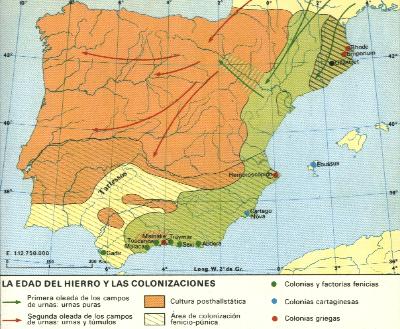
 just I write the names that appears in a book


 I hate when I don't come with the exact thing I was thniking of, but it happened again: this is not exactly the map I'd like to attach, but again it can be of some help:
 Attachment:
  Seems we posted at the same time.
 |
|