|

|
Hugfrty
|
|
Ship
High
In
Transit
Manure in a wooden ship for three or more monts is no good. (ie. It produces lots of highly explosive methane gas.) That was learned after a few incidents. It was then (and is now) shipped hiher up in the cargo hold(s) of ships to allow the explosive gases to escape harmlessly into the atmosphere.
|
|
| |
|
|
|
123john321
|
|
When I was editing my diplomacy.txt, I found this will the French when demaning something...
Would you care to take part in our share-the-wealth program, Jon Doe?
|
|
| |
|
|
|
Aramis
|
|
Not where I was tomorrow, nor will be yesterday.
Dec 2002
time: 23:23
|
|
Not a quote, but the funniest request I get is another civ asking ME for a world map.
Also, back in mid-Jan, around Elvis' birthday, someone started a thread aftereeing kings in a mass-regcde game demand fried banana sandwiches. I think the thread was called "Fried Bananas."
|
|
| |
|
|
|
123john321
|
|
I suck THAT bad?
|
|
| |
|
|
|
Boris Godunov
|
 |
Portland, OR
Aug 2001
time: 00:23
|
|
quote:
Originally posted by Hugfrty
Ship
High
In
Transit
Manure in a wooden ship for three or more monts is no good. (ie. It produces lots of highly explosive methane gas.) That was learned after a few incidents. It was then (and is now) shipped hiher up in the cargo hold(s) of ships to allow the explosive gases to escape harmlessly into the atmosphere. |
Nah, that is, pardon the pun, bullshit. 
Here's the origin:
http://www.wordorigins.org/wordors.htm#****
quote:
****
**** is a very old word, with an Old English root. *Scítan is the Old English word. It has cognates in most of the other Germanic languages and shares a common Germanic root with modern equivalents like the German scheissen.
*Scítan, however, doesn't appear in extant Old English texts and is only assumed to have existed in Old English. The verb to **** dates the Middle English period (c. 1308), and the noun form is from the 16th century. The interjection is of quite recent vintage, not found until the 1920s.
In 2002, an alleged acronymic origin for **** appeared on the Internet. According to this tale, the word is from an acronym for Ship High In Transit, referring to barges carrying manure. This is a complete fabrication and absurd on its face. All it takes to disprove it is to look up the word in any decent dictionary. Remember, anytime someone posits an acronymic word origin, chances are that it is utterly false. |
|
|
| |
|
| |
|
|
|
minke19104
|
|
I thought it was
Fornication Under Carnal Knowledge??
One of my High School teacher told me that.
|
|
| |
|
|
|
Boris Godunov
|
|
Portland, OR
Aug 2001
time: 00:23
|
|
F*ck doesn't come from an acronym, either...remember kids, when people give a word origin as an acronym, it's probably not true!
quote:
F*ck
Popular etymologies agree, unfortunately incorrectly, that this is an acronym meaning either Fornication Under Consent of the King or For Unlawful Carnal Knowledge, the latter usually accompanying a story about how medieval prisoners were forced to wear this word on their clothing.
Deriving the etymology of this word is difficult, as it has been under a taboo for most of its existence and citations are rare. The earliest known use, according to American Heritage and Lighter, predates 1500 and is from a poem written in a mix of Latin and English and entitled 'Flen flyys.' The relevant line reads:
"Non sunt in celi quia fuccant uuiuys of heli."
Translated:
"They [the monks] are not in heaven because they **** the wives of Ely [a town near Cambridge]."
Fuccant is a pseudo-Latin word and in the original it is written in cipher to further disguise it.
Some sources cite an alleged use from 1278 as a personal name, John le ****er, but this citation is questionable. No one has properly identified the document this name supposedly appears in and even if it is real, the name is likely a variant of fuker, a maker of cloth, fulcher, a soldier, or another similar word.
The earliest usage cite in the OED2 dates from 1503 and is in the form 'fukkit.' The earliest cite of the current spelling is from 1535.
The word was not in common (published) use prior to the 1960s. Shakespeare did not use it, although he did hint at it for comic effect. In Merry Wives of Windsor (IV.i) he gives us the pun "focative case." In Henry V (IV.iv), the character Pistol threatens to "firk" a French soldier, a word meaning "to strike," but commonly used as an Elizabethan euphemism for ****. In the same play (III.iv), Princess Katherine confuses the English words "foot" and "gown" for the French "foutre" and "coun" (**** and ****, respectively) with comic results. Other poets did use the word, although it was far from common. Robert Burns, for example, used it in an unpublished manuscript.
The taboo was so strong that for 170 years, from 1795 to 1965, **** did not appear in a single dictionary of the English language. In 1948, the publishers of The Naked and the Dead persuaded Norman Mailer to use the euphemism "fug" instead, resulting in Dorothy Parker's comment upon meeting Mailer: "So you're the man who can't spell ****."
The root is undoubtedly Germanic, as it has cognates in other Northern European languages: Middle Dutch fokken meaning to thrust, to copulate with; dialectical Norwegian fukka meaning to copulate; and dialectical Swedish focka meaning to strike, push, copulate, and fock meaning penis. Both French and Italian have similar words, foutre and fottere respectively. These derive from the Latin futuere.
While these cognates exist, they are probably not the source of ****, rather all these words probably come from a common root. Most of the early known usages of the English word come from Scotland, leading some scholars to believe that the word comes from Scandinavian sources. Others disagree, believing that the number of northern citations reflects that the taboo was weaker in Scotland and the north, resulting in more surviving usages. The fact that there are citations, albeit fewer of them, from southern England dating from the same period seems to bear out this latter theory.
There is also an elaborate explanation that has been circulating on the internet for some years regarding English archers, the Battle of Agincourt, and the phrase Pluck Yew! This explanation is a modern jest--a play on words. However, there may be a bit of truth to it. The British (it is virtually unknown in America) gesture of displaying the index and middle fingers with the back of the hand outwards (a reverse peace sign)--meaning the same as displaying the middle finger alone--may derive from the French practice of cutting the fingers off captured English archers. Archers would taunt the French on the battlefield with this gesture, showing they were intact and still dangerous. The pluck yew part is fancifully absurd. This is not the origin of the middle finger gesture, which is truly ancient, being referred to in classical Greek and Roman texts.
For more information on **** and its usages, see The F Word , by Jesse Sheidlower, Random House, 1999, ISBN 0-375-70634-8. This is perhaps the most comprehensive treatment of the word available.
|
|
|
| |
|
| |
|
|
|
Giovanni Wine
|
 |
Torino, Italian Wine Capital
May 2002
time: 06:23
|
|
This happened to me just last night, I was playing with Rome, and I met Cartaghe right at the start, Hannibal (which was on polite) called me and said
"Salute a te! Hai davanti a te Annibale, primogenito del Leone, orgoglio di Baal, eroe di Cartagine e rovina di Roma!"
Something that can be translated into "Greetings, I'm Hannibel, first son of the lion, glory of Baal, hero of Cartaghe and ruin of Rome
LOL, we just met, and he already claim he destryed my civ
Saluti
|
|
| |
|
| |
|
|
|
Aramis
|
|
Not where I was tomorrow, nor will be yesterday.
Dec 2002
time: 23:23
|
|
quote:
Originally posted by Olaf Hårfagre
A little thin reply. Can you explain why you think so? |
Surely.
Generally speaking, the earliest trends (before the Louisiana Purchase and the opening of the West) in migration/settlement in US history were westward towards the Mississippi Rv. then south towards the Ohio for those coming from New England and the Mid-Atlantic states. Or westward then north towards the Ohio for those coming from Virginia, Carolinas, and Georgia. Their cultures merged a bit north
Lincoln was born in Kentucky in a family who hailed originally from (I think) North Carolina. Anyway, he was a product of rural Southern culture. Kentucky did not secede from the Union (altho' early in the war tried to declare neutrality), but it is a southern state.
Lincoln moved 1st to Indiana, later to Illinois. In both states, the lower portions of the states were settled by southerners, while the upper portions were settled by northerners. Illinois remained in the Union (very loyal), but part of its roots were in the south.
The differences are minor between these "cultures." Today, in my adopted state of Indiana it is more common to hear people in the north say "certainly," while those in the south say "surely."
I don't see a case for irony in Lincoln's heritage vs. his position as president.
Peace--rmds
|
|
| |
|
|
|
mrmitchell
|
|
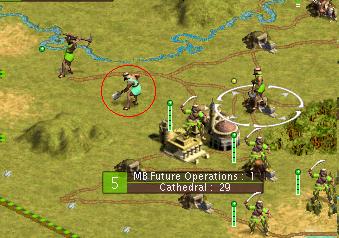
Apparently the Celt workers were bored because they wanted to share their skills with us, the Persians:
 Attachment: free_workers.jpg Attachment: free_workers.jpg
This has been downloaded 170 time(s).
|
|
| |
|
|
|
mrmitchell
|
|
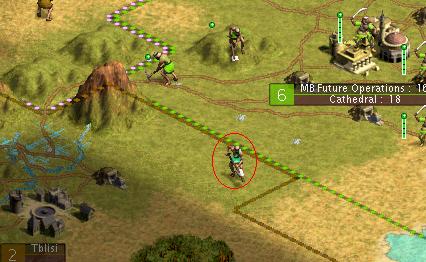
Apparently they wanted to help everyone, because a few turns later they were helping the ruskies:
Attachment: celts_and_ruskies.jpg
This has been downloaded 171 time(s).
|
|
| |
All times are GMT. The time now is 05:23.
Apolyton Time is 00:23. |
top of page
|
| archivepost |
|
Forum Rules:
You may not post new threads
You may not post replies
You may not post attachments
You may not edit your posts
|
HTML code is ON
vB code is ON
Smilies are ON
[IMG] code is ON
|
|
|
|
|
|







 08-03-2003 07:24


 (yeah,yeah, the 4 letter one




 |
|