|
| |
|
| |
|
| |
|

|
chegitz guevara
|
 |
Ft. Lauderdale, FL Communist Party of Apolyton
Jun 2000
time: 00:25
|
|
quote:
Originally posted by Ned
Monkspider, could you explain why you or anyone was against globalization? |
Anti-globalization is a misnomer. The so-called anti-globalization movement is not against globalization but rather the form it is taking. Rather than an autocratic process which takes place behind closed doors by officials beholden to no one, we want a democratic process where our labor and environmental rights are respected, where we the people have input into who shall represent us, where the poor conditions of the Third World will be visited upon the First World and where the Third World can prevent its people from being used like slaves and its environment consumed.
The "anti-globalization" network is a global network of First and Third World acitivists, labor militants, environmentalists, child advocates, etc. Many of the most important leaders of the movement come from the Third World; Ken Saro-Wiwa who was executed in Nigeria, for example (there's one woman from India who is very important).
We don't own the media, so we have been defined by those who oppose us and our views. That always happens to opposition movements, however. That's why we've had to create our own media, www.indymedia.com, which has its problems, but it's new and still learning.
|
|
| |
|
|
|
chegitz guevara
|
|
Ft. Lauderdale, FL Communist Party of Apolyton
Jun 2000
time: 00:25
|
|
quote:
Originally posted by Lawrence of Arabia
No, sorry che. Corporations are going to increase their supply until they have reached the profit maximization point. If their costs have decreased, they will increase the supply and decrease the price, and sell more and in the end make more profits then if they had simply pocketed it. |
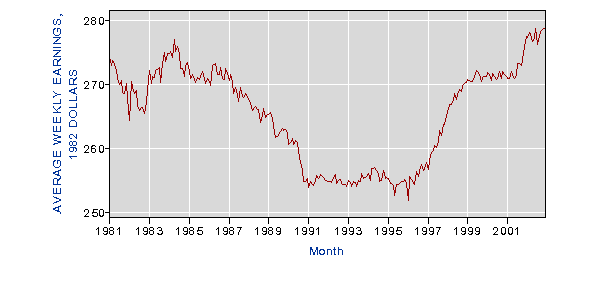
Yes, I know that's the theory. Be nice if that's how things worked in reality. Cars aren't less expensive. Clothes aren't less expensive. Most production moved overseas hasn't decreased costs here in the First World. That's what really happened. Now, it's possible costs didn't rise as quickly as they otherwise would have, and technology costs are constantly dropping. But in the end, prices have continuously gone up, not down. We've only had deflation in the last year, and that's because demand dropped precipitously.
|
|
| |
|
| |
All times are GMT. The time now is 05:25.
Apolyton Time is 00:25. |
top of page
|
| archivepost |
|
Forum Rules:
You may not post new threads
You may not post replies
You may not post attachments
You may not edit your posts
|
HTML code is ON
vB code is ON
Smilies are ON
[IMG] code is ON
|
|
|
|
|
|






 28-01-2003 05:27





 Attachment:
  |
|