|
| |
|

|
Trip
|
 |
Hunt Valley
Apr 2002
time: 00:26
|
|
Or perhaps a bit better phrased, "what do you think are the most necessary improvements?"
What do you think?
I have a couple things:
- Too easy to kill other civs/nations. Look at history. You very rarely see nations disappearing completely, and often times they'll come back to become dominant again (the case with almost any country in history).
- 'Feel' too rigid over history: Things generally play nearly the same from the beginning of the game to the end. At the beginning, the 'virgin map' is very awe-inspiring, and truly gives the feeling of trekking out into a vast and unclaimed world. I like how this was done. However, 5000 years later, it just feels like you've planted the landscape with a few buildings every 5 tiles and covered the world in a brown mess. Solution? Probably would take 30 pages in the design document.
- I still think that combat could be better balanced. The whole attack-defense-hit point system is okay, I suppose, but it's not real war. You don't move units around with hit points that regenerate by sitting on top of a hill. A few tweaks in this area could work wonders, IMO. There's something about two units doing hit point damage back and forth to each other that doesn't inspire the grand scope of what war has been over history (think Agincourt or Constantinople here).
Last edited by Trip on 09-03-2003 at 14:38
|
|
| |
|
|
|
alva
|
 |
Republic of Flanders
Sep 2001
time: 06:26
|
|
That's why a more dynamic world would improve things IMO.
As it stands, we are able to plot (+) 100 turns in the future.
(Which is the weakest part of the AI btw)
Some people start to beeline to Cavalry right from the first turn, planning where they will place cities and knowing what those cities will be worth in time, this IMO in the weakest part of a game like this.
You don't have to react to circumstances, no surprises or at least hardly any, the biggest one is missing a resource or one that depletes, or perhaps even a sneak attack. ( at which times Civ is the most fun).
Now lets's say we start off in a world where rivers are only one tile big, and over time start to flow in various directions or even dissapear.
That and sudden tile change ( pollution does this too, but at a time where is hardly going to make a impact and only negative at that), could make certain cities, for which you had high hopes render reduntant.
That would the player needing to improvise, replan, etc...and leave some uncertainty as to if you will win/loose, instead of more or less being certain you will, when you are only halfway.
|
|
| |
|
|
|
Trip
|
|
Hunt Valley
Apr 2002
time: 00:26
|
|
If you destroy a civilization, it has no effect on the game. 'Their' citizens become 'your' citizens instantly, and don't affect anything for the rest of the game. In reality, every 'civilization' has been conquered by another, usually to rise again. Civs being conquered never to emerge independent or important again is the rare exception, and no where near being the rule.
Whatever hit points represent, it's not realistic. Armies don't trade blows, sometimes dealing no casualties, sometimes wiping out a formation. Modifiers, terrain, etc. help change combat a bit, but two large formations fight each other piecemeal on a plain, then both will always take a fair amount of casualties.
I'm probably asking too much. 
|
|
| |
|
|
|
Trip
|
|
Hunt Valley
Apr 2002
time: 00:26
|
|
You can contend that 'mixed' cultures aren't really former civilizations, but what would make it the same civilization? Egyptians, Romans, various other Middle Eastern peoples (quite a few, though as you pointed out, many of them are no more), have exited in one form or another, often times as a 'mixed' civilization.
A few civilizations that it would have been 'game over' for, if they existed in the Civ world: Greece, Rome/Italy/Lombards/Whatever, Germany, France, Spain, England, Poland, Hungary, Czechs, Ukraine, any Slavic people you can think of, Korea, any African 'nation', the Mongols, and probably many many more particulars than I either don't remember or aren't mentioning.  Often these civilizations rose to their former glory, but even if they haven't, they still exist in some form or another. Often these civilizations rose to their former glory, but even if they haven't, they still exist in some form or another.
|
|
| |
|
|
|
Dominae
|
|
quote:
Originally posted by Trip
Too easy to kill other civs/nations.
|
It all depends on what you name things. Clearly people have descended from the roman civilization over time, but we would never call them "romans" anymore. Similarly with all other civs who are no longer recognized as a seperate entity. In Civ3, when my Mongols wipe out the Egyptians, I know there are still some Egyptian people kicking around, but you can bet they'll never come back to their former glory (Genghis makes sure of that!).
quote:
'Feel' too rigid over history
|
This is because Civ3 is a strategy game, not a historical simulation. If you want the latter, play Europa Universalis, or something similar. The fact that the game feels like it "plays out" the same all the time is simply because you know the game too well and always use the strategies that seem optimal/fun to you.
quote:
I still think that combat could be better balanced. |
If you look at entire campaigns and not just single battles, the combat system suddenly looks a lot better. An offensive campaign using Knights involves the coordination of many pieces and many battles in one single turn. If you look at this big picture, it will feel a lot more "realistic".
I quite like how combat was implemented. It makes for a simple early-game (which is as it should be), and a more complex late-game, but only because there are more units and special abilities. Thus you learn the game very easily and/or play through the turns very fast at the start, but things get naturally more compicated as time passes. If combat were difficult right away, you would lose a lot of players.
Dominae
|
|
| |
|
|
|
Trip
|
|
Hunt Valley
Apr 2002
time: 00:26
|
|
quote:
Originally posted by Dominae
It all depends on what you name things. Clearly people have descended from the roman civilization over time, but we would never call them "romans" anymore. Similarly with all other civs who are no longer recognized as a seperate entity. In Civ3, when my Mongols wipe out the Egyptians, I know there are still some Egyptian people kicking around, but you can bet they'll never come back to their former glory (Genghis makes sure of that!). |
The problem is there very well might be a way they could return to their former glory. However, there's no way for that to happen. If another civ has the upper hand, with enough time he can conquer another civ without fail.
quote:
This is because Civ3 is a strategy game, not a historical simulation. If you want the latter, play Europa Universalis, or something similar. The fact that the game feels like it "plays out" the same all the time is simply because you know the game too well and always use the strategies that seem optimal/fun to you. |
It's really just a personal nuance that I have, and not much a "I wish things were more realistic," etc. What I mean is that the 'feel' of the beginning of the game is good (every game), but it doesn't devlop the right feel as you continue further into the game, developing your terrain, building more cities etc. I can't really put my finger on it though.
quote:
If you look at entire campaigns and not just single battles, the combat system suddenly looks a lot better. An offensive campaign using Knights involves the coordination of many pieces and many battles in one single turn. If you look at this big picture, it will feel a lot more "realistic".
I quite like how combat was implemented. It makes for a simple early-game (which is as it should be), and a more complex late-game, but only because there are more units and special abilities. Thus you learn the game very easily and/or play through the turns very fast at the start, but things get naturally more compicated as time passes. If combat were difficult right away, you would lose a lot of players.
Dominae |
Comparatively, Civ 3 is not a very complex game at all. However, I suppose that's the main reason that the Civ series is as popular as it is, and why things like combat, et al won't ever change.
|
|
| |
|
|
|
Dominae
|
|
quote:
Originally posted by Trip
The problem is there very well might be a way they could return to their former glory. However, there's no way for that to happen. If another civ has the upper hand, with enough time he can conquer another civ without fail.
|
I just consider Civ3 rulers far more ruthless that real-life ones (a scary thought, I know). The alternative is for there to be a mechanism to ensure the complete destruction of a civ, but that it requires comparatively more time and resources than it does now.
In any case, I see your point, but unless you provide an idea for implementing this, I cannot really agree or disagree with much force.
quote:
It's really just a personal nuance that I have, and not much a "I wish things were more realistic," etc. What I mean is that the 'feel' of the beginning of the game is good (every game), but it doesn't devlop the right feel as you continue further into the game, developing your terrain, building more cities etc. I can't really put my finger on it though.
|
Quite the opposite from SMAC, where (I think) the game gets cooler and cooler as you go on.
I know what you mean about the beginning of the game being more fun, but I'm sure you understand that exploration and expansion must come to an end sometime, right? The problem is that these two fun things are not really replaced with anything, just more troop movement and improvement construction. But things are complex enough in the later-game (consider how the turns get longer and longer) that adding in some extra complexity would make it worse.
Dominae
|
|
| |
|
|
|
Trip
|
|
Hunt Valley
Apr 2002
time: 00:26
|
|
quote:
Originally posted by Dominae
I just consider Civ3 rulers far more ruthless that real-life ones (a scary thought, I know). The alternative is for there to be a mechanism to ensure the complete destruction of a civ, but that it requires comparatively more time and resources than it does now.
In any case, I see your point, but unless you provide an idea for implementing this, I cannot really agree or disagree with much force. |
I'm a history and computer science major, planning upon becoming a game designer. What that translates to is that neither you nor I want me to describe an alternative method for handling this, as it would take far too much of both of our time.
quote:
Quite the opposite from SMAC, where (I think) the game gets cooler and cooler as you go on.
I know what you mean about the beginning of the game being more fun, but I'm sure you understand that exploration and expansion must come to an end sometime, right? The problem is that these two fun things are not really replaced with anything, just more troop movement and improvement construction. But things are complex enough in the later-game (consider how the turns get longer and longer) that adding in some extra complexity would make it worse.
Dominae |
As you pointed out, this isn't the case in SMAC, which means that the problem isn't inevitable, even with the current game engine. I think you've hit the nail on the head with what you've said. At the beginning there's something specific to do, but later on nothing new emerges, where you just have more of the same to do. The game engine could be tweaked a bit to allow for the removal of some of the more menial tedium (make automated Workers smarter, some sort of interface to handle 200+ units, and 100+ cities, etc.). Once that is achieved, then 'flavor' could be added to make the middle and late game more enjoyable.
|
|
| |
|
|
|
CiverDan
|
|
Countries do get "wiped out". The only difference between civ and RL (in modern times at least) is that countries that were wiped out now get restored after the invading troops are expelled from the lands they invaded. France in WWII and Kuwait in the Gulf War are two recent examples. S. Vietnam was attacked and that country hasn't reappeared. The game is just unable to represent the current political landscape of today's world where its just unacceptable to attack a country and keep the land you take in most situations. (Imagine if the US attacked Iraq and tried to KEEP it. That would go over real well with the rest of the world.)
I do miss the random events. I wish there was larger scale random event too. Like asteroids, random climate changes etc. If the Tunguska event had happens over a populated area a major city could have been destroyed. There is also some evidence that natural climate changes also played a role in history. These things could have be implemented.
As far as hit points. It should have been changed so units can only heal in cities. Each "unit" represents probably a 1000 foot soldiers on average. each tank maybe 100 tanks. Each plane about 10. Only ships are truly 1 to 1 ratios and thats only when applied to carriers. When units are "damaged" it actually means a certain number of units have been killed/destoyed. So being able to "heal" doesnt make sense.
|
|
| |
|
|
|
Dominae
|
|
With Battlefield Medicine, Tanks can heal in open ground in enemy territory. Talk about a Wonder that comes right at the wrong time in the game (for purposes of realism).
Dominae
|
|
| |
|
|
|
Hugfrty
|
|
If you want large-scale army combat, buy CTP2. Its a great game although rather buggy (not too bad though). You can have 12 units on one tile as an army (no leader or leader-style nonsense required) and have them all attack or defend at once. Each type of unit has different roles in the combat (which is automated). There are standard attacking/defending units, which are *usually* hand-to-hand (especially early on) that can attack ONLY those units directly across from them. Ranged units are the same except they get an extra shot in as the battle starts and they can shoot from behind hand-to-hand units. Next, there are flankers. These things really rule. Although occasionally less powerful and DEFINITELY more expensive (including upkeep, which comes from your production pool, not your gold), these units can attack enemy units, even if they are not directly facing them. Auto-defend units are pretty good too. They automatically bombard any enemy units that stop too close to where they are fortified, assuming they are of the correct type (air, sea, or land). There are also a shitload of special "spellcasting" units that can plant nukes, steal technology, infect the city, release the plague, destroy the city with a massive "nanite bomb," steal production with a franchaise, incite a revolution, kill a public figure, advertise, convert their religious beliefs, and many more.
|
|
| |
|
|
|
Asmodeus
|
|
London
Nov 2001
time: 05:26
|
|
I love the game but a few things that could be improved:
Resources can be connected to any city in your empire via road, sea etc - but Food cant??? Why not? Why cant excess crops from cities unable to expand further (eg no hospital has been built) be shared throughout the empire instead of wasted?
Random Events - were a feature of SMAC i really liked. Lets have a small % chance of Volcano, Earthquake, Flood, Meteorite, Hurricanes (affect ships/aircraft & coastal cities), Pandemic (a plague that spreads over a wide area, maybe a whole continent like the Black death). I'm sure there are many others but i dont want to labour the point. The events could be scaled to the size of the map so they dont become intrusive - could also be an 'optional' rule.
More types of government or the ability to tweek them just like in SMAC.
Diplomatic Non Aggression Pact.
Optional Blind Research ala SMAC.
Automated commercial trade, ships, planes and freight. When trading with other nations have units automatically traveling on the map between countries(just a few obviously not thousands) - this allows enemies to attack your trade routes and gives your navy something to protect. It would also make Privateers worth while using and could be used to blockade islands like the u-boats in WWII.
|
|
| |
|
|
|
Dominae
|
|
Blind Research was a wonderful idea from SMAC that I'm surprised they did not make an option in Civ3. I would love to play some PBEM or AU games with blind research. Especially in SP, where a major key to success involves figuring out what the AI researches and reacting accordingly.
Dominae
|
|
| |
|
|
|
Vercingettyrex
|
|
Scotland
Nov 2001
time: 05:26
|
|
I really like the combat system in CIV3. I think it's one of the really great things about it. If there was a really good editor it would be possible to knock off a good WW2 - European theatre wargame using only slight modifications to the system. The bombardment concept in particular is an excellent modifcation to the original design.
The one area that I think needs tweaking is Diplomacy. The value of items such as trade goods and science advances doesn't seem to have an underlying rational such as the law of supply and demand that a player can use to help calculate what is a fair price.
I think that the culture idea is excellent as well. I just wish that other components of a civilisation such as law and religion had been given this sort of overhaul. At presen religion is very abstracted. I'd almost like it to be a seperate component like Government. Ritual sacrifice anyone?
Having said that, I'm not disapointed with any aspect of the game. These ideas never occured to me before playing the game and are only a result of having played it . Rather they are the same sort of feelings I had on playing CIV2 or SMAC, which is to say, wouldn't it be nice to be able to... The additions to the game were a real surprise and are most excellent.
Last edited by Vercingettyrex on 11-03-2003 at 01:06
|
|
| |
|
|
|
minke19104
|
|
Non Aggression Pact is in Civ 3 already... Just renegotiate Peace Treaty.
That's basically what Non Aggression Pact is, We agree no war for this sum of money, techs, etc. for 20 turns.
|
|
| |
|
|
|
Dominae
|
|
Mad Bomber, consider that the name of the Small Wonder is Battlefield Medicine and I think you'll see my point. I believe it was intended to complement Cavalry offensives, but the designers did not anticipate the rapid rush for tech in the Industrial corridor.
Dominae
|
|
| |
|
|
|
Structure
|
|
I'm not sure how you could implement point number one. I think the designers used culture flipping and corruption as a way of discouraging rapid conquest, or complete conquest. But clearly that is still the way the game is played. Some civs get crushed and incorporated into others never to reappear. But I'm not sure we'd achieve more "historical realism" by having civs reemerge. As other posts have noted, sometimes civs do persist over millennium, but more often they disappear. What we think of as persistence is often language based rather than culture. (The Persian example fits this. Though, Egypt is a good example of where even this is completely gone.)
Point two about the development of the map is well taken. The game becomes an overbuilt sprawl. Obviously, you can't have the exciting exploratory nature of early game. And there isn't really a need for it. That should be the fun of starting a new game! But something is needed to make the late game run smoother and produce less carpal tunnel. More effective automation of various tasks please! Also I think a total redesign of the landscape/landform might reduce the "fill every crack" sprawl. Perhaps reducing the amount of arable land? Or that in combination with production based upon acres within city radius which would be of much finer definition than "squares." Your workers would then be able to work x amount of acres of the land type based on tech and population. But the overhead sprawl would be limited. Add to this one obvious change: irrigation water is not unlimited! And many types of soil are not suited to irrigation anyway. Fresh water should be a limited and valuable commodity. War should be fought over it. Like in the real world. Also distance from the poles should influence production levels. With, perhaps, distance to equator influencing disease levels? (similar to jungles and disease now, but influencing production and pop)
The combat system is the final point I believe you made and in my opinion the weakest part of Civ3. I can think of several ways to improve it. Better balance between unit types so they all get built and used in their own ways being the goal. I would think a "rock, paper, scissors" system of bonuses would add tremendously to the combat system. Similar to Age of Kings and many other RTS games. Give certain unit types a small attack or defense bonus v. certain other types. For example, horsemen, knights, and other cavalry (until the development of breach loading carbines) shouldn't defeat fortified pikemen. Give the pikemen a large defensive bonus v. horse units. So how to defeat pikemen then? Bombarded, demoralized, or otherwise disrupted pikemen should be very vulnerable to cavalry charges. Foot infantry shouldn’t have a large bonus against pikes (historically swordsmen had very mixed results against well trained pike formations) but they should have a solid chance at defeating them. I could go on about various other types, but its all stuff that people have thought about and argued about a lot in other places. Esp. look at the forums for Medieval Total War. They have some awesome combat discussions.
Overall the Civ series is one of favorite all time games, but there is still a lot of room for improvement. The game company that does it right will be rewarded for it.
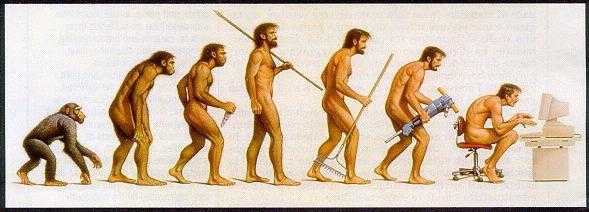
 Attachment: evol2.jpg Attachment: evol2.jpg
This has been downloaded 191 time(s).
|
|
| |
All times are GMT. The time now is 05:26.
Apolyton Time is 00:26. |
top of page
|
| archivepost |
|
Forum Rules:
You may not post new threads
You may not post replies
You may not post attachments
You may not edit your posts
|
HTML code is ON
vB code is ON
Smilies are ON
[IMG] code is ON
|
|
|
|
|
|





 09-03-2003 14:32




 |
|