|
| |
|

|
Paddy the Scot

|
 |
Hordeland
Mar 2001
time: 14:35
|
|
13 December 1941
My name is Charles Arthur Stuart. I am 22 years of age, from a small country town called Picton. Picton is an old colonial farming community just south of Sydney, in the New South Wales Great Dividing Range. Growing up here was a delight in so many ways. Peace, sunshine, happiness and fresh milk.
A little to our north is another such community called Camden. It was here on a converted farm that our Dad taught my brother Jimmy and I how to fly. Just the thought of those days brings back such a smile to my face. Looming and zooming standing the Sopwith Camel on her nose and freefalling in the stall of her engine, just to feel the frame vibrate and shake so hard as the 130 hp Clerget engine came back on line, wow pure exhilaration. Dad flew Camels in the RAF during the Great War, so it was only fitting that he and some of his mates here at Camden would buy them, recondition them, and get back into the Great Blue. Thus sharing the passion with Jim and I. Some of my earliest memories revolve around dropping out of clouds into pure sunshine.
So it was only natural that I would end up here in the RAAF, as a junior Flying Officer. Actually the CO is from Camden, so I am in good company. Not that this brings me any favours, Squadron Leader Owen is a strict and distinct leader.
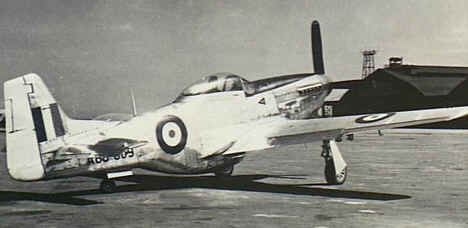
Today we await word of a transfer. As you could imagine the lads imaginations are going wild – are we going to Europe at last, to the Middle East, off west to Perth, or is north to Asia… There are just so many different theatres of operation. My thoughts are that we will head to Port Moresby for escort duty, and Long Range Patrol. See we are fitted out with the new Mark I Mustang, armed with four .30's and four .50's and 180 gallons in self sealing tanks. This Escort Fighter is a dream to fly and such a pleasure to stand on its nose.
17 December 1941
When word came down that we were to move out, the squadron moved fast. Yes many things were already to go, but there was still much to do.
Singapore, not Moresby, not Europe, not even the sands of the Middle East, no we were off to the tropics.
Tonight as I write these scant lines we are bivouacked next to a dirt runway on a Dutch Indies Island out side of Waingopoe. This is a place I never imagined, the heat, the mosquitoes, the heat, the rain, the heat, the adventure, oh, did I mention the heat. We are here for the night, and should be flying out in the morning. A few fuel hops and we may even make Singapore by night fall.
The ground crew here are made up of a mix of Australians, Dutch, and Brits. Word is the 4th RAAF Fighter Squadron were through here two days ago, yet no one is saying where they are going.
Well sleep is here.
21 December 1941
We have landed in Singapore. It was not quite the quick hop I had hoped. I have now seen quite a few small dirt strips, seemingly cut from the very jungle.
The flight in was very interesting, there are so many islands in this area of the world. We spotted a great many naval units moving through the waterways. At one stage we over flew two great Battleships, the Prince of Wales and the Repulse. They stand like island themselves; I sure would not like to be under the pounding of their guns.
Here in Singapore the airport is a busy place. I count seven squadrons operating out of here, four of fighter and three of bomber. We are sharing facilities with the Flying Tigers, Singapore Squadron.
Our orders are to regroup, and tomorrow we start combat air patrols.
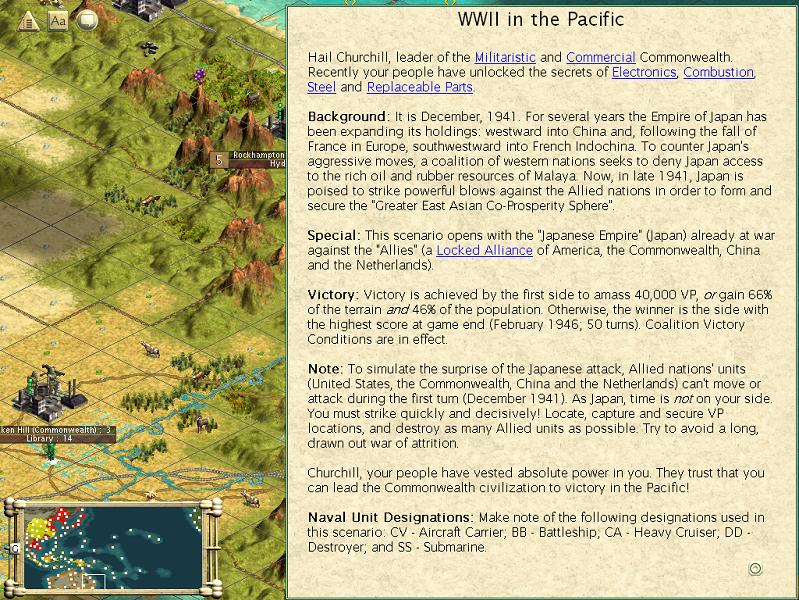
 Attachment: raaf-badge_small.jpg Attachment: raaf-badge_small.jpg
This has been downloaded 109 time(s).
|
|
| |
|
| |
|
| |
|
|
|
Paddy the Scot
|
|
Hordeland
Mar 2001
time: 14:35
|
|
13 January 1942
Christmas was a blur of patrols.
New Years was spent sound asleep.
Battalion after Battalion have been airlifted in. Then they regroup and move up the Malayan peninsula. These fields sure have been busy. Not even at the air regattas back home have I seen so many touchdowns in the one day.
Word is that a new strip is being built for us up that way and we are moving soon. So far this has been nothing but rumour.
19 January 1942
Patrols continue.
This evening a group of us headed into town to hit the bars. It is not very often that we have the next day off from flight ops. While drinking we got chatting with a group of diggers who were rotating out of Bhuket for some R&R.
They told some gruesome stories of Japanese Light Tanks hitting the positions hard.
Yet as there trials sounded bad, they stopped and spoke reverently of the lads who are further up the line, in Rangoon, Mandalay and as far north as Myitkyina. These far flung outposts of the Empire cut off by the Jap in Bangkok.
5 February 1942
Packing the Squadron up today. We are moving, but we do not know where yet.
17 February 1942
Kudat, what a small township. We have three strips operating at over capacity.
Yesturday two fighters clipped wings, causing one to spiral into the trees, another good pilot gone.
You could here the CO’s clearly across the fields. They sure were having a heated conversation.
11 March 1942
Time is moving fast.
The Navy has a massive built up of ships to the south of here; we have strict orders to keep all Jap recon planes out of that area. This has been quite an operation. Yet the Mustang sure is up to the challenge.
The Bomber crews seem to be growing very restless over on the overside of the field. There machines do not seem to have been on any missions in the time we have been here. Yes they have been flying, and some good sights have been had in watching the 3 squadrons forming up, yet they have not had us out for an escort duty. 7th squadron has been the only squadron used in this fashion so far. It would be my opinion, that if they were to be doing any major attacks, then they would take more than one squadron for escort duties.
Tommy Jones, another Flying Officer in my flight feels that something major must be coming very soon. What with the fleet build up and the bomber squadrons on these possible training flights.
Throughout this we continue to fly regular patrols throughout this region of the South China Seas.
Every now and then we have mixed it up with Jap. Yet these skirmishes have been far and few between to date.
The Mustang is one fine flying machine.
Attachment: plane-mustang-raaf.jpg
This has been downloaded 100 time(s).
|
|
| |
|
| |
|
| |
|
| |
|
| |
|
| |
|
| |
|
|
|
Paddy the Scot
|
|
Hordeland
Mar 2001
time: 14:35
|
|
19 April 1942
Patrols continue at a steady rate.
We hear of massive bombardmeants of Rangoon to our north.
2 May 1942
This morning was to be it.
3am callout
7th Fighter Squadron rolled out first
They had operational cap
We watched 4th Fighter Squadron leave intermixed with all 3 bomber squadrons
Then our mighty 5th and the 11th Fighter Squadrons took off.
We were sent on Fleet Combat Air Patrol.
And the fleet was an amazing sight.
Puerto Princess was the target.
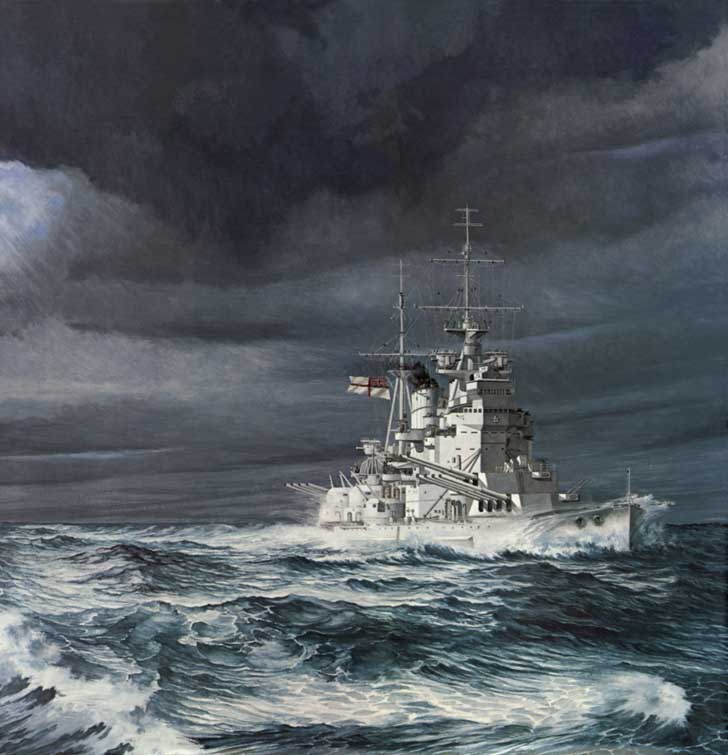
Our Flight spent some time over the mighty Battleships Prince of Wales and Repulse. They sure do look Majestic.
Even up here in these dark clouds, you could feel the power when they unleashed their big guns.
Throughout the day we rotated our roles for the Combat Air Patrol.
Watching the Anzac Diggers storming the beaches was amazing.
Albeit, the long wait seems to have been worth it.
Before retiring to sleep, I read some of the history of the HMS Prince of Wales, a 35,000-ton King George V class battleship built Birkenhead, England, was completed in March 1941. In late May, while still not fully operational, she was sent into action with the German battleship Bismarck and received significant damage from heavy gunfire. Following repairs, Prince of Wales carried Prime Minister Winston Churchill across the Atlantic to Newfoundland. There, on 9-12 August, Churchill joined U.S. President Franklin D. Roosevelt for the Atlantic Charter conference, the first meeting between the two English-speaking leaders of what was emerging as the "Grand Alliance" against the Axis powers.
Following her return to British waters, Prince of Wales went to the Mediterranean, where she successfully engaged Italian planes off Malta in late September. Sent to the Far East with the battlecruiser HMS Repulse to counter the swiftly developing Japanese threat in the region, she arrived on 2 December 1941. On 8 December, the day of the Pearl Harbor Raid on the other side of the International Date Line, the Japanese landed in northern Malaya.
It sure seems like a great career for a ship that has been in the water less than two years old.
Attachment: the prince.jpg
This has been downloaded 71 time(s).
|
|
| |
|
| |
|
| |
|
|
|
Paddy the Scot
|
|
Hordeland
Mar 2001
time: 14:35
|
|
13 May 1942
Only a few scrapes with Jap in the air so far.
Yet 7th Fighter Squadron are at half numbers due to several major air battles in the last few weeks.
And 11th Squadron have lost 2 fighters to accidents, 2 more to Jap flak flying support to the bombers this week, and 4 to Jap Zeros.
19 May 1942
Patrols, Combat Air Patrol, Bomber Support, Naval Support, Cricket Players, and bloody good beer drinkers. The Group Captain certainly knows how to keep us busy.
I am not sure some nights who are the biggest drinkers, ourselves, or the mosquitoes that wait our every move.
4 June 1942
With the success of the attacks on Puerto Princess so successful, we are rotating back to Singapore.
9 June 1942
Then they bounced us up country – Rangoon.
This out post of the Empire repeatedly bombed over the last months.
29 June 1942
As we capture one island, the Dutch lose another. Tenate fell to the Japanese yesturday.
1 July 1942
Massive fighter action here in Rangoon.
I bagged my 3rd Jap bomber two days ago.
Yet my proudest achieve was mixing it up with some Zeros this morning. I know have a Zero painted on my Mustang. All I can say is bring it on.
4 July 1942
A contingent of Yanks turned part of the base into the home of the Red White and Blue. I think they got a shock that we all got into it so much… Afterall they are the colours of our flag too.
 Attachment: my flag.gif Attachment: my flag.gif
This has been downloaded 60 time(s).
|
|
| |
|
| |
|
|
|
Paddy the Scot
|
|
Hordeland
Mar 2001
time: 14:35
|
|
9 July 1942
Early morning found us at Angels 11, soaring high above the South China Sea. Our mission brief was just that, brief. Intel wanted us up and covering this patch of sky for the next few days… We were to tackle any airborne foes, spot shipping and possibly vector in bombers on any that we sighted. This sure does make for long and slightly boring days… Up before the3 sun, in the sky as the sun crests the horizon, and patrolling a slightly cloud covered patch of water.
At this height we could easily see the land on both sides of the Sea, and there was just a hint that we could get some action in the water ways.
4 hours had ticked by, only two faint sightings so far, and nothing really to chase after. The Sqd Leader was keeping a tight leash on us. He was quite determined to keep us in one operating group as Intel had requested.
Then our squak boxes came alive with some bizarre screaming…
“Mayday Mayday, HT5564 we are going down… help we are going down… ahhhhhhh!!!”
Well this surely woke us from any doldrums that was afflicting us. To have come through so loud and clear, they were close to us…
A few of the lads started up, talking and wanting to run off on the hunt. This was when the experience of the CO and the older lads really came out.
“HT5564, this is Red Roo, we hear you 5 x 5… what is your location?”
“Mayday Mayday, HT5564 we are going down… we are just north of Sibalac Point”
“HT5564, this is Red Roo, we hear you and are responding now.”
“Roo Leader to Flights 1 & 2, with me lads. Flight 3 stay the course at this altitude, and watch our backs.”
“Flight 1, Roger Red Roo”
“Flight 2, Roger Red Roo”
“Flight 3, Roger Red Roo”
“Red Roo Leader to Grafton Base. Red Roo Leader to Grafton Base. Be advised we are heading to Sibalac Point to assist HT5564.”
“Grafton Base to Red Roo, we have you listed. Be advised Naval elements are also moving in that direction to work on a recovery mission.”
The next twenty minutes were quite tense. As we moved into the area, the cloud cover thickened. As we came closer to the point each flight was sent into a slight spiral, ever vigilant for the Jappaman and the aircraft that took out HT5564.
This all proved very futile, as we never laid eyes on any enemy aircraft.
HT5564 left quite a mess across the bay of Sibalac Point. Yet in amongst this mess two bright orange life rafts were being slowly paddled into the bay.
Our Flight came in low and we waggled our wings, bringing welcome waves from the lads in the rafts.
From the wreckage and the oil spread across the calm waters of the bay, I felt quite uneasy about coming down in water…
|
|
| |
|
|
|
Mad Bomber
|
 |
Columbus, Ohio
Nov 2002
time: 00:35
|
|
quote:
Originally posted by Paddy the Scot
-----------------------
The Mustang was of British design and made to British order for the Royal Air Force 
The company that made them happened to be in the US of A.
----------------------- |
Not exactly.
Some info on the Mustang:
It all started in 1939, when the British needed more fighter aircraft. They showed interest in the Curtiss P-40 Warhark and the Bell P-39 Aircobra amoung others. Neither were their first choice, but that was the best that the Americans had and the British could not wait for any new designs. They decided the P-40 would be the one. James H. "Dutch" Kindelberger, president of North American Aviation, was approached by the British to build the P-40 at the North American production facility because Curtiss Aircraft was at full capacity. Kindelberger told the British that it would take 120 days to tool up for the P-40.
Then Kindelberger somehow, with no real evidence that it could be done, convinced the British that North American Aviation could design and build a new fighter that was better than the P-40. The new fighter would fly faster, higher, farther, be more maneuverable and pack more firepower. The British took NAA at their word because they had performed well with British orders for the NAA Harvard trainer. British approval by letter of intent was given on 10th April 1940. Shortly after, 23 May, a contract order was placed by the British for the first 320 aircraft designated NA-73.
78,000 man hours and 102 days later, the prototype, NA-73X, rolled out of the hangar - without an engine. 18 days later, the Allison V-1710-39 was ready and on 26 October 1940, NX19998 took to the skies for its maiden flight with test pilot Vance Breese at the controls. On 9 December 1940 the British Purchasing Comission sent a letter to North American Aviation stating that the NA-73 airplanes have been given the official designation of "Mustang".
Part of the US approval for export to Britain was that 2 examples of the Mustang would be turned over to the USAAF for evaluation. The US was very slow to evaluate the new fighter designated XP-51. After evaluation they were also slow to place orders, but interest picked up and orders were placed by the US which included the A-36 Apache. The A-36 was a P-51A set up for dive-bombing ground attack. In all over 15,000 P-51 Mustangs of all types were built from 1940-1945.
Significant design changes came about when the Rolls-Royce Merlin V-12 was used in the P-51B/C and then when the bubble canopy P-51D/K was introduced. The P-51D was the most produced model and was favored among most pilots. The P-51H was a redesigned version but entered service to late to make an impact on WWII.
Source: http://www.p51.mustangsmustangs.com/p51.shtml
|
|
| |
|
| |
All times are GMT. The time now is 05:35.
Apolyton Time is 00:35. |
top of page
|
|
|
Forum Rules:
You may not post new threads
You may not post replies
You may not post attachments
You may not edit your posts
|
HTML code is ON
vB code is ON
Smilies are ON
[IMG] code is ON
|
|
|
|
|
|





 23-04-2004 17:51


 Also milk in Japan only sell in 1 L or 500 mL, not 4 L jugs like in western countries so the price here is about 3 times more expensive!


 more very soon




 |
|