|
| |
|

|
aneeshm
|
 |
Indore , Madhya Pradesh
Jul 2001
time: 10:52
|
|
quote:
Originally posted by Giancarlo
Their armed forces is full of conscripts. It would be expected of a large military. The Indian Airforce is full of lousy MiG-21s..
http://www.paknews.org/avantgo.php?...ate1=2002-11-05
"Official figures reveal at least 221 MiG-21s, worth tens of millions of dollars, were lost in crashes between 1991 and 2000, killing around 100 pilots."
221? Damn. |
This is something I just cannot pass up .
THERE IS NO CONSCRIPTION IN THE INDIAN ARMED FORCES .
My grandfather's brother was in the army till he retired ( as a Major General ) . Even during the recent Kargil war , there was no conscription . And people don't join the Armed forces just to get themselves through higher education , as happens in some places .
The Mig-21s are being phased out by indigenously built aircraft soon ( within the next eight to ten years ) . And you trust a Pakistani article about India ? I'd not trust a Indian source about Pakistan , nor a Paki source about India .
Tell me , Giancarlo , from where did you get your knowledge of India ? I've lived here all my life . Not to be insulting or anything , but still , you speak as one whose image of India is based more on the prevailing cultural perceptions than first-hand experience .
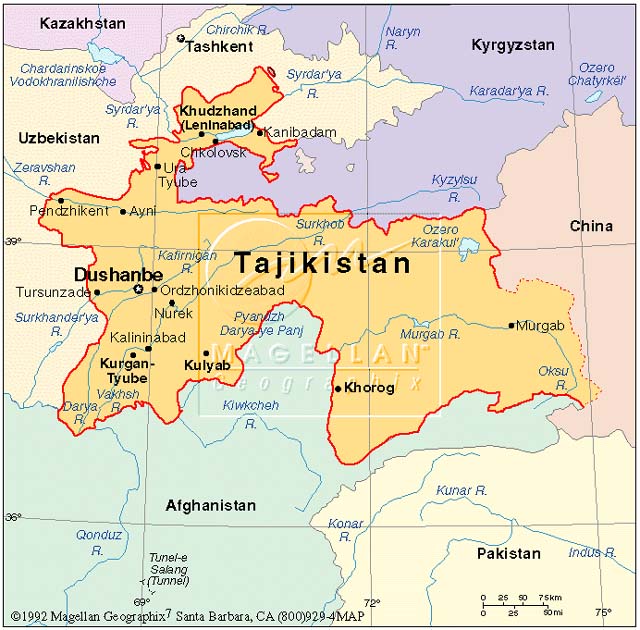
Yes , Indian troops will be there in addition to Russian troops . They will serve two purposes - one , of protecting the interests of Tajikistan , if necessary . And secondly , of allowing us overflight and refuelling capacity on the other side of Pakistan ( in times of crisis ) .
|
|
| |
|
|
|
Dr Strangelove
|
|
The next question is how will India and China deal with each other as they grow more powerful and begin to exert influence in Central Asia? One might also ask how Russia will react to their intrusion into what used to be part of the Soviet Union.
|
|
| |
|
|
|
Zulu Elephant
|
|
By extending the Indian-Pakistan conflict into central Asia, isnt it possible that Russia, China and America could be dragged in? Is this what India wants? Does it make it less likely that Pakistan would try anything? What would happen if Pakistan crossed the border to attack Indian bases?
|
|
| |
|
|
|
Giancarlo
|
 |
Los Angeles
Apr 2000
time: 02:22
|
|
quote:
Originally posted by aneeshm
This is something I just cannot pass up .
THERE IS NO CONSCRIPTION IN THE INDIAN ARMED FORCES .
My grandfather's brother was in the army till he retired ( as a Major General ) . Even during the recent Kargil war , there was no conscription . And people don't join the Armed forces just to get themselves through higher education , as happens in some places . |
Then I'll take that correction. But you must face the reality, the Pakistani Airforce is far better trained then the Indian Airforce.
quote:
The Mig-21s are being phased out by indigenously built aircraft soon ( within the next eight to ten years ) . And you trust a Pakistani article about India ? I'd not trust a Indian source about Pakistan , nor a Paki source about India . |
It is not just MiG-21s, there are other MiG variants. And I heard that many of the projects like the LCA and MCA have been put on hold.
quote:
Not to be insulting or anything , but still , you speak as one whose image of India is based more on the prevailing cultural perceptions than first-hand experience . |
Apparently you do not know what you are talking about. I'm talking strictly on military and economic grounds, not on the culture. The GDP per capita has been stagnant for the past ten years.
quote:
Yes , Indian troops will be there in addition to Russian troops . They will serve two purposes - one , of protecting the interests of Tajikistan , if necessary . And secondly , of allowing us overflight and refuelling capacity on the other side of Pakistan ( in times of crisis ) . |
Great spark another conflict with Pakistan.
|
|
| |
|
|
|
el freako
|
 |
Bristol, European Union
Oct 1999
time: 05:22
|
|
quote:
Originally posted by Giancarlo
Apparently you do not know what you are talking about... ...GDP per capita has been stagnant for the past ten years. |
Giancarlo again proves his total ignorance of economic matters,
According to the IMF GDP per head in India has risen by 57% in the period 1994-2004 (compared to the US's 23% rise).
It looks like you're the one who doesn't know what you're talking about Giancarlo!
Last edited by el freako on 05-10-2004 at 00:05
|
|
| |
|
|
|
Giancarlo
|
|
Los Angeles
Apr 2000
time: 02:22
|
|
What about some facts highlighting India's real problems.. like the non-existent state of infrastructure that is apparent in much of the country...
http://www.sas.upenn.edu/casi/repor...aper042299.html
India, alas, dos not a have a majority of these attributes. Literacy is below 60 per cent. Infrastructure is in a terrible mess. Corruption and bureaucratic sloth are widespread. The financial sector has serious weaknesses. Laws governing factors of the production (land, labor and capital) are rigid. A legal system exists and in some respects works well (as Enron will testify), but legal enforcement is poor because of incompetent police and enormous legal delays. Politicians have neither the guts nor inclination to take on powerful sectional interests like trade unions and farmers. So transactions costs are high, infrastructure is costly and unreliable, and here can be no speedy redeployment of land, labor and capital to meet changing conditions.
This explains why, after eight years of reform, few multinational companies see much promise in shifting factories from other countries to India. India can indeed occupy a few small labor-intensive niches. Sundaram Fasteners, for instance, has become a successful exporter of radiator caps for the global operations of General Motors. But this is a tiny operation. In general, multinationals do not regard India as a cost-effective production center for the global market, and are interested mainly in its domestic, protected market. Hewlett Packard considered using India as an export base but ultimately decided that the infrastructure was neither rapid nor reliable enough.
India’s merchandise exports have indeed grown in the last 15 years. From a low of 4.5 per cent of GDP in the mid-1980s, they now amount to roughly 10 per cent of GDP. However, the composition of merchandise exports has changed surprisingly little. The Economic Survey 1998-99 shows that between 1980-81 and 1997-98, the share of agricultural exports moved from 18.7 per cent to 18.8 per cent, of textiles and garments from 23.7 per cent to 20.7 per cent, of gems and jewelry from 15.1 per cent to 15.1 per cent (no change). Exports of electronic goods are new items that have taken some market share from chemicals and machinery. The remarkably limited compositional change suggests that much of the increase in exports since 1980 has come more from a realistic exchange rate than strident improvements in manufacturing productivity.
|
|
| |
|
| |
All times are GMT. The time now is 05:22.
Apolyton Time is 00:22. |
top of page
|
| archivepost |
|
Forum Rules:
You may not post new threads
You may not post replies
You may not post attachments
You may not edit your posts
|
HTML code is ON
vB code is ON
Smilies are ON
[IMG] code is ON
|
|
|
|
|
|







 04-10-2004 12:20


 Attachment:
  Attachment:






 )
) |
|