|
| |
|

|
Bereta_Eder
|
|
but to be honest to those who envisioned europe (nothing to do with those who are today in charge) they never intended for differences to subside and be crushed. and to try and come up with one or two unyfying traits it isn't so bad. yes in education systems there are similarities, maybe in other parts of social life too. but that's that. then there are huge differences too, so many that in one thing a "european" and a "non european" are more similar and in another thing they are not.
i just dont like the efforts to put whole people in little boxes to serve a wider goal. now, i know it has been done and will keep being done but i dont think that's a... serious thing to do
|
|
| |
|
|
|
molly bloom
|
 |
Lundenwic
Oct 2001
time: 15:37
|
|
quote:
Originally posted by Heresson
nah, Spain has a lot to do with Poland, much more than with Morocco. Even if Spanish music was influenced by Arabs, I guess it got separated from it a long time ago.
|
De qué coño estás hablando?
Spain and Morocco:
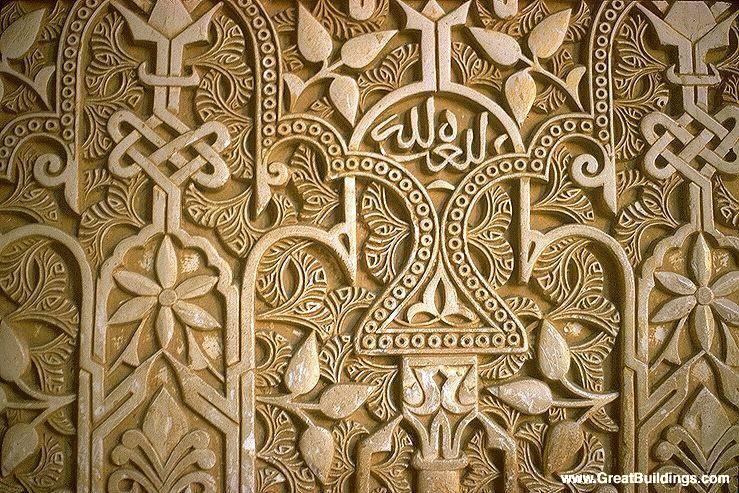
same musical instruments, same type of singing, same styles of architecture, shared cuisine, shared vocabulary, science, rulers, a common cultural heritage, in fact, despite the expulsion of the Moriscos and Marranos.
And what links Poland and Spain ?
Oh yes- Catholicism. Whadda surprise. 
But don't take my word for it...
quote:
...but no two groups have influenced Spain more than the Arabs and the Jews. The first evidence of Jewish settlements in Spain started in the third century. They had control over the Mediterranean trade on the eastern and southern coasts of Spain. They also were the bankers and businessmen who dominated the early Spanish economy. The Arabs arrived in 711 and pushed north from North Africa and were a dominant force until their final defeat at Granada in 1492. These Muslims, later called Moors, opened Spain to Eastern civilization and even introduced Greek philosophy to the Iberian Peninsula. Toledo was considered the new Athens of Europe. We will focus our studies in five cities that most reflect the Arab and Jewish Influence. They include Valencia, Toledo, Córdoba, Granada, and Sevilla. Before exploring Spain, we will follow the steps of the Arab invasion through Morocco to the shores of Algeciras, Spain. Madrid will be our ending point for this trip, which will give us time to explore this beautiful capital. Every aspect of Spain that was affected by the Jews and Arabs will be explored, which includes the language, art, literature, music, dance, food, customs, holidays, architecture and religion. We must include the study of the Spanish Inquisition in order to fully appreciate the Jewish and Arab cultures in Spain. This course will give the student a better understanding of the elements that shape present day religious conflicts. |
Oh and present day Spain ?
quote:
Zapatero’s Socialist Workers Party of Spain (PSOE) has distanced itself from the pro-American line of its predecessor in government, the reviled Popular Party (PP) of Jose Maria Aznar, by seeking closer ties with other European powers. This is deepening political divisions over the strategically vital Maghreb.
Spain has long been a pivotal power in the region. It retains its enclaves in Morocco, Ceuta and Melilla, and has a long colonial history in the area. In concert with the other main former colonial power in the region, France, it is seeking to reassert its influence.
|
http://www.wsws.org/articles/2004/j.../nafr-j31.shtml
I'm Spanish I tell you- not Islamic !!!!
 Attachment: cid_2343022.jpg Attachment: cid_2343022.jpg
This has been downloaded 47 time(s).
|
|
| |
|
|
|
Heresson
|
 |
of frogs
Jun 2000
time: 06:37
|
|
You're exagerrating molly (I did as well). Of course Spain has more Moorish influence. I'm a student of Arabic studies, You don't have to teach me about it Still, today it's more similar - by religion, culture, size, to Poland and other European lands than to Morocco, and its obvious as well. Does Morocco have any romanesque buildings? gothic? renaissance? baroque? neoclassical? Both Poland and Spain viewed themselves as champions of catholic faith on the edges of Europe, both have Muslim influences (Spain much much bigger, of course, but Turkish influence on Poland was strong: Polish national dress is of Turkish origin, f.e.), both were important mights in Europe that faded in XVII century and later. Both are of almost the same size (of population) and importance in EU, both are on similar level of development, both have long Jewish tradition, the historical relations were always very good,
in fact first info about Poland was given by a Jew from Muslim Spain, Ibrahim ibn Ya'qub.
quote:
Oh and present day Spain ?
|
 Wow. Wow.
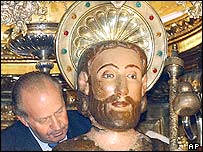
St James says: Fi-l-haqiqati, ana Maghribiyyun!
Attachment: _40109331_kingjamesap203cred2.jpg
This has been downloaded 33 time(s).
|
|
| |
|
|
|
molly bloom
|
|
Lundenwic
Oct 2001
time: 15:37
|
|
quote:
Originally posted by Heresson
You're exagerrating molly (I did as well).
|
No, I'm not.
Moroccan roll:
quote:
TETOUAN
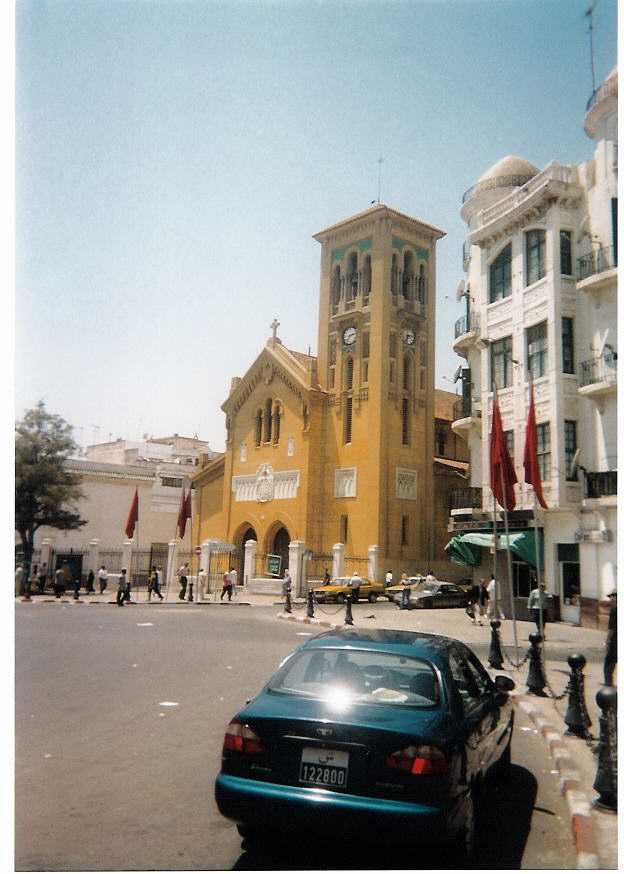
Ciudad hispaomorisca, llamada “La Blanca”, su arquitectura recuerda a la de muchos pueblos andaluces. Fueron, precisamente, musulmanes y judíos huídos de España tras la caída de Granada en 1492 quienes reconstruyeron la ciudad. La dedicación a la piratería, que habia ocasionado la primera destrucción de Tétouan por Enrique III de Castilla, volvió a causar su decadencia tras el bloque de Felipe II.
Bajo Moulay Ismail, la ciudad conoció un nuevo periodo de esplendor con construcciones tales como la muralla o el Palacio del Califa, que aún hoy pueden admirarse. También deben visitarse el Museo Arqueológico, el Museo de Artes Marroquíes y la Medina. De la variada artesanía de Tetouán, gozan de especial reconocimiento los bordados y la alfarería.
|
http://www.ferrimaroc.com/ingles/turismo1i.html
Spain in Morocco, Morocco in Spain, it's a two way thing:
quote:
Aspects of Sephardic Jewry
When discussing the Spanish component of Judaism in the Moghreb (North Africa) the Israeli (Moroccan-Jewish) historian Choraqui notes:
Spanish influences had predated the expulsion from Spain. Numerous and close ties in the field of commerce and learning had long connected Iberia and North Africa. For the Jews especially these ties had been exceptionally close for, under the unifying force of Islam, the Jews too had enjoyed a remarkable unity. The ritual, the chants, the liturgy and the traditions of the Jews living in the various Moslem countries were very similar, especially in the case of North Africa and Spain which, even after the defeat of the Moors in the latter country, still tended to resemble two provinces of the same country as far as the Jews were concerned.1
When the Jews left Spain they were following the foot-steps of their ancestors who had fled the Visigoths and the later Almoravids who conquered Andalucia. The Sultan viewed these talented arrivals as an adjunct to his kingdom and most of the Jews settled in and aound the Arab urban centres controlled by the Sultan. The Sephardim brought about a cultural revival of the Moroccan Jewish community which had been isolated for some time.2 There was much symbiosis between the two communities and many customs were exchanged, but, on the whole, in religious and intellectual matters the Sephardim were dominant. According to Choraqui:
The geographical limits of marked Spanish influence were noticeable for as long as Jews remained in North Africa. Tangiers and Spanish Morocco were understandably the parts of Morocco most affected and it was there that the old Jewish culture of Andalusia was preserved till recently in its purest state, free from Arab influence. The streets of the mellah (ghetto) recalled the streets of Seville and Granada; the houses looked alike, the passers-by had the same features, the language was almost the same, slightly mixed with archaisms and Hebrewisms. The manners and customs were those of sober Seville of the fifteenth century; time had little effect in the mellah with its long memories. The newcomers to the rest of Morocco exerted such influence that they soon absorbed to their ways the native-born communities of Tangiers, Tetuan Sale, Arzila, Larache, Rabat, Safi, Meknes and Debdou.
|
http://cjtm.icaap.org/content/4/v4art8.html
I'm Spanish I tell you, not Moroccan...
Attachment: tetouan3.jpg
This has been downloaded 32 time(s).
|
|
| |
All times are GMT. The time now is 05:37.
Apolyton Time is 00:37. |
top of page
|
|
|
Forum Rules:
You may not post new threads
You may not post replies
You may not post attachments
You may not edit your posts
|
HTML code is ON
vB code is ON
Smilies are ON
[IMG] code is ON
|
|
|
|
|
|






 20-08-2005 04:01


 |
|