|
| |
|
| |
|
| |
|
| |
|
| |
|
| |
|

|
Jools
|
 |
of Bug City
Mar 1999
time: 05:15
|
|
Okay, I am sick of people calling Poland pretty pathetic. Fact is that for a long period of time anything compared to Poland would be pathetic.
Now, Poland became a country of importance in the 10th century when it became christian and fully independant. It threw of the yoke of German Emperors, didn't have to pay tribute, had it's own Archbishop and Metropolite.
Poland was a country of reasonable importance up to the 12th century when it was divided by the kings many heirs. That's when the country broke up into small principalities (Silesia, Pommerania, Krakow, Masovia, Poznan etc...). Many princes tried to unify the country and many failed. The circumstances were very unfriendly for unification (especially Mongol invasion, where a joint Hungarian and Polish army stopped - yet was defeated - the Mongol advance).
Poland really picked up in late 14th century when it was unified by Wladyslaw Lokietek (apart from Silesia, Pommerania but had Red Rus).
Having a chain of good monarchs and great fortune Poland unified with the Lithuanians (who were the conquerers of all Rus), and the Lithuanian Prince was also the Polish King. This was in 1386.
After the Prussians organised an Uprising against the Teutons Poland joined in and defeated the modern military power (Teutons) at Grunwald.
That was the beginning to the golden age. The Jagiellons (lithuanian dynasty) soon were in power in almost all of central Europe, Bohemia, Poland, Lithuania, Hungary and Moldavia. It was a true powerhouse but unfortunately for them this didn't last too long.
After an ill-fated crusade against the Turk the Jagiellons lost Hungary because the King was slaughtered in Battle. Soon another war broke out with the still powerful Teutonic Order when another uprising was orginased this time by the Poles. This war last 14 years and was another Polish success.
By this time Poland was a rich, flourishing country with much importance and influence over their neighbours.
The 15th century ended and the next one began. It was also another good 100 years for Poland. Even though loosing the thrones of Bohemia and Hungary, The Jagiellons were still in power in Poland.
This is exactly when the Golden Age began. Poland being a very tolerant country felt an influx of Jewish immigrants that strengthened the economy, peasants were still free and all was well.
This century also was famous of it's good kings (Zygmunt The Old, Zygmunt Augustus, Stephen Bathory of Transylvania and the more argueable Sigismund Vasa of Sweden).
After many military succeses (last war with Teutonic Order ended in 1521 and the TO was vassalised and partitioned), Turkey and The Northern War against Ivan IV the Terrible, Poland was still a large, formidable country.
A very important date is the signing of the Warsaw Confederacy in AFAIK 1572. This was the document which made Poland a multi-religious country and made all gentrymen (20% of the population) equal by the law and king. From now on no religion was worse nor better, anyone disregarding religion could become a noble (even a Jew, and there were many Muslim nobles -not to mention orthodox and protestant).
The 16th century ended in great succes.
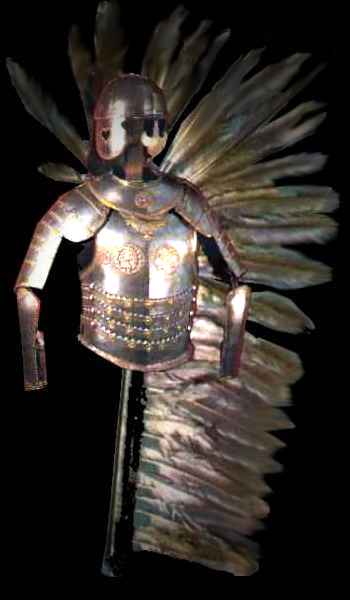
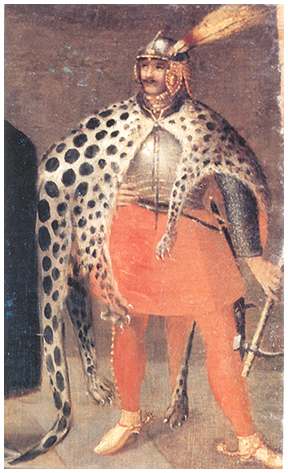
The 17th century was the birth of the Baroque which had a true Iron Base in Poland. Infact the Poles developed their own version of the Baroque called Sarmatism (the Poles claimed they were descendants of the ancient people the Sarmatians). Sarmatism was very popular among Poles and was very specific. I'll try to find some pictures. Clothes were derived from Turkey and Persia, the main weapon wasn't a rapier but a sabre(szabla). The influence of Sarmatism was great, From Warsaw to Buda to Moscow.
The 17th century was a time of strife for Poland and was soaked with blood. This is the time of non stop wars and great leaders and the declining of religous tolerance. After taking over Moscow in 1611, the hardcore catholic Sigismund Vasa could make his son, Wladyslaw the Tsar of Russia but he couldn't answer the Russian Bojars demand that his son turn to orthodox. A puppet tsar was placed on the Russian throne and was quickly dethroned by a moscow uprising.
Other wars include two with then extremely Powerful Sweden, Three with Turkey, two with Russia, One Cossack uprising, two Translyvanian invasions and ofcourse the regular crimean incursions.
It is strange that a country like poland with a tiny standing army managed to get out of almost every war with succes and even help it's allies. The tragedy and downfall is that most of these invasion occured in the same time giving Poland to time to rest or rebuild.
The last year of Polish victory is in 1683 when Jan III Sobieski, called by the Turks the Lion from the North, answered the Austrian Emperors call for aide and left Poland with 20,000 hussars for the beseiged Vienna. Needless to say the Turks were slaughtered and from then on never caused any serious problems to the christian world.
The 18th century is a time of downfall, though it could've easily turned into the time of the second golden age.
Incompetent Kings, civil wars, foreign intervention, abusement of the democratic system led to the downfall of power and authority. Poland was a battle ground for Swedens and Russians.
This century also had it's good sides, the development of industry, the influence of american revolution etc...
Poland was partitioned in 1795 but the Poles never stop to fight. They fought for Napoleon and were his most elite and loyal troops. They stayed with him till the very end. Napoleon said at Sommosierra "Impossible? I do not know such word! There is nothing impossible for my Poles!". Jozef Poniatowski was Napoleons only foreign Field Marshall.
Two uprisings were organised in the 19th century, one in 1831 and one in 1863. Both were pacified within two years but this only proved that the Poles weren't and never will be rusified or germanised. Yet the governments of the partitioners did everything to make sure the Poles would quarrel...
WW1 is a turning point for Poland. Both sides promised the Poles an independant country in order for them to go to recruiting points. Approximataly 3 million Poles served under both banners in WW1. Most on the Eastern Front.
By this time a Polish Legion was formed and served the Austrians. These formations were very succesful in battle. When the Legion Commander Pilsudski noticed the Germans were loosing, he and his men withdrew their oath and were arrested. After the war the Polish Legions marched for Warsaw and disarmed german garrison soldiers and an independant Poland was formed.
Poland's history in a nutshell.
|
|
| |
|
|
|
Jools
|
|
of Bug City
Mar 1999
time: 05:15
|
|
NOW, Why I think Poland should be in an official set.
------------------------------------------------------------------
-Renaissance and Baroque power
-Tolerant
-Military Power, great military tactics, far advanced.
-Science: From Copernicus(No, Mikolaj Kopernik was not German) to Curie(And she wasn't French!).
-Large cultural influence over Europe
-Parliamentary system
-Elected Kings
-Hussars
-Great Battles
-Extremely colorful and vibrant history
-Specific civilisation, different than anyother in Europe
-Great Leaders, Magnificent Generals and Statesmen
-First Pacifist Country in the world 
-Polish fighting spirit
-Yoked off the Bolsheviks in 1921
-Also influential in the Baltic theatre post WW1 (helped Latvia form, sneak attacked Lithuania, Four Uprisings)
-Armia Krajowa, counted 320k soldiers. Espionage, sabotage and partisan brigades, fought against hitler during occupation, supplied the allies with information. The largest underground army.
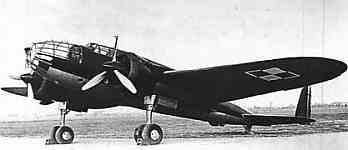
-El Alamein, Tobruk, Battle for Britain, Monte Cassino, Lenino, Squadron 303. A lot for a country that is occupied.
-Modern Times: Peacefully throwing off the yoke of the Soviet Union and helping it collapse.
Now, wouldn't a Polish Civ be interesting in Civ3?
|
|
| |
|
|
|
Jools
|
|
of Bug City
Mar 1999
time: 05:15
|
|
Leaders:
======
*Poland's most known leaders lived mostly in the 17th century. It is thanks to these people that Poland wasn't annexed 200 years earlier. These were truly great tactitians and strategists that could defeat much larger armies using their cunning and wit and their hussars . In the 17th century Polish leaders sprung out like mushrooms after rain .
Military Leaders:
-Boleslaw Chrobry (Monarch), many great military campaigns in Rus, Bohemia and Germany (11th century)
-Wladyslaw Lokietek (Monarch 14th century). Unified Poland, stopped Teutonic order.
-Wladyslaw Jagiello(Monarch 14-15th centuries). Fought against Tartars, Mongolians, Poles, Teutons mostly with succes.
-Prince Witold (Lithuanian Prince 14-15th centuries). Same as Jagiello, good commander, though hardly Polish...
-Piotr Dunin (General 15th century), great commander, excellent at seiging, fought against the Teutons in 14 year war.
-Stephen Bathory (Monarch 16th Century). His 16 years of power were short but in this time he proved to be one of the best monarchs and military leaders Poland had. Defeated Ivan IV the Terrible in the Northern War.
-Jan Zamoyski (Marshall, General, Statesmen 16-17th century). Very influential man, founded the city of Zamosc, defeated Austrian Archduke in 1588, Crowned Bathory and Sigismund Vasa. Good General, Great Statesmen.
-Stanislaw Zolkiewski (16-17th century). Great tactician, defeated the Russian army at Kluszyn with only 10,000 cavalry men and 1000 infantrymen. Died slaughtered by the Turks, seriously outnumberd in Cecora, Moldavia.
-Jan Karol Chodkiewicz (17th century). Another superb military leader, defeated the Swedes in 1605 in Kircholm with only 3000 hussars against 12000 Swedes. Died in 1621 defending a fortress beseiged by the Turks.
-Stefan Czarniecki (17th century General). Invented Partisan warfare -in poland at least. Great Cavalry commander. Crossed the frozen Baltic to Denmark to help them fight of the Swedes.
-Jan Weyher (17th Century Admiral). Defeated the Almighty Swedish fleet at Oliwa with a small but sturdy fleet.
-Jan III Sobieski (Monarch 17th Century). Called by the Turks the Lion from the North. Slaughtered them on numerous occasion, Chocim and Vienna.
-Tadeusz Kosciuszko (18th Century General). Honorary citizen of the USA, american colonel, Polish Hero. Defeated the Russians on numerous occasions with tiny armies at Dubienka. Humiliated the great Russian armies by defeating them with peasants armed with scythes. Mastered the use of fortifications.
-Jozef Poniatowski (18th-19th Century General). Nephew of the Last Polish King. Fought alongside Kosciuszko, defeated the Russians at Zielonka. Was Napoleons high ranking officer. Was Napoleons last Field Marshall.
-Jozef Pilsudski (20th century) Politician, General, Statesman. And very good at it.
|
|
| |
|
|
|
Jools
|
|
of Bug City
Mar 1999
time: 05:15
|
|
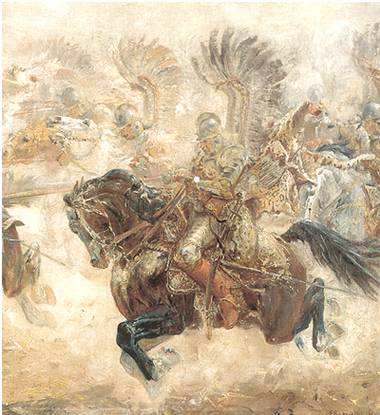
Hussar Charge!!!
Polish Warfare 1450 to 1699
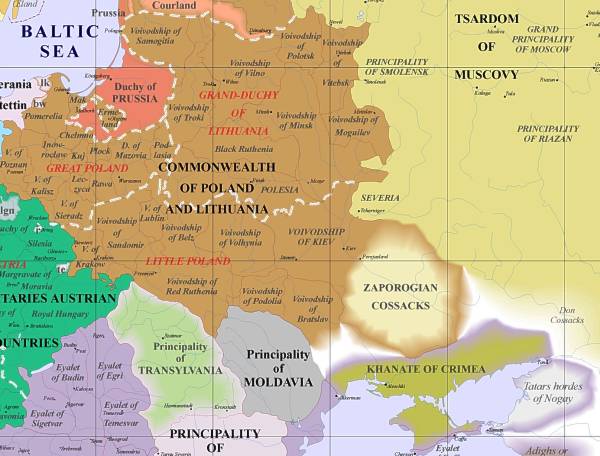
At this time the Polish-Lithuanian Commonwealth was the largest territory in central and eastern Europe and its army, though small, achieved many successes against a wide variety of foes.
There were few periods when Polish-Lithuanian forces were not fighting against one of the Commonwealth's enemies, which included Tartars, Teutonic Knights, Swedes, Austrians, Ottomans, Muscovites, Moldavians and Zaporozhian Cossacks.
Their forces combined elements of eastern tactical and strategic thinking with western tactics of technology and firepower.
The influence of the Polish army on the West has been under estimated, some of these influences include:-
-Full gallop cavalry charge with drawn sabres
-Diverse tactical and defensive use of fortified camps
-Origins of the divisional system
-Uhlan lancers
-Military uniforms, e.g. long-cut jackets, grenadier caps and dragoon uniforms.
It should be remembered that one of the greatest generals in history, Gustav Adolf, developed his skills in almost continuous warfare with the Poles - and his success in the Thirty Years War was preceded my many years of effort against inferior numbers of Poles who had humiliated the Swedish army at Kircholm.
 Attachment: ussarcharge.jpg Attachment: ussarcharge.jpg
This has been downloaded 61 time(s).
|
|
| |
|
| |
|
|
|
Jools
|
|
of Bug City
Mar 1999
time: 05:15
|
|
quote:
Although the Polish-Lithuanian Commonwealth (Poland for brevity) has a well deserved reputation for fielding the finest cavalry in 17th C. Europe, the accomplishments and integrated role of the infantry and artillery is less known. It is true that the dominant and often decisive arm was the cavalry, and the other types of units were influenced by this reality. In particular, all units had to be highly mobile or risk being irrelevant in battle, or relegated to siege or defensive duties.
Polish generals had great faith that, given the appropriate tactical situation, their excellent cavalry could sweep the field of any opponent. They were seldom disappointed. The trick in good generalship was creating the conditions for the appropriate tactical situation. The most important consideration was that cavalry was devastating against disorganized foes, but could not break intact pike formations (although the hussar lances did on a few occasions), and could be checked by disciplined musket formations or by field works. One way of creating disorganization and breaking formation was the firepower provided by light artillery.
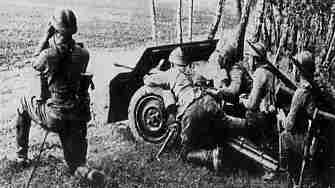
Light Artillery in Polish service had to adapt to a cavalry-dominated army’s operational and tactical situation. It had to be mobile enough to keep up with the cavalry, and had to provide concentrated firepower when needed to disrupt enemy ranks.
In addition to regular Crown and Lithuanian units, much of the Polish strength-in-numbers came from levies of noblemen and from private armies (great noblemen might amass a thousand men or more, and several pieces of artillery). These irregular forces could be quite variable in equipment, costume, and organization. Boleslav Orlicki’s Horse Artillery represents a private unit of this type, raised by a medium-sized estate. The service is less likely to be offered as a mercenary contract for cash than as a display of loyalty to the Crown or a political faction.
The Poles invested heavily in artillery and mastered the tactics of bombardment in concentration with mobility in advance of their enemies. They exchanged many insights with their on-again/off-again rivals, the Swedes, under Gustav II Adolf (Gustavus Adolfus), also a noted artillery innovator. Faced with the need to keep up with their cavalry, the Poles were particularly advanced in carriage design and the tactical aspects of handling horse artillery. A case can be made that Poles invented horse artillery, at least, Jan Tarnowski’s "Consilium rationis bellicae" (Outline of Military Method ) included a description of the use of light cannons mounted on wagons, a concept akin to 'gallopers'. Kazimierz Siemienowicz wrote Artis Magnae Artilleriae pars prima (The Complete Art of Artillery, Part One) the standard European reference for artillery until the Napoleonic era, which included the first description of multi-stage rockets. Siemienowicz, as Lieutenant General of Crown Artillery, directed it’s technical and tactical refinement in the mid 17th Century. (See also dell'Aqua's manual.)
Horse Artillery worked closely with mounted infantry- the dragoons - who would typically accompany batteries to form skirmishing screens in front, and some security to the battery line itself. Dragoons were often armed with smaller infantry matchlocks prior to 1670, but were also often armed with carbines with wheel-locks, dog-locks, other types of early flint-locks and pistols, as well as sabers. Dragoons were numerous in Polish service, and did most of the routine work of scouting, picket duty, and finding provisions, as well as providing critical infantry support in the highly mobile battles the Poles favored.
In the 1500's, artillery was typically parked on top of a hill before the battle, from which spot it never moved. It was usually heavy (6 pounder and larger), and after an opening bombardment often fell silent as the battle was determined by the rest of the army. Contrast those tactics with the following dramatization, after the Poles and Swedes developed the use of light artillery that was integrated with the battle line.
|
quote:
Horse Artillery in the XVII Century?
Although the term 'Horse Artillery' is associated with the 18th Century, the concept was well established some two hundred years earlier. According to Tomczak in Taktyka artylerii konnej wg regulaminu T. Kosciuszki:
"Paul Jovius described the essence of light artillery moving where and when required by horsepower in 1494, in Historia del sue tempo. The French king Henry IV reportedly proposed arming his cavalry with cannons. In 1533, Maurice Sask in the battle of Sivershausen assigned light artillery to assist his cavalry.
"Horse artillery in connection with the Polish army is described in K. Gorski's Historia Artylerii. Horse artillery was a factor in the cavalry battle of Lopusza in 1512. Gorski concluded that the field pieces involved were falconetts (3 pounders). This was not necessarily dedicated and specialized horse artillery, but this was nevertheless a joint effort by cavalry and, by necessity, highly mobile artillery.
"In steps, light, mobile proto-horse artillery became part of the regimental organization, assigned in close support of infantry. In the west artillery gained a role in the army as important as cavalry. Gustav Adolf organized light artillery as part of infantry regiments...."
M. Rostafinski in Zarys rozwoju historii wojskowosci w Polsce, p. 79, argues that Horse Artillery was a fact in 17th C. Poland. The Pole's light artillery was used in a highly mobile fashion, and had the necessary equipment for horse artillery, and were integrated in the battle line and used (in a very modern way) in close support of cavalry and infantry, so they were in effect horse artillery. However, they were not explicitly organized as standing units dedicated to the support of cavalry, the modern technical definition. So purists can still claim that it is not really ‘Horse Artillery,’ although I wish to add the point that the Poland had a cavalry army with supporting infantry, whereas all western European nations had infantry armies supported by cavalry.
Who gets the official credit for the first standing organization of horse artillery? Tomczak observed that some say it was Peter I, others claim Frederic II of Prussia. Peter I’s reform was to provide his dragoon regiments with two light artillery pieces. The artillery took on the character of dragoons, and could accommodate the rapid pace of travel required in support of cavalry. Frederic II of Prussia gets credit for horse artillery as standing companies dedicated to supporting cavalry with highly mobile operations - the fully modern late 18th through early 20th century concept.
Certainly the term ‘Horse Artillery’ was new in the XVIII century. T. Kosciuszku in his 1808 treatise on horse artillery prepared for the American army mentioned that when he first brought up the concept some officers apparently thought that he meant that the artillery pieces were to be strapped on the horses back. Kosciuszku said that, at lease in the late 18th century, horse (aka 'flying' or 'position') artillery was not too different from field artillery in usage, except that it was more independent. He said that all American field artillery in service in 1800 was of a design suitable for horse artillery use. Kosciuszku's only specific design recommendations was the use of a carriage traveling position, esp for any heavier piece, esp 4 pdr+. The key difference is the presence of the horse as the motive force! Horses, according to Kosciuszku, are reliable and as brave as their handlers, and can obviously move the gun faster. |
Taken from http://www.kismeta.com/diGrasse/Pol...seArtillery.htm
|
|
| |
|
|
|
Jools
|
|
of Bug City
Mar 1999
time: 05:15
|
|
Sarmatism.
Term used to describe an ideology and a way of life of Polish nobles in the 17th century and the early 18th. Although it is not an art-historical term, it has been used to describe artistic phenomena connected with the patronage of Polish nobles of the period. Like the historians of other European countries, the Polish historians of the 16th century sought to dignify the origins of their nation by placing them in antiquity. The fabled valiant Sarmatians were believed to have been the ancestors of the Poles and to have lived north of the Black Sea in the time of the Roman Empire; later driven west and northwards by other peoples, they were thought to have conquered the Polish territory and reduced its original population to serfdom, themselves forming the nobility of the new nation. The name Sarmatia was already applied to Poland in the 16th century, and its people referred to as Sarmatians. The Polish–Sarmatian nation of the nobility developed a specific outlook and civilization that had its culmination in the late 17th century; to a great extent it adopted elements from the general culture of Catholic Europe. Politically, the exponents of Sarmatism promoted the idea of a republic of nobles with an elected king as first among equals, and strongly opposed absolutist tendencies, then popular in Europe. Consequently, its features included conservatism, traditionalism, xenophobia, religious zeal and, finally, a deep conviction that the Polish political and social system was the best possible and that the mission of the Polish nation was to defend the Christian (especially Roman Catholic) world against the Eastern Orthodox, Protestant and Islamic peoples.
quote:
Poland was much more tolerant in the sense of practical toleration than any of the other countries. Which is, of course, the reason why it became a haven for persecuted minorities. Large numbers of Scots, for example, escaped from Scotland, from persecution by the Puritans. Large numbers of English in the time of Queen Elizabeth went to Poland to escape the persecution there. And, of course, the reason why Poland became the largest refuge for European Jewry is exactly because they had extremely favorable conditions protected by charters and by laws. It was a very rich kaleidoscope of religions which, generally speaking, managed to live in relative harmony with each other. |
I tried to find some pictures of Sarmatian clothing but was unsuccesful
|
|
| |
All times are GMT. The time now is 05:15.
Apolyton Time is 00:15. |
top of page
|
| archivepost |
|
Forum Rules:
You may not post new threads
You may not post replies
You may not post attachments
You may not edit your posts
|
HTML code is ON
vB code is ON
Smilies are ON
[IMG] code is ON
|
|
|
|
|
|







 18-10-2001 21:40


 .
.


 that's the spirit

 )
)


 |
|