|
| |
|

|
Ted Striker
|
 |
United States of America
Jan 1970
time: 21:24
|
|
Here's an interesting story concerning agriculture. It is actually ancient history though.
The Egyptians grew a kind of wheat called Kamut. It was a tough kind of plant and grew well in the environment.
Years later, the Greeks under Alexander invaded and took the place over. They replaced the wheat there with Greek (durum) wheat, which is what we all in the West grow and eat. Kamut ceased to be grown
This is where it get interesting.
quote:
Following WWII, a US airman claimed to have taken a handful of this grain from a stone box in a tomb near Dashare, Egypt. Thirty-six kernels of the grain were given to a friend who mailed them to his father, a Montana wheat farmer. The farmer planted and harvested a small crop and displayed the grain as a novelty at the local fair. Believing the legend that the giant grain kernels were taken from an Egyptian tomb, the grain was dubbed "King Tut's Wheat." But soon the novelty wore off and this ancient grain was all but forgotten. In 1977, one remaining jar of "King Tut's Wheat" was obtained by T. Mack Quinn, another Montana wheat farmer, who with his son Bob, an agricultural scientist and plant biochemist soon perceived the value of this unique grain. They spent the next decade propagating the humped-backed kernels originally selected from the small jar. Their research revealed that wheats of this type originated in the fertile crescent area which runs from Egypt to the Tigris-Euphrates valley. The Quinns coined the trade name "Kamut" an ancient Egyptian word for wheat. Egyptologists claim the root meaning of Kamut is "Soul of the Earth."
|
The real story is still elusive. Scientists believe that Kamut was still grown in obscurity somewhere in Egypt or surrounding areas, but never in large scale, commerical production.
Kamut is a superior source of vitamins and protein over Greek wheat. People who have wheat allergies are often recommened to use Kamut bread instead. Kamut is also a tougher plant than Greek wheat, and is easier to grow, requiring no pesticides or fertilizers.
The forgotten grain that fed the Egyptian empire is now available to you!
http://www.hort.purdue.edu/newcrop/...999/v4-182.html
|
|
| |
|
|
|
Dr Strangelove
|
|
quote:
Originally posted by Sagacious Dolphin
Its not a BBC study. It was performed by University College, London. |
The article states that the study was funded by the BBC.
|
|
| |
|
|
|
Lazarus and the Gimp
|
 |
Whale-raping abomination
Aug 2000
time: 05:24
|
|
quote:
Originally posted by Ned
Lazarus, Anywhere in Europe - but excluding the Church, which continued to carry on Roman culture, and the areas still under Roman control. |
Cute. So with that deft piece of footwork you get to exclude the breakthroughs in Church architecture in the time (which owed nothing to Rome), the ecclesiastical art of the Celtic Church (which owed nothing to Rome- Rome was openly hostile to it), the Cluniac reforms and the wave of intellectual fervour that followed it, the establishment of a consecrated monarchy which ended the turmoil and assassinations and brought political stability unprecedented even under the Romans, the establishment of schools right across Britain and just about all the written work of the time, as the vast majority of surviving wriiten work was by monks, even if was secular writing.
Still, I'll play ball and pick some examples going by your rules.
The Royal Navy (established by King Edgar)
"Beowulf"
The Norse Sagas.
The poetry of Israel the Grammarian
Numerous other heroic poems, if anyone's counting
The establishment of the principle of diminished responsibility in criminal law (established by the statutes of Athelstan limiting the level of punishments applicable to those below the age of 15).
The emergence of the land-owning middle class through the principle of bookland.
Bald's "Leechbook"- medical textbook detailing the correct useage of anaesthesia.
Wansdyke
Offa's ****
The Shire and Hundred administrative system.
The Abingdon Canal at Oxford
Trial by 12 jurors (established in Aethelred's third code of Wantage).
That's off the top of my head, sticking to England, and going by your rules which are, to be blunt, bollocks.
|
|
| |
|
|
|
Sonic
|
|
Vilnius, Lithuania
Dec 2001
time: 07:24
|
|
First scyscreapers in the world were built in Shibam, Yemen (although they were rarely over 10 floors, their height was huge since floors themselves were tall). They are also oldest existing skyscreapers. Gundam Palace Scyscreaper in Sa'ana, Yemen, was the first scyscreaper to surpass 20 floors. It was built in about the time Jesus Christ lived, unfortuantely, it is destroyed now.
|
|
| |
|
|
|
Dr Strangelove
|
|
quote:
Originally posted by Ted Striker
Can somebody answer me this? This was mostly post-medieval, but I've searched for this answer and have yet to come up with anything.
There was a big trend for hundreds of years, for mostly French and Italian men, to be really effeminate in both manner and dress.
I mean I see the pictures of these guys wearing tights, skirts, high heels, long haired wigs, and lots of makeup.
Where did this awful trend get its start? |
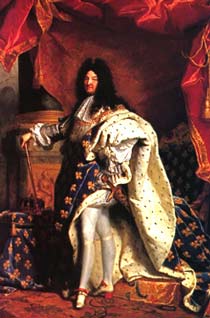
Wigs and high heels I think date back to the reign of Louis XIV. During his reign the power and influence of the great nobility were greatly reduced. He made the nobles dependent upon his patronage, the getting of which required them to hang around his court pretty much 24/7. By carefully doling out rewards he made himself the idol of the aristocratic class, who flattered him by copying literally everything about him. High heels were used to give themselves height. As he aged it became fashionable among the younger nobility to make themselves appear older using make up and wigs.
At the start of the middle ages most of Europe was wearing what it had worn during Roman times - robes and leggings. That evolved naturally into tunics which you may be referring to as dresses, and tights.
|
|
| |
|
|
|
Dr Strangelove
|
|
quote:
Originally posted by Sikander
There was a huge population loss as the Roman empire collapsed, particularly among the urban elite who were the keepers of a lot of technology. The devolution of the political establishment in most places meant that many of the complex trading systems of the Roman era were essentially destroyed, and the results were the starvation of many large urban areas. It is estimated that the population of many parts of Western Europe during the "dark ages" dropped to about 25% of its level during good Roman times, mostly from the effects of warfare directly, as well as the disruption of distribution networks. Of course as has been said previously, these effects were not seen everywhere or in the same degree even where they were experienced. |
Much of this urban population fled to the countryside, often primarily due to the dramatic fall off in trade as the empire broke up. Without having the means to support themselves they were often forced to put themselves and their families in the service of landowners. Some authors consider this trend as the beginnings of serfdom.
|
|
| |
|
|
|
Dr Strangelove
|
|
quote:
Originally posted by Ted Striker
Thank you Doc, very interesting, especially the part about when he got older. |
Yes, while "The Sun King" wore dark wigs to make himself appear younger, to flatter him the courtiers adopted white wigs to make themselves appear older.
|
|
| |
|
|
|
Dr Strangelove
|
|
quote:
Originally posted by Saint Marcus
can you post your source too? would be nice to compare the two (sources&findings) |
JAMA issues are not available online, and anyway I don't keep them around so I don't have the whole referrence citation.
|
|
| |
All times are GMT. The time now is 05:24.
Apolyton Time is 00:24. |
top of page
|
| archivepost |
|
Forum Rules:
You may not post new threads
You may not post replies
You may not post attachments
You may not edit your posts
|
HTML code is ON
vB code is ON
Smilies are ON
[IMG] code is ON
|
|
|
|
|
|





 02-01-2003 09:23


 Attachment:


 |
|