|
| |
|

|
panag
|
 |
MY WORDS ARE BACKED WITH BIO-CHEMICAL WEAPONS
Oct 2000
time: 07:29
|
|
quote:
Originally posted by Lonestar
I'd be happy with GDI Ion cannons. |
hi ,
who knows , maybe in 100 years , .......
forget b3 , go straight for hypersoar 
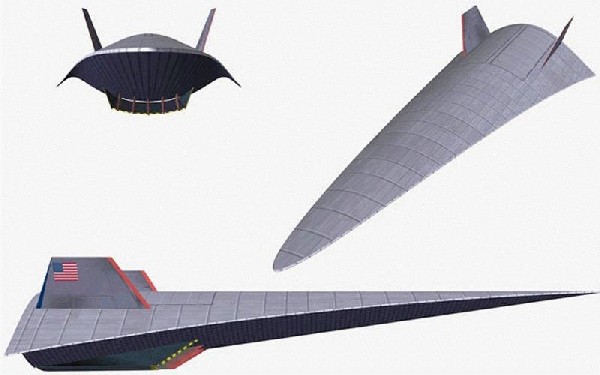
HyperSoar hypersonic Global Range Recce/Strike Aircraft the size of a B-52 could take off from the US and deliver its payload to any point on the globe - from an altitude and at a speed that would challenge current defensive measures - and return to the US without the need for refueling or forward bases on foreign soil. Equipment and personnel could also be transported.
HyperSoar could fly at approximately 6,700 mph (Mach 10), while carrying roughly twice the payload of subsonic aircraft of the same takeoff weight.
The HyperSoar concept promises less heat build-up on the airframe than previous hypersonic designs - a challenge that has until now limited the development of hypersonic aircraft. The key to HyperSoar is the skipping motion of its flight along the edge of Earth's atmosphere - much like a rock skipped across water. A HyperSoar aircraft would ascend to approximately 130,000 feet - lofting outside the Earth's atmosphere - then turn off its engines and coast back to the surface of the atmosphere. There, it would again fire its air-breathing engines and skip back into space. The craft would repeat this process until it reached its destination.
A mission from the midwestern United States to east Asia would require approximately 25 such skips to complete the one-and-a-half-hour journey. The aircraft's angles of descent and ascent during the skips would only be 5 degrees. The crew would feel 1.5 times the force of gravity at the bottom of each skip and weightlessness while in space. (1.5 Gs is comparable to the effect felt on a child's swing, though HyperSoar's motion would be 100 times slower.) Although the porpoising effect of a HyperSoar flight might test the adventurousness of some airline passengers, this would not impact military or space launch applications.
Most current hypersonic designs rely on rocket engines to boost the aircraft to the edge of space, from where the craft essentially glides back down to its destination. Other designs simply use engines to push the aircraft through the atmosphere.
All previous concepts have suffered from heat buildup on the surface of the aircraft and in various aircraft components due to friction with the atmosphere. A HyperSoar plane would experience less heating because it would spend much of its flight out of the Earth's atmosphere. Also, any heat the craft picked up while "skipping" down into the atmosphere could be at least partially dissipated during the aircraft's time in the cold of space.
Another HyperSoar advantage is its use of air-breathing engines. Most conventional hypersonic designs rely on rocket motors to boost the aircraft to the edge of space. By not boosting to as high a velocity, and by dropping back into the atmosphere at the bottom of each "skip," a HyperSoar plane can utilize air- breathing engines, which are inherently more efficient than rocket engines. Also, HyperSoar engines would be used strictly as accelerators, rather than as accelerators and cruising engines - as in some hypersonic designs - thereby greatly simplifying the design and reducing technical risk.
Waveriders are aerodynamic shapes designed such that the bow shock generated by the configuration is attached along the outer leading edge at the design Mach number. The shock attachment condition confines the high-pressure region behind the shock wave to the lower surface of the configuration, which provides the potential for high lift-to-drag ratios. Waveriders also offer potential propulsion/airframe integration (PAI) benefits because of their ability to deliver a known uniform flow field to a scramjet inlet.
Enhanced mixing mixing between the fuel and airstream, and thus reduced combustor length and engine weight, is an important goal in the design of supersonic combustion ramjet (scramjet) engines. Cryogenic hydrogen fuel was chosen for air-breathing scramjet propulsion for the National AeroSpace Plane. Selection was based on its high specific energy, its high heat-sink capacity for structural cooling, and its ability to burn very rapidly and sustain flameholding in strained recirculation zones.
The HyperSoar concept has been under investigation by Lawrence Livermore National Laboratory for several years and is being discussed with the US Air Force and other government agencies. Livermore has been working with the University of Maryland's Department of Aerospace Engineering to refine the aerodynamic and trajectory technologies associated with the concept.
Other potential applications for HyperSoar aircraft include:
Space lift - HyperSoar could be employed as the first stage of a two-stage-to- orbit space launch system. Research shows this approach will allow approximately twice the payload-to-orbit as today's expendable launch systems for a given gross takeoff weight.
Passenger aircraft - A commercial HyperSoar airliner or business jet could reach any destination on the planet from the continental U.S. in two hours or less.
Freighter - A HyperSoar freight aircraft could make four or more roundtrips to, say, Tokyo each day from the U.S. versus one or less for today's aircraft. Analysis indicates a HyperSoar aircraft flying express mail between Los Angeles and Tokyo could generate ten times the daily revenue of a similarly- sized subsonic cargo plane of today.
Proponents estimate that approximately $140 million would be needed over the next few years to advance several technologies to the point where a $350 million one-third-scale flyable prototype could be built and tested. The development cost of full-scaled HyperSoar aircraft is estimated at about the same as spent to develop the Boeing Company's new 777, or nearly $10 billion.
have a nice day
 Attachment: hypersoar3view.jpg Attachment: hypersoar3view.jpg
This has been downloaded 91 time(s).
|
|
| |
|
|
|
DanS
|
 |
Kickball Capital of the World
Jan 1970
time: 00:29
|
|
Well, this is hardly going into production mode. More like looking for a blue sky design.
Overall, I think we should be spending money on making individual soldiers safer, better taken care of, and more powerful while in the field. It would seem that much better MREs would help morale, for instance. And better, less intrusive, body armor would be great too. Seeing our boys get taken out by snipers and RPGs in Baghdad--decidedly low tech--makes it apparent that a high political price is paid with little expenditure by a low-level intensity enemy. Anything to reduce the political price and to help bring our boys home in one piece would be very valuable. Further, this is something that is a need right now, not 25 years from now.
Objective Force Warrior is so riddled with defense research double-speak it's laughable, but I guess we would have to create such a program and beef it up, if one didn't already exist.
Last edited by DanS on 06-07-2003 at 03:06
|
|
| |
|
|
|
yavoon
|
|
quote:
Originally posted by GePap
Given that most of the possible competitors do not have to pay for as huge a force as we, they don;t have to pay much more. The biggest leap the uS has on anyone else is in space, with our satelite networks (the Japanese are as advanced in electronics as we are). This is were others would really have to spend lots to catch up. |
our experience and talent and equipment at force projection is a pretty vast gap too. even if technically someone did not lack the technology to do what we do. if they wanted to do what we do it would take them years and years and billions upon billions of dollars of R&D and set up.
|
|
| |
|
|
|
yavoon
|
|
even if everyone knows what a radar is. and aluminum and steel and titanium, computer chips..etc etc.
to tell a bunch of engineers to say go build a carrier battle group(the pinnacle of force projection). they'd be dumbfounded. just to put something in the water that isnt a joke would be billions upon billions of dollars. much less to tactically and logistically support, or to refine those tactics. or nething.
the gap is enormous. u underestimate the engineering challenge(as well as the monetary and political) of design and implementation. and put all ur emphasis on simply posession of the technology.
|
|
| |
|
|
|
GePap
|
 |
of the Big Apple
Nov 2001
time: 23:29
|
|
The gap is not enourmous. Stuides were done in the mid-90's showing that if the European's spent about 50 billion more a year on the military they would catch up, as far as smart bombs and so forth goes.
Airframes are a good example: the US does not make better airframes than anyone else: were US planes are better is in electronics, but the Japanese are as far ahead as we are there, at least, if you look at commecrial programs (In armor our lead is not the great (an M1A2 is not significantly better than a Leopard 2), and if a state like Israel can have top notch military programs, like the Arrow missile, on 15 billion a year, then 100 billion a year would do the Japanese nicely.
I would characterize the biggest US leads in the folowing areas:
Force projection: none of the equipment needed to do so is very revolutionary, but it is expensive, like mopre air transport and ships.
Stealth: certainly the US has a nice tech lead here.
Smart weapons: anyone who spends the money on the relatively cheap kits can catch up.
Naval power: to build a good navy is damn expensive, certainly with repect to building whole carrier groups: big outlays ould be needed here.
Space: Biggest lead here.
You greatly underestimate engineers. As I said, if the Irsalei can have so much on so little, other like the japanese and Europeans certainly can do serious catching up in a decade, if they moved thier military budgets to 4-5% of GNP.
|
|
| |
|
|
|
yavoon
|
|
quote:
Originally posted by GePap
The gap is not enourmous. Stuides were done in the mid-90's showing that if the European's spent about 50 billion more a year on the military they would catch up, as far as smart bombs and so forth goes.
Airframes are a good example: the US does not make better airframes than anyone else: were US planes are better is in electronics, but the Japanese are as far ahead as we are there, at least, if you look at commecrial programs (In armor our lead is not the great (an M1A2 is not significantly better than a Leopard 2), and if a state like Israel can have top notch military programs, like the Arrow missile, on 15 billion a year, then 100 billion a year would do the Japanese nicely.
I would characterize the biggest US leads in the folowing areas:
Force projection: none of the equipment needed to do so is very revolutionary, but it is expensive, like mopre air transport and ships.
Stealth: certainly the US has a nice tech lead here.
Smart weapons: anyone who spends the money on the relatively cheap kits can catch up.
Naval power: to build a good navy is damn expensive, certainly with repect to building whole carrier groups: big outlays ould be needed here.
Space: Biggest lead here.
You greatly underestimate engineers. As I said, if the Irsalei can have so much on so little, other like the japanese and Europeans certainly can do serious catching up in a decade, if they moved thier military budgets to 4-5% of GNP. |
they aren't doing so much though. look where the skills are, missile systems, tanks, airplanes. these are all individual programs for neighbor to neighbor combat.
and to say that the world makes better airframes when we make stealth airplanes is a lil bit weird in the logic.
to think of how long it would take for the world to have our naval sophistication, our stealth sophistication, and our expanding bomber sophistication. we have a ginormous lead.
a little bit of a tangent I wish I had that link to the guy who promised to make a cruise missile w/ a 100 mile range and 20kg payload for 10 grand, or was it 5 grand? that was badass.
|
|
| |
|
|
|
GePap
|
|
of the Big Apple
Nov 2001
time: 23:29
|
|
quote:
Originally posted by yavoon
and to say that the world makes better airframes when we make stealth airplanes is a lil bit weird in the logic. |
Stealth does not have much to do with airframes or engines. Sure, ycertaint shapes help reduce the radar signature, but the main thing is the materials you put on the plane, not the engines, nor the manueverability. An F-117 is utterly incapable of doing any air to air combat, and the flying wing notion of the B-2 is as old as WW2.
quote:
to think of how long it would take for the world to have our naval sophistication, our stealth sophistication, and our expanding bomber sophistication. we have a ginormous lead. |
The biggets bit of our naval lead is the fact we have 122 carries and no one else does. Certainly building a new aircraft carrier fleet form scracth would be a huge outlay for any competitor, but the problem is more about building it than designing it or the systems in it. Beyond number, I think our biggest lead in the sea is underwater, with our newest attack subs and with our SLBM's. As I said, the Japanese already have AEGIS ships like our Burke Destroyers.
|
|
| |
|
|
|
yavoon
|
|
quote:
Originally posted by GePap
Stealth does not have much to do with airframes or engines. Sure, ycertaint shapes help reduce the radar signature, but the main thing is the materials you put on the plane, not the engines, nor the manueverability. An F-117 is utterly incapable of doing any air to air combat, and the flying wing notion of the B-2 is as old as WW2.
quote:
to think of how long it would take for the world to have our naval sophistication, our stealth sophistication, and our expanding bomber sophistication. we have a ginormous lead. |
The biggets bit of our naval lead is the fact we have 122 carries and no one else does. Certainly building a new aircraft carrier fleet form scracth would be a huge outlay for any competitor, but the problem is more about building it than designing it or the systems in it. Beyond number, I think our biggest lead in the sea is underwater, with our newest attack subs and with our SLBM's. As I said, the Japanese already have AEGIS ships like our Burke Destroyers. |
stealth dictates the shape of ur airframe. so I don't see how u can say other ppl have better airframes when essentially we are designing stealth planes and they aren't.
I am not "underestimating the engineers." but when u talk about designing a carrier battle group. its simply an enormous undertaking. the US isn't going to hand you a blueprint of how to do it. its eminitely doable because u can make all the component parts and you know its been done before. but it will still take a ton of money TO DESIGN. then u get to spend a lot more building it and even more developing an infrastructure around it.
and when it comes down to it. our lead is all in the right place for the most part. sure the world has good airplanes. but what would the kill ratio be in the sky if u placed them against f-22's and awacs.
though russia has some very cool technologies. good innovation in russia. supercavitating torpedo's. the gas stealth. neways.
|
|
| |
|
| |
|
|
|
GePap
|
|
of the Big Apple
Nov 2001
time: 23:29
|
|
quote:
Originally posted by Kramerman
GePap, we give the Israelis much military aid. This no doubt helps them out a lot when i comes to tehir defense capabilities. thus they dot have to spend as much on equipment and can put that into their R&D. Also, Israeli Intellegence is AWESOME... it is this (virtually) precognition ability of Mosad (sp?) that has made Israel so effective in all of its wars, not tech. |
The US gives Israel about 3 billion a year in direct military aid. yes, this certainly is a fair proportion of their military budgetm but it is still only 3 bllion a year, and all of Israel's military budget about 13-15 billion a year. Plus nothing (but internal politics) is stopping other state from spending vast sums on R&D, nor the US for that matter. s for Israeli vcitories, it is training that was the biggest difference, but a qualitative edge certainly was crucial in many battles, and certaily exists today.
The US has such a better military than say the Europeans and Japanese becuase we would rather spend our money on the military and they on welfare programs. gain, if they really wanted, in a decade they could match the US in most areas, except at sea and in space, because both require huge initial spending programs that would take more than a decade to put together.
|
|
| |
|
|
|
Kramerman
|
 |
UT, Austin - The live music capital of the world
Jun 2002
time: 23:29
|
|
quote:
gain, if they really wanted, in a decade they could match the US in most areas, except at sea and in space, because both require huge initial spending programs that would take more than a decade to put together. |
indeed, i agree with this... but the tech gap when i was refering to it was the gap between the US and our enemies. Europe is not an enemy. Russia is..err... not really an enemy. China, is an enemy. North Korea is an Enemy. If they invested comparable amounts in military R&D, they would not catch up, at least not anytime soon. They would just, for the most part, keep the gap from getting bigger.
|
|
| |
|
|
|
DanS
|
|
Kickball Capital of the World
Jan 1970
time: 00:29
|
|
If they invested comparable amounts in military R&D, they would not catch up, at least not anytime soon. They would just, for the most part, keep the gap from getting bigger.
Not necessarily. Astute Chinese students of technology could figure out what works by the trailblazing research we have done. The first time through is the most expensive.
Last edited by DanS on 06-07-2003 at 11:06
|
|
| |
|
|
|
panag
|
|
MY WORDS ARE BACKED WITH BIO-CHEMICAL WEAPONS
Oct 2000
time: 07:29
|
|
quote:
Originally posted by Kramerman
GePap, we give the Israelis much military aid. This no doubt helps them out a lot when i comes to tehir defense capabilities. thus they dot have to spend as much on equipment and can put that into their R&D. Also, Israeli Intellegence is AWESOME... it is this (virtually) precognition ability of Mosad (sp?) that has made Israel so effective in all of its wars, not tech. |
hi ,
and what do we give , ........
and be happy about it , with what you guys give we pay you guys back , double time , first in jobs , second with technology in certain fields , ...... 
when we buy an F-15 , we send some engineers over , redesign this , that , that little piece , etc , ...... the result , the us navy is now going to use those "I" standards and specs , ....... so in the end there is an F-15I , .....
sometimes we get spare pieces for free , but thats no exception , every end user of us military equipment gets this , ...... and certain jobs are secure thanks to these gifts , ...... it beads paying social welfare to the people who work on the machines , ......
have a nice day
|
|
| |
|
| |
All times are GMT. The time now is 05:29.
Apolyton Time is 00:29. |
top of page
|
| archivepost |
|
Forum Rules:
You may not post new threads
You may not post replies
You may not post attachments
You may not edit your posts
|
HTML code is ON
vB code is ON
Smilies are ON
[IMG] code is ON
|
|
|
|
|
|






 04-07-2003 03:23





 |
|