|
| |
|

|
oedo
|
 |
and the revolution
Feb 2000
time: 05:30
|
|
http://www.guardian.co.uk/comment/s...1036571,00.html
quote:
This war on terrorism is bogus
The 9/11 attacks gave the US an ideal pretext to use force to secure its global domination
Michael Meacher
Saturday September 6, 2003
The Guardian
Massive attention has now been given - and rightly so - to the reasons why Britain went to war against Iraq. But far too little attention has focused on why the US went to war, and that throws light on British motives too. The conventional explanation is that after the Twin Towers were hit, retaliation against al-Qaida bases in Afghanistan was a natural first step in launching a global war against terrorism. Then, because Saddam Hussein was alleged by the US and UK governments to retain weapons of mass destruction, the war could be extended to Iraq as well. However this theory does not fit all the facts. The truth may be a great deal murkier.
We now know that a blueprint for the creation of a global Pax Americana was drawn up for **** Cheney (now vice-president), Donald Rumsfeld (defence secretary), Paul Wolfowitz (Rumsfeld's deputy), Jeb Bush (George Bush's younger brother) and Lewis Libby (Cheney's chief of staff). The document, entitled Rebuilding America's Defences, was written in September 2000 by the neoconservative think tank, Project for the New American Century (PNAC).
The plan shows Bush's cabinet intended to take military control of the Gulf region whether or not Saddam Hussein was in power. It says "while the unresolved conflict with Iraq provides the immediate justification, the need for a substantial American force presence in the Gulf transcends the issue of the regime of Saddam Hussein."
The PNAC blueprint supports an earlier document attributed to Wolfowitz and Libby which said the US must "discourage advanced industrial nations from challenging our leadership or even aspiring to a larger regional or global role". It refers to key allies such as the UK as "the most effective and efficient means of exercising American global leadership". It describes peacekeeping missions as "demanding American political leadership rather than that of the UN". It says "even should Saddam pass from the scene", US bases in Saudi Arabia and Kuwait will remain permanently... as "Iran may well prove as large a threat to US interests as Iraq has". It spotlights China for "regime change", saying "it is time to increase the presence of American forces in SE Asia".
The document also calls for the creation of "US space forces" to dominate space, and the total control of cyberspace to prevent "enemies" using the internet against the US. It also hints that the US may consider developing biological weapons "that can target specific genotypes [and] may transform biological warfare from the realm of terror to a politically useful tool".
Finally - written a year before 9/11 - it pinpoints North Korea, Syria and Iran as dangerous regimes, and says their existence justifies the creation of a "worldwide command and control system". This is a blueprint for US world domination. But before it is dismissed as an agenda for rightwing fantasists, it is clear it provides a much better explanation of what actually happened before, during and after 9/11 than the global war on terrorism thesis. This can be seen in several ways.
First, it is clear the US authorities did little or nothing to pre-empt the events of 9/11. It is known that at least 11 countries provided advance warning to the US of the 9/11 attacks. Two senior Mossad experts were sent to Washington in August 2001 to alert the CIA and FBI to a cell of 200 terrorists said to be preparing a big operation (Daily Telegraph, September 16 2001). The list they provided included the names of four of the 9/11 hijackers, none of whom was arrested.
It had been known as early as 1996 that there were plans to hit Washington targets with aeroplanes. Then in 1999 a US national intelligence council report noted that "al-Qaida suicide bombers could crash-land an aircraft packed with high explosives into the Pentagon, the headquarters of the CIA, or the White House".
Fifteen of the 9/11 hijackers obtained their visas in Saudi Arabia. Michael Springman, the former head of the American visa bureau in Jeddah, has stated that since 1987 the CIA had been illicitly issuing visas to unqualified applicants from the Middle East and bringing them to the US for training in terrorism for the Afghan war in collaboration with Bin Laden (BBC, November 6 2001). It seems this operation continued after the Afghan war for other purposes. It is also reported that five of the hijackers received training at secure US military installations in the 1990s (Newsweek, September 15 2001).
Instructive leads prior to 9/11 were not followed up. French Moroccan flight student Zacarias Moussaoui (now thought to be the 20th hijacker) was arrested in August 2001 after an instructor reported he showed a suspicious interest in learning how to steer large airliners. When US agents learned from French intelligence he had radical Islamist ties, they sought a warrant to search his computer, which contained clues to the September 11 mission (Times, November 3 2001). But they were turned down by the FBI. One agent wrote, a month before 9/11, that Moussaoui might be planning to crash into the Twin Towers (Newsweek, May 20 2002).
All of this makes it all the more astonishing - on the war on terrorism perspective - that there was such slow reaction on September 11 itself. The first hijacking was suspected at not later than 8.20am, and the last hijacked aircraft crashed in Pennsylvania at 10.06am. Not a single fighter plane was scrambled to investigate from the US Andrews airforce base, just 10 miles from Washington DC, until after the third plane had hit the Pentagon at 9.38 am. Why not? There were standard FAA intercept procedures for hijacked aircraft before 9/11. Between September 2000 and June 2001 the US military launched fighter aircraft on 67 occasions to chase suspicious aircraft (AP, August 13 2002). It is a US legal requirement that once an aircraft has moved significantly off its flight plan, fighter planes are sent up to investigate.
Was this inaction simply the result of key people disregarding, or being ignorant of, the evidence? Or could US air security operations have been deliberately stood down on September 11? If so, why, and on whose authority? The former US federal crimes prosecutor, John Loftus, has said: "The information provided by European intelligence services prior to 9/11 was so extensive that it is no longer possible for either the CIA or FBI to assert a defence of incompetence."
Nor is the US response after 9/11 any better. No serious attempt has ever been made to catch Bin Laden. In late September and early October 2001, leaders of Pakistan's two Islamist parties negotiated Bin Laden's extradition to Pakistan to stand trial for 9/ 11. However, a US official said, significantly, that "casting our objectives too narrowly" risked "a premature collapse of the international effort if by some lucky chance Mr Bin Laden was captured". The US chairman of the joint chiefs of staff, General Myers, went so far as to say that "the goal has never been to get Bin Laden" (AP, April 5 2002). The whistleblowing FBI agent Robert Wright told ABC News (December 19 2002) that FBI headquarters wanted no arrests. And in November 2001 the US airforce complained it had had al-Qaida and Taliban leaders in its sights as many as 10 times over the previous six weeks, but had been unable to attack because they did not receive permission quickly enough (Time Magazine, May 13 2002). None of this assembled evidence, all of which comes from sources already in the public domain, is compatible with the idea of a real, determined war on terrorism.
The catalogue of evidence does, however, fall into place when set against the PNAC blueprint. From this it seems that the so- called "war on terrorism" is being used largely as bogus cover for achieving wider US strategic geopolitical objectives. Indeed Tony Blair himself hinted at this when he said to the Commons liaison committee: "To be truthful about it, there was no way we could have got the public consent to have suddenly launched a campaign on Afghanistan but for what happened on September 11" (Times, July 17 2002). Similarly Rumsfeld was so determined to obtain a rationale for an attack on Iraq that on 10 separate occasions he asked the CIA to find evidence linking Iraq to 9/11; the CIA repeatedly came back empty-handed (Time Magazine, May 13 2002).
In fact, 9/11 offered an extremely convenient pretext to put the PNAC plan into action. The evidence again is quite clear that plans for military action against Afghanistan and Iraq were in hand well before 9/11. A report prepared for the US government from the Baker Institute of Public Policy stated in April 2001 that "the US remains a prisoner of its energy dilemma. Iraq remains a destabilising influence to... the flow of oil to international markets from the Middle East". Submitted to Vice-President Cheney's energy task group, the report recommended that because this was an unacceptable risk to the US, "military intervention" was necessary (Sunday Herald, October 6 2002).
Similar evidence exists in regard to Afghanistan. The BBC reported (September 18 2001) that Niaz Niak, a former Pakistan foreign secretary, was told by senior American officials at a meeting in Berlin in mid-July 2001 that "military action against Afghanistan would go ahead by the middle of October". Until July 2001 the US government saw the Taliban regime as a source of stability in Central Asia that would enable the construction of hydrocarbon pipelines from the oil and gas fields in Turkmenistan, Uzbekistan, Kazakhstan, through Afghanistan and Pakistan, to the Indian Ocean. But, confronted with the Taliban's refusal to accept US conditions, the US representatives told them "either you accept our offer of a carpet of gold, or we bury you under a carpet of bombs" (Inter Press Service, November 15 2001).
Given this background, it is not surprising that some have seen the US failure to avert the 9/11 attacks as creating an invaluable pretext for attacking Afghanistan in a war that had clearly already been well planned in advance. There is a possible precedent for this. The US national archives reveal that President Roosevelt used exactly this approach in relation to Pearl Harbor on December 7 1941. Some advance warning of the attacks was received, but the information never reached the US fleet. The ensuing national outrage persuaded a reluctant US public to join the second world war. Similarly the PNAC blueprint of September 2000 states that the process of transforming the US into "tomorrow's dominant force" is likely to be a long one in the absence of "some catastrophic and catalyzing event - like a new Pearl Harbor". The 9/11 attacks allowed the US to press the "go" button for a strategy in accordance with the PNAC agenda which it would otherwise have been politically impossible to implement.
The overriding motivation for this political smokescreen is that the US and the UK are beginning to run out of secure hydrocarbon energy supplies. By 2010 the Muslim world will control as much as 60% of the world's oil production and, even more importantly, 95% of remaining global oil export capacity. As demand is increasing, so supply is decreasing, continually since the 1960s.
This is leading to increasing dependence on foreign oil supplies for both the US and the UK. The US, which in 1990 produced domestically 57% of its total energy demand, is predicted to produce only 39% of its needs by 2010. A DTI minister has admitted that the UK could be facing "severe" gas shortages by 2005. The UK government has confirmed that 70% of our electricity will come from gas by 2020, and 90% of that will be imported. In that context it should be noted that Iraq has 110 trillion cubic feet of gas reserves in addition to its oil.
A report from the commission on America's national interests in July 2000 noted that the most promising new source of world supplies was the Caspian region, and this would relieve US dependence on Saudi Arabia. To diversify supply routes from the Caspian, one pipeline would run westward via Azerbaijan and Georgia to the Turkish port of Ceyhan. Another would extend eastwards through Afghanistan and Pakistan and terminate near the Indian border. This would rescue Enron's beleaguered power plant at Dabhol on India's west coast, in which Enron had sunk $3bn investment and whose economic survival was dependent on access to cheap gas.
Nor has the UK been disinterested in this scramble for the remaining world supplies of hydrocarbons, and this may partly explain British participation in US military actions. Lord Browne, chief executive of BP, warned Washington not to carve up Iraq for its own oil companies in the aftermath of war (Guardian, October 30 2002). And when a British foreign minister met Gadaffi in his desert tent in August 2002, it was said that "the UK does not want to lose out to other European nations already jostling for advantage when it comes to potentially lucrative oil contracts" with Libya (BBC Online, August 10 2002).
The conclusion of all this analysis must surely be that the "global war on terrorism" has the hallmarks of a political myth propagated to pave the way for a wholly different agenda - the US goal of world hegemony, built around securing by force command over the oil supplies required to drive the whole project. Is collusion in this myth and junior participation in this project really a proper aspiration for British foreign policy? If there was ever need to justify a more objective British stance, driven by our own independent goals, this whole depressing saga surely provides all the evidence needed for a radical change of course.
· Michael Meacher MP was environment minister from May 1997 to June 2003 |
this link is almost one week old. I found it on various pages now, but for some reason, it wasn´t discussed here, yet. so I couldn´t help...
|
|
| |
|
|
|
realpolitic
|
 |
Rogue States of America
Mar 2002
time: 21:30
|
|
Look at the site, www.newamericancentury.org then decide. Use the search feature to find "Pearl Harbor". You'll find the pre 9/11 references lament defence expenditures are the lowest since Pearl Harbor. Post 9/11 refer to 9/11 as Pearl Harbor. They also say that they have the right to shape world events as they wish on many pages.
Btw, Dan Quayle also signed the statement of principles, he was Bush Sr.'s VP who used to compare himself to Jack Kennedy, but couldn't spell potato.
Last edited by realpolitic on 13-09-2003 at 02:31
|
|
| |
|
|
|
realpolitic
|
|
Rogue States of America
Mar 2002
time: 21:30
|
|
Thanks, oedo, my search led me to that page too, I can't it on my computer.
Richard Butler, in an interview on CNN said before 9/11 that the US would offer the Taliban "a carpet of gold or a carpet of bombs"
http://www.cnn.com/TRANSCRIPTS/0201/08/ltm.05.html
That's a pretty provokative statement almost like they wanted to "shape events" into a new Pearl Harbor. That's bound to anger any country, ESPECIALLY the Taliban.
Last edited by realpolitic on 13-09-2003 at 02:46
|
|
| |
|
|
|
Peter Triggs
|
|
Gone Fishin, Canada
Jan 2000
time: 05:30
|
|
I had to go to the dentist yesterday and, while waiting, read the lead editorial in the Times:
quote:
Two years on
Myth and reality about September 11
The passing of time can dull a sense of emotional loss, but it also frames more clearly the significance and symbols of a traumatic event. The ceremonies to observe the second anniversary of 9/11 today will not, understandably, be on a scale or have the impact of those conducted 12 months ago. This does not mean that the atrocities directed at New York and Washington in 2001 have slipped, or will ebb, from the collective thoughts of Americans. The apparent anniversary reappearance of Osama bin Laden is itself a reminder of a threat embodied by him, but made real by others. The attack on the World Trade Centre has defined international politics for the past two years, and will do so for many years to come.
The distance of time has, however, allowed some to circulate their own, entirely fantastic and often highly offensive versions of history and obtain an audience for them. The combination of conspiracy theorists, an ugly anti-Americanism and the medium of the internet has led to appalling suggestions that the Israelis were responsible for this carnage or that the US Government was aware of the threat but let it proceed as part of a masterplan to control global oil. That Michael Meacher, a minister 13 weeks ago, should have chosen to swim in this sewer is shocking and shameful. An elementary reading of the facts, rather than an almost insane gathering of lies circulating in cyberspace, demolishes what is less a supposition than a symptom of sick minds.
|
The rest of it is here: http://www.timesonline.co.uk/newspa...-811658,00.html
I think I buy the 'sick minds' theory.
|
|
| |
|
|
|
Sava
|
 |
GO GO GO!
Mar 2001
time: 23:30
|
|
quote:
Originally posted by realpolitic
What did you expect those crooks to do? Help a down and out country? If so read the WTO thread. |
yeah, that's why I opposed the war in Iraq... DUH! did you even read my post?
quote:
PNAC is not something the Gaurdian just make up some of my friends were telling me about it in March, I'd have posted a thread, but I thought you'd have heard of it. |
There's a difference between what some whackjob think tank says and what this administration is capable of doing, politically. Bush wanted to go into Iraq the day he took office. But he had to wait and wait. And then 9-11 happened. And Bush wanted to go into Iraq then. But he couldn't... and he had to wait, and wait... and then he made this BS case against Saddam about WMD's. The public was fooled. But they are getting wise. Trust me, they will only give Bush so much support. Look at current poll numbers. Bush may be a dope idealist, but he's a politician first. 
And yes, this Guardian writer is a conspiracy theorist dope. I can't comment on Bush's personal vision for the world. But what he wants to do, and what the American people will allow him to do are two completely different things. This is still a Democracy, even if it his heavily influence by the corporate media.
 Attachment: dirtyliberals.jpg Attachment: dirtyliberals.jpg
This has been downloaded 165 time(s).
|
|
| |
|
|
|
mrmitchell
|
|
(haven't read the article btw)
And it's revealed! Michael Meacher is going to be on this month's cover of Duh! magazine, along with stoires about the Senator that said RIAA amnesty might not be the best thing.
|
|
| |
|
|
|
oedo
|
|
and the revolution
Feb 2000
time: 05:30
|
|
quote:
Originally posted by Sava
There's a difference between what some whackjob think tank says and what this administration is capable of doing, politically. |
come on! you really should know better. anything was possible after 9/11, this so called catalyzing event(page 63): Patriot Act, War on Afghanistan, War on Iraq, Guantanamo Camp...
and those people you just called whackjob think tanks now hold the power in Washington, especially in the Pentagon. one of the signers, Wolfowitz, made it the deputy secretary of defence. (I would be surprised if the other signers turned to street beggars now, but I admit, I don´t really know most of them)
browse through the newamericancentury-page and you will find other names holding key-positions now, for example Cheney, Rumsfeld and Jeb Bush, who signed the Statement of Principles.
and now see on page 4, how the puppet masters make George W. Bush dance to their rhythms:
Potential rivals such as China are anxious to exploit these transformational technologies broadly, while adversaries like Iran, Iraq and North Korea are rushing to develop ballistic missiles and nuclear weapons as a deterrent to American intervention in regions they seek to dominate.
or here on page 87:
We cannot allow North Korea, Iran, Iraq or similar states to undermine American leadership, intimidate American allies or threaten the American homeland itself.
the axis of evil. when I first heard it, I thought, this was just another lapsus linguae by GWB. now I suspect it wasn´t.
quote:
Bush wanted to go into Iraq the day he took office. But he had to wait and wait. And then 9-11 happened. And Bush wanted to go into Iraq then. But he couldn't... and he had to wait, and wait... and then he made this BS case against Saddam about WMD's. |
nice idea. let´s find out where he´s got it from:
The current American peace will be short-lived if the United States becomes vulnerable to rogue powers with small, inexpensive arsenals of ballistic missiles and nuclear warheads or other weapons of mass destruction. - page 87
quote:
The public was fooled. But they are getting wise. Trust me, they will only give Bush so much support. Look at current poll numbers. Bush may be a dope idealist, but he's a politician first. |
I wish I could share your optimism. well, time will tell.
quote:
And yes, this Guardian writer is a conspiracy theorist dope. I can't comment on Bush's personal vision for the world. But what he wants to do, and what the American people will allow him to do are two completely different things. this is still a Democracy, even if it his heavily influence by the corporate media. |
now, this is what really pisses me. you don´t really discuss the points Meacher makes. you only use some shoot-dead arguments like conspiracy theorist or stupid crap. case closed. others shout anti-america or set the funny  -smiley. period. any substance? nope. any arguments? zero. -smiley. period. any substance? nope. any arguments? zero.
so he´s a conspiracy theorist, because does nothing but quoting from the PNAC. I have to sleep over that.
good night

Last edited by oedo on 13-09-2003 at 07:36
|
|
| |
|
|
|
notyoueither
|
 |
of naught
Aug 2001
time: 22:30
|
|
We cannot allow North Korea, Iran, Iraq or similar states to undermine American leadership, intimidate American allies or threaten the American homeland itself.
It would be good for NK, Iran, and countries like Iraq to intimidate other nations and threaten North America (and Europe) with ICBMs?
Why the mention of an Enron power plant in India?
And when a British foreign minister met Gadaffi in his desert tent in August 2002, it was said that "the UK does not want to lose out to other European nations already jostling for advantage when it comes to potentially lucrative oil contracts" with Libya (BBC Online, August 10 2002).
And WTH does that have to do with the Persian Gulf and the American administration? Well duh! The UK wants good relations with Libya and access to fossil fuels there. Colour me shocked. Shocked, I say!
The problem with 'the points Meacher makes' is that he is making no points. He is rambling through the warehouse of wing-nut theories about how evil the administration of the US is.
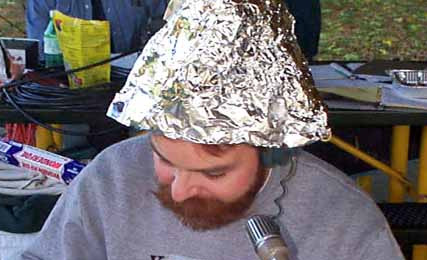
If you seriously believe that the FBI, NSA, and CIA in conjunction with the White House all let 9/11 happen, then you too need a tin foil hat.
|
|
| |
|
| |
All times are GMT. The time now is 05:30.
Apolyton Time is 00:30. |
top of page
|
| archivepost |
|
Forum Rules:
You may not post new threads
You may not post replies
You may not post attachments
You may not edit your posts
|
HTML code is ON
vB code is ON
Smilies are ON
[IMG] code is ON
|
|
|
|
|
|





 13-09-2003 01:38





 |
|