|
| |
|
| |
|
| |
|

|
DanS
|
 |
Kickball Capital of the World
Jan 1970
time: 00:28
|
|
especially those 1950-1970s international-style blocky buildings which have absolutely no personallity
I can definitely agree with that.
I'm very much amazed at how easily North American cities ruin the historic essense of their cities instead of making the business district separate.
Most were ramshackle cities without a whit of character anyway, so they weren't worth saving. 
Actually, I don't agree with your approach, especially West of the Apallachian mountains, where most cities were planned (at least here in the States). Things are where they are for reasons, such as proximity to transportation. Some of these reasons have changed over time, of course. Freeways have replaced the railroads, for instance.
But on the whole, if you built cities beside cities, you would have a disjointed city that lives for yesterday rather than today. The best cities have been able to reintegrate the elements that made them successful in the first place.
Anyway, there are some NA cities that have kept their historical downtowns while building highrises otherwise. New Orleans is a good example.
Last edited by DanS on 10-06-2003 at 20:55
|
|
| |
|
| |
|
|
|
Eli
|
|
Israel
Jul 2000
time: 07:28
|
|
Vagabond :
What is this building that is supposed to be the highest in the world?
|
|
| |
|
| |
|
|
|
Master Zen
|
 |
of naughty
Jan 2003
time: 23:28
|
|
Fez: I edited my post shortly after you posted, the Torre Mayor is currently the largest building in Latin America (see the edit after my pic). It was only finished last year, before that the tallest buildings were the "twin towers" of Caracas, about 20 ft smaller.
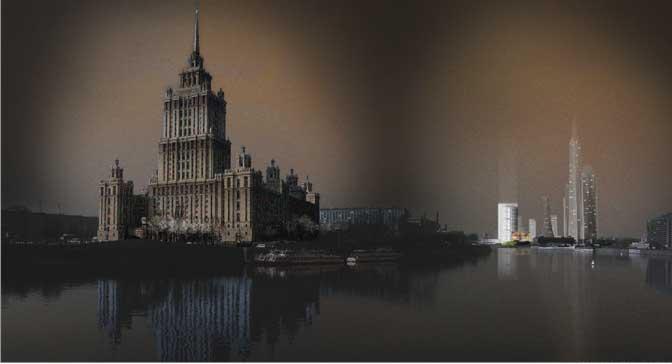
I guess the best deal is to blend skyscrapers (or any modern structures) with the historic cores of cities but without ruining either. And I agree that individual housing makes urban sprawl horrendous, just look at the cause and effect:
1) People want individual housing
2) People want individual transportation
3) Roads and highways are built towards the outskirts
4) Roads foment the spreading of the sprawl
5) Commuttes become longer, traffic worse, pollution worse.
I have read that some North American cities are re-adapting office buildings in downtown areas for residential use. I think that is a WONDERFUL idea, as businesses can move to satellite cities in the outskirts and more people can move into the downtowns which in these cities (save exceptions like NY) are very uninhabited. Plus, the "outer ring" of residential housing happens to be the inner city, which in NA is usually the most crime-ridden, lowest land valued area (the ghetto). I believe this revitalization has led to some degree to the rise in city populations (as opposed to metro populations) in major NA cities during the 1990s.
European cities are the opposite. Downtown and inner city housing is much more highly valued. Latin America is kind of different: Inner City is crap (mostly lower and working class multi-unit dwellings), "Outer City" is usually well off, and then you have the "Rings of Poverty' in the city's outskirts which are usually slums of the dirt poor or low low class, many times lacking infrastructure.
I think downtowns should be re-vitalized, I for one would forgo an individual house for a nice downtown apartment close to work.
|
|
| |
|
| |
All times are GMT. The time now is 05:28.
Apolyton Time is 00:28. |
top of page
|
| archivepost |
|
Forum Rules:
You may not post new threads
You may not post replies
You may not post attachments
You may not edit your posts
|
HTML code is ON
vB code is ON
Smilies are ON
[IMG] code is ON
|
|
|
|
|
|






 09-06-2003 09:08


 Apparently Madrid is the only place in the world where they have oblique skyscrapers. The district of Nuevos Ministerios is also cool.


 Attachment:
  |
|