|
| |
|

|
Barinthus
|
 |
A Magical Moment...
Jan 2004
time: 21:35
|
|
Oerdin, glad you're alright and hope the TB thing's not that serious. Like other said, excellent work.  It's always good to know we have folks like you over there representing the States. Shame on your higher-ups for not letting you guys go ahead with your efforts. It's always good to know we have folks like you over there representing the States. Shame on your higher-ups for not letting you guys go ahead with your efforts.
How did that videotaped Imam speech went? Did he stick to his word and denounced violence, etc?
What's ACR, btw? Armored Carrier Regiment? I'm guessing here. 
As for blog, perhaps persuade a trusted friend to help you set it up so you can just focus on writing and s/he can take care of the rest?
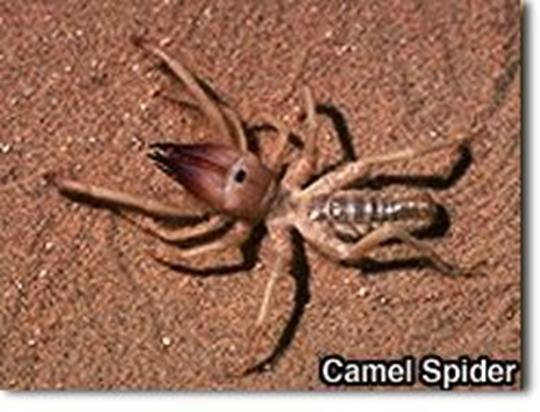
I'm curious, have you seen a camel spider? Over here, there have been some urban legends passing around on how they are poisonous, can run up to 30 mph, and can grow up to like a foot long and generally are like those parasitic alien lavrae in movie Aliens.
Here's a picture, I can't figure out how to post two pictures at same time so...
 Attachment: untitled.jpg Attachment: untitled.jpg
This has been downloaded 229 time(s).
|
|
| |
|
|
|
Barinthus
|
|
A Magical Moment...
Jan 2004
time: 21:35
|
|
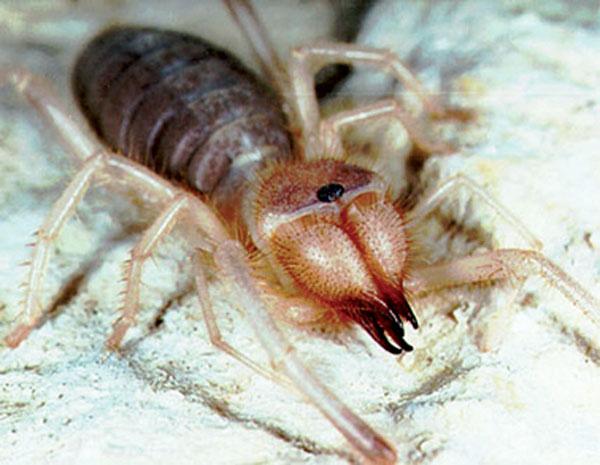
Front view, better picture...
Oh I forgot to add this... what I mentioned in the above posting is just urban legend bull. From what I read on the internet, those are not poisonous, they do run fast but not at 30mph, and while they can grow to a rather large size, a foot long is absurd. They primarily go out and hunt at nights only and tend to target livestock.
Attachment: untitled1.jpg
This has been downloaded 229 time(s).
Last edited by Barinthus on 21-05-2004 at 22:15
|
|
| |
|
| |
|
|
|
Oerdin
|
 |
of Internet Music.
Sep 2001
time: 21:35
|
|
Here's an article from the LA Times about the Amusement Park south of Al Kut which the CA Company I share living space with (along with the MPs) is rehabing.
[q]
Suspected militants to repair park
By Monte Morin, Los Angeles Times | May 20, 2004
KUT, Iraq -- In an unusual approach to guerrilla warfare, US Army commanders are hiring suspected members of a Shi'ite Muslim militia to help rebuild a rusted, abandoned amusement park that once drew thousands of families with its Ferris wheel, bumper cars, fountains, and picnic areas.
The plan may sound far-fetched. But commanders in the Second Armored Cavalry Regiment say it is based on this simple premise: Enemy fighters do not have time to fire rockets or mortar shells if they are busy earning a living. Rebuilding the amusement park should occupy dozens of men for weeks.
''Call it Six Flags Over Al Kut," quipped Colonel Brad May, the regiment's commander.
Throughout Iraq, the US military is funneling more than a billion dollars into projects to repair infrastructure and create jobs.
The Kut amusement park is the first public-works effort to target suspected followers of radical Shi'ite cleric Moqtada al-Sadr.
The project carries special significance for the military. Sadr's forces in Kut rallied at the park before taking part in the bloody uprisings that swept south-central Iraq last month. Since then, the park has been occupied by squatters, who herd scores of goats amid pink oleanders and towering date palms. Looters have dismantled a high wall, carting away the bricks in dump trucks.
A US officer said renovating the park might plant peaceful thoughts in the minds of some militiamen.
''This time they'll be here with picks and shovels instead of AKs and RPGs," said Army Captain Leonard Kergosian, referring to assault rifles and rocket-propelled grenades.
Of all the cities involved in the uprisings, only Kut was quickly retaken by US forces. The city of a quarter-million inhabitants has remained relatively quiet since, and Sadr's local office has been reduced to a bombed-out shell.
While violence still rages in Karbala and Najaf, US commanders in Kut say they have struck on the right combination of deadly force and economic encouragement to maintain peace.
''We carry a gun in one hand and wave with the other," said Lieutenant Colonel Mark Calvert, a cavalry squadron commander in Kut.
But in recent days, there have been signs of trouble. Patrols rumbling through the city have encountered a proliferation of new Sadr posters nailed or stenciled onto walls, and two suspected militiamen died over the weekend while tinkering with a bomb in their car.
Hoping to stamp out a potential fire before it caught, Calvert thought the renovation project could help. He already had spent or planned to spend hundreds of thousands of dollars on sewer, road, and school renovation projects, but the park could carry special appeal to residents. Many of its rides will have to be scrapped, but engineers hope to at least salvage its primary draw: the large, colorful Ferris wheel.
The only task that remained then was recruiting Sadr supporters for the job. That chance arrived last week during Friday prayers at a mosque whose members are loyal to the cleric. A patrol from the cavalry regiment stopped to talk with security guards and arranged a meeting with one of them Monday.
Over small glasses of tea, Calvert presented his offer to the Sadr contact: Fifty men would be paid $5 a day each to clean up and landscape the amusement park grounds. Two supervisors would get $15 each to oversee the work. The Army would pay $100 up front so that the supervisors could buy tools.
''I demand that people who work for me do a very good job," Calvert told the contact, Kassim Khlaf. ''I'll come by every day to check on the progress. If there's a problem, I will talk to you."
At that point, Khlaf chuckled lightly, shook his head, and said, ''Abu Ghraib -- noooo."
[/b]
|
|
| |
|
|
|
Bereta_Eder
|
|
One of rare examples of genuine humour by Moneypenny.
Needs to be commended.
|
|
| |
|
|
|
Oerdin
|
|
of Internet Music.
Sep 2001
time: 21:35
|
|
An intersting article which DanS posted in another thread but which seems appropriate for here.
quote:
"Najaf is dying"
A terrified Iraqi bookstore owner denounces the Mahdi Army as "barbarians" as Muqtada al-Sadr prepares for martyrdom at the hands of American troops.
- - - - - - - - - - - -
By Phillip Robertson
May 22, 2004 | NAJAF, Iraq -- On Friday afternoon, shortly after Muqtada al-Sadr gave a Kufa sermon that sounded like a goodbye message, Iraqis were running down the main street near the Tho al Fikar hotel. They were running because an intense firefight had broken out between U.S. forces and the al Mahdi Army. Or at least that is what started it. Al Mahdi snipers had taken their places on the tops of the hotels so they could get a good shot at the Americans and they were shooting east, toward the police station. Then fighters came inside the hotel and told journalists that if they went up to the roof they would be killed. Everybody ignored them. The snipers fired all afternoon and part of the evening, and from the roof of the Tho al Fikar, we saw a gas station throwing out a long skein of smoke into the sky.
In his Kufa sermon Muqtada had told his followers that they should fight on even if he was killed or captured, and the young leader took the time to thank various organizations, like the Sunni cleric's association, for their support. When I heard about the speech from a journalist who'd been there, it sounded like a retirement address, or a goodbye. Muqtada al-Sadr is getting ready. His photograph in Ansar al Mahdi, one of his official papers, shows an assistant dressing him in martyr's white, while the headline reads, "The Eagle of Benihashim Prepares to Die." The Benihashim are the descendants of the prophet Mohammed.
Just as the sermon was starting in Kufa, I walked down the long street that separates the Najaf medina from the new city until it hit a ramshackle market. I had been trying to get to al-Sadr's sermon, but it was impossible to drive to Kufa because a battle had started at the edge of town and the road was closed. Under a patchwork of orange tarps and ragged sheets, swarms of flies lit on rickety butcher counters, some still wet with blood. Friday is the traditional day that sheep are slaughtered in Iraq and the market had been full a few hours earlier. A moment later, a young al Mahdi fighter approached Mustapha, the translator, and insisted that it was forbidden to go any farther without permission. So we took a detour through the reeking market and listened to the sound of firing from an American gun, interspersed with rocket-propelled grenades. We ignored the al Mahdi fighter's instructions and headed toward the al Fikar, which was much closer to the fighting. Close to the market, we saw men huddled under the sheets in deep conversation. We were greeted politely, which is something of a miracle under the circumstances.
The city is gradually slipping into chaos; the fighting is longer and less predictable than it was two weeks ago. Najaf is polarized between two groups, one violent and one that advocates peace. I returned to try and understand the relationship between these two groups of Najafis and what had changed in the last month. Ayatollah Ali al Sistani, the most respected Shiite religious figure in Iraq, lives in a modest house near the Shrine of Ali. The house is on an alley just off Rasul Street, one of the rambling walking streets that lead to the gold-domed shrine at the center of the city. It is also off limits to visitors. At the entrance to the narrow alley, five dour men with rifles were waiting for Sistani's house to be attacked by the gunmen from the al Mahdi Army. Directly across the Rasul Street entrance to Sistani's alley, there is an al Mahdi Army checkpoint and the young fighters who were searching pedestrians on their way to the main square were only a few feet from the men who guard Sistani. They were busy pretending to ignore one another.
In the past week, fighters of the al Mahdi Army shot at Sistani's house several times in an obvious effort to scare him into keeping quiet. It's a desperate move. Other clerics in Najaf got the same treatment. Sheik Ali Najafi said that his father had received threats all the time, either unsigned notes or bullets. Everyone knows who is doing it. The Muqtada people don't appreciate what the clerics are saying about them. Recently, Ayatollah Ali al Sistani, who is originally from Iran, called for the al Mahdi Army to leave Najaf along with the American forces and take their fight elsewhere. It was a dangerous thing to ask Muqtada to do. If he withdraws from Najaf, the al Mahdi Army is finished. Muqtada al-Sadr, who has said in the past that he will obey all orders from the religious authorities, simply refused to go when the order came down.
Sistani and Sadr, through spokesmen and armed supporters, are now in a kind of low-level war. But by shooting at Sistani's house as well as the offices of other senior clerics in Najaf, Muqtada has lost most of the support he had in civilian Najaf, leaving only the armed boys and the younger clerics backing him. The city has seen the religious pilgrims, its major source of income, scared away and the citizens who depend on them are getting angry. In a town where religious life and daily life are identical, attacks on respected clerics amount to nothing less than crimes against Islam. Muqtada al-Sadr's father, Mohammed Sadiq al-Sadr, was killed by Saddam Hussein in 1998, and following his death the Shiite community in Iraq convulsed. There will certainly be more violence if Muqtada dies at the hands of the Americans, but he is not a marjah -- a religious elder -- and does not command the respect his father did. Muqtada al-Sadr cannot issue fatwas, for example. His wake will be violent for different reasons, and everyone in Najaf is waiting for the hammer to fall.
On Wednesday afternoon, a few feet from the Sistani checkpoint, a middle-aged Iraqi man was walking to his small bookstore. Al Mahdi Army fighters have made a point of threatening his life, so it is better to just call him Ali. Ali was tired; there were dark circles under his eyes, which I noticed when he rolled his glass display case toward the sidewalk. He was opening up shop and rolled the display case out on small ingenious rails of his own design. Ali built them so the store could be folded up and put away when business was done. It reminded me how many Najafis had learned in the past few months to retreat from the fighting without leaving town. They had adopted a lower profile, pulled the doors closed and disappeared. Ali, the notable exception, was opening his shop while everyone else was closing theirs. He is living in fear for his life and he is not sleeping well. Things are breaking down.
"The Al Mahdi Army are all barbarians, they are mindless, they can kill anyone and no one will say anything," Ali explained under shelves full of dusty Islamic volumes. He took me back to the Internet cafe and pulled up a digital snapshot of the newspaper Ansar al Mahdi, and it showed a man in Iraqi clothes who had been hung, the rope still around his neck, the head forced into an unnatural angle. He craned his neck toward the ceiling. The man's body was slumped in a chair. The executed man was holding a large yellow placard that described him as a collaborator. "They are proud of it, look, they published it themselves," Ali said in disgust when he brought up the image. He told me that they had probably executed people suspected of spying in the Islamic court a few blocks away. The picture looked authentic; the paper was dated the 28th of April. "Najaf is dying," Ali said.
I asked Ali if he was getting threats from the al Mahdi Army. He nodded. It happened all the time. Ali said a Muqtada gunman recently told him, "We know you are a spy for the Americans. You are worth $10,000 if we kill you." This threat was one of many they had made against the bookseller. That is their style. The al Mahdi fighters think everyone is a spy who is not part of their organization, and now that people are turning against them there is a certain amount of truth to it. They are suspicious of foreign journalists, but they are far more worried about the people of Najaf. After my conversation with Ali, it was easy to see why. Ali hates the al Mahdi people in a visceral way and walks down Rasul Street with his haunted look without trying to hide from the packs of armed men.
When Ali brought out the cold soft drinks, he came out and said that the al Mahdi Army was receiving new shipments of weapons from outside Najaf -- he thought from Iran. I asked him how he knew about the guns. "I saw them unpacking crates of rifles near the Sadr office," Ali told me. "The roads are open, anyone can bring them in." I have heard the story about the weapons shipments many times in the last few days, but it's hard to track down the details. A number of observant people are certain that arms are coming in, but they aren't sure where they are coming from. It is also true that there are unfamiliar, new-looking rifles held by some of the checkpoint soldiers. These weapons are much better than the old Kalashnikovs which are everywhere in Najaf.
Before leaving, Ali gave me an important tip. He told me that the sheiks were convening a meeting to demand that Muqtada leave Najaf. The meeting would take place the next morning, out in the country, at a place called Misha'ab. Muqtada's support was about to take another blow.
On Thursday in Misha'ab, a farming village near the Euphrates River, sheiks from large and small tribes filtered into the large hall in the mosque. There is a throne at one end of the long room and the congregation of men wore the black cord over the black checked kaffiyehs. All wore their white dishdashas and thin woolen abays, a tribal symbol of rank. One old sheik sat with great dignity, holding a walking stick made from a piece of rebar. Another man brought coffee in small cups and was careful to offer a drink to every one of the several hundred men who were waiting for sheik Haider al Fatlawi to make a statement. Fans on long poles stirred the air in the room. The sheiks, who are famous for shifting allegiances, chatted with one another and seemed to be in a good mood. They weren't there to negotiate; they had come in an act of solidarity, and to send a message to the al Mahdi Army and Muqtada al-Sadr. After several hours, al Fatlawi appeared and called for the militias to leave Najaf and Karbala, which was expected, since Sistani has said it several times before.
Al Fatlawi is not only the highest-ranking tribal leader in the area, but also an important advisor to Sistani. It seemed that Sistani had called the meeting, and the sheiks had responded with their support. In the tribal meeting hall, the Husseiniya, Al Fatlawi, handed out a printed statement, made a few restrained comments for the cameras and then vanished. We expected a speech but didn't get one. The printed statement, which repeated all the familiar requests that Sistani had put to Muqtada, ended by saying that attacks on the religious elders would not be tolerated. Tribal authorities and police should take control of Karbala and Najaf as well as guard the marjahs. All other military forces should leave. Sistani's office had also countered Muqtada's request for help from fighters outside Najaf, saying that they shouldn't come, that they weren't welcome in the city. It was a problem only for Najafis to solve.
After al Fatlawi handed out the sheet of paper, the sheiks filed slowly out of the hall and assembled on Misha'ab's main street for a demonstration. They walked under the burning sun, chanting that they would defend their religion. It was a rhythmic song like Muqtada's but with none of the anguish and requests for divine intervention. Their voices weren't raw like the fighters'. Around them, thin men from the tribes, armed with Kalashnikovs, guarded the demonstration. A pickup truck of Iraqi police went down the main street. Out in the country, they were safe from attack by the al Mahdi Army and they seemed relieved to be doing a useful job without the threat of assassination.
Back in Najaf that afternoon, I tried to visit Sistani's house to see how it had been attacked by the gunmen, but the dour men at the Sistani checkpoint were not interested in showing the bullet marks to journalists. They were following instructions to keep the press away from the marjah. If I wanted to speak to a representative, I was supposed walk down Rasul Street to the Sistani office. At the home of another cleric, I was told to prepare questions in advance and never bring up politics. "The community of elders is above politics and will not speak about them," the representative explained. But politics in its most explosive form was all around us.
The war between the al Mahdi Army and the coalition forces has created an environment of merciless self-censorship among the clerics. Sheik Ali Najafi said at one point in the interview, "Please ask your question in a more indirect way." But it was ridiculous to formulate it in an indirect way. I wanted to know what kind of threats they were getting from the al Mahdi Army. What sort of pressure were they under? If we couldn't talk about what was happening, there was nothing to talk about. Just as our talk ended, a fighter fired a rocket-propelled grenade nearby and it made the characteristic kettle-drum sound when it detonated. Still, we were not allowed to talk about it.
At the Sistani office, where I expected to have to prepare questions in advance and promise not to ask about current events, I met the editor of Holy Najaf, a Sistani-run magazine. He was young and willing to talk. Saeed Raith Shabbar, a slight, handsome man in a black turban, admitted that someone shot at the roof of Sistani's house but couldn't say anything else. He didn't want to further inflame the situation. "We hope that the American government respectfully takes the advice of Saeed Ali Sistani to leave Najaf. If they do it, they will prove to the world that they are civilized. If there is damage to the shrine, it will be the responsibility of the groups who are fighting," Shabbar said. He knew that neither force would withdraw from the city because Sistani and the other marjahs requested it. "If someone does not obey your request, you cannot give him an order," he observed and shrugged.
I asked him if he wanted to say anything else and he made this observation: "When I watch the news from all over the world, I feel that we have returned to the Stone Age. The people fighting cannot stop and return to peace." This observation had been on his mind and he wanted to make sure the translation was correct. "All of humanity is suffering right now because of fanatics." This is exactly what he wanted to say and he had written it down to make sure we got it right. For Shabbar, Bush and Muqtada were manifestations of the same fault in human nature, the mysterious blown fuse that leads people to destruction. We considered what it took to make such a person, the banishment of doubt, the ugliness of absolute belief without reason. Najaf and Karbala were two places where the fanatics of the world were duking it out, a small stage that represented the greater world.
"When they pick up a gun, they become monsters," Shabbar said when I was leaving. He made the intensifying war in Najaf simple by showing that it was ultimately pointless. I was sorry to go. As I walked out the door with my translator Mustapha, the al Mahdi fighters watched us carefully. On Friday, when I came back through the al Mahdi checkpoint, they said to me, "We know you're against us."
From the roof of the al Rasul hotel at 11 o'clock that night, we watched the U.S. and the al Mahdi fighters engage in a two-hour battle. There was a long line of bright flashes that stretched from the western boundary of the city near the Najaf sea all the way to 1920 square on the east side, an electrical storm brought to the earth. There were flashes and detonations from the direction of Kufa. Red tracers floated up in perfect arcs while al Mahdi snipers fired away, sometimes at nearby buildings. Someone was shooting at the al Mahdi fighters inside the city, but we couldn't see it and it was difficult to move down the dark streets.
From the roof of the al Rasul, we knew that most of the battle took place at the northern edge of the vast graveyard for the shrine, but there were shots from other places in the city as well. American machine guns have a deep, froglike sound that Russian weapons do not, so it is easy to know where the Americans are. We also know that the shots we heard were not only directed at the Americans because there are also sounds of Iraqi weapons firing and answering. This means that other, hidden battles are taking place in Najaf; armed forces are attacking the al Mahdi fighters from rooftops and cars, anti-Muqtada men moving through Najaf looking for easy targets.
Two new men have moved into the al Rasul tonight. They have come from Basra and they are volunteers for Muqtada's militia. They are here because they responded to his appeal for help. The two men did not come with their guns -- they will pick up their weapons tomorrow after the al Mahdi officials give them their IDs.
After visiting the shrine and praying, they went out for a bite to eat. The two men didn't stay out late, because tomorrow will be a long day.
|
|
|
| |
|
|
|
Oerdin
|
|
of Internet Music.
Sep 2001
time: 21:35
|
|
Today we've hired several artists from the Al Kut Center of the Arts in order to paint pro-peace (read anti-Sadr) murials around the city. The city has a real darth of public art so this is a great chance to improve that and to employ local artists. So far we're putting two murials at the Amusement park, one at the university, one in the town market place, and another near the main bridge over the Tigris.
We also finally got an airlit of new leaflets, posters, and handbills to distribute which is good because we'd given out most of our best stuff already. We divided the products up amoungst the various units here in Al Kut and we're going to let them do most of the drudge work of actually distributing the products to the people. The regular soldiers seem to like doing this and the Iraqis just love to get anything for free so it seems like a good arangement.
Lastly, there has been much talk here of Ahmad Chalabi of late. Chalabi was once Rumsfield's golden boy even though the Iraqi excile had a checkered past. Chalabi was forced to leave Iraq by Saddam though he was able to take his considerable wealth with him; he started a string of shady business throughout the Arab world and in his spare time ran an organization called "the Iraqi National Congress". The INC was/is a group of Iraqi exciles who worked for the over throw of Saddam's regime and although the INC was not well liked by the Iraqi people it, along with the Kurdish Regional Government, became the Bush Administration's main recipiant of money to Iraqi opposition groups.
Last year, dispite the fact that the Jordanian government had an arrest warrent out for fraud against Chalabi the Bush Administration named him as a key member of the Iraqi Governing Council. On the council Chalabi not only gained a reputation for being a administrations voice in the IGC but he also gained a reputation for corruption and nepitism. Last week it came to light that Chalabi had been skimming millions off of Iraqi government accounts in addition to possibly selling US and UK military information to the Iranian government. Now, Chalabi is a persona nongrata in Baghdad and his house has been raided by both Iraqi Police and the CIA.
An interesting story and one which, atleast in my mind, reflects on how little the Bush administration cares about the types of friends it associates with.
Last edited by Oerdin on 24-05-2004 at 02:24
|
|
| |
|
|
|
debeest
|
|
quote:
Originally posted by Oerdin
Bump for the hell of it. |
Not to worry, Oerdin. This thread won't drop.
|
|
| |
|
|
|
Oerdin
|
|
of Internet Music.
Sep 2001
time: 21:35
|
|
Here is an interesting article someone else posted in a different thread and I thought I'd post in this thread. It's about a bayonet charge that Scottish soldiers did in southern Iraq recently.
quote:
http://www.dailyrecord.co.uk/news/t...-bayonets-attac hed--they-finished-off-the-enemy-who-had-not-run-away---name_page.html
SCOTS soldiers last night told how they launched a bayonet charge on Iraqi militiamen after hours of battle.
An Army insider last night gave the Record an insight into the bravery of the Argyll and Sutherland Highlanders.
They were forced to use 'cold steel' as supplies of ammunition ran low.
Many of the militiamen turned and fled but the close-quarters fighting left around 20 rebels dead.
Thirty-five of Shia Moslem cleric Muqtada al-Sadr's followers died and two British troops were injured during the three-hour battle.
A senior Argylls officer said last night: 'After a fierce fight and with small amounts of ammo left, they put in a conventional left-flanking attack.
'With bayonets attached, they finished off the enemy who had not run off.'
It was the first time in 22 years the Army had used bayonets in action.
The last came when the Scots Guards stormed Argentinian positions during the Falklands War.
The battle developed following a distress call from a group of eight British soldiers last Friday.
The troops under the command of Major Adam Griffiths were surrounded on the notorious Route Six highway while en route to Camp Abu Naji in southern Iraq. Their LandRovers were riddled with bullets and they came under attack from rocket launchers and grenades.
But as a 30-strong platoon of Argylls responded to the SOS, the militia were getting reinforcements.
The men from the Stirlingshire-based regiment were forced to dig in and shoot back.
The Argylls were aided by a detachment of the Princess of Wales' Royal Regiment, who arrived at the scene in armoured Warrior vehicles.
More than 150 Iraqis were said to be involved in last week's battle. Military sources say the militiamen miscalculated the response from the original group of soldiers.
Last night, a source said: 'Morale is very good following this serious incident.
'The insurgents have been laying ambushes on Route Six one of the main roads between Basra and Baghdad for some time.
'Previously, the response from small British groups has been drive on. These militiamen were obviously expecting this to happen again.
'The enemy have been picking their targets, mainly two LandRovers with six to eight soldiers on board. With those odds, it is sometimes best to keep on going, but the attack was so sustained, the LandRovers stopped and returned fire.
'We now hope that these attacks on Route Six will stop, but we are taking nothing for granted.'
Intelligence gathered since the bayonet charge suggests it shocked the militia fighters, who expected the outnumbered Scots to flee.
The source added: 'The injuries received by our troops were shrapnel to the hand and shrapnel to the groin. Both of these casualties were as a result of rocket-propelled grenades fired at them.
'Both the injured guys are back with their units and doing fine.'
The Princess of Wales' Royal Regiment arrived on the scene in 37ton Warriors just as the Scots' ammo was getting low.
They found many Iraqi militia fleeing the bayonet charge.
Around 20 Iraqis who chose to stand and fight were killed by the troops of both regiments.
The Argylls' forebears formed The Thin Red Line which kept 25,000 Russians at bay at Balaclava during the Crimean War of the 1850s.
In 1967, Argylls commander Lieutenant-Colonel Colin Mitchell known as Mad Mitch stormed a rebel stronghold in Yemen.
Accompanied only by 15 pipers playing Scotland The Brave, he recaptured Crater Town, the commercial heart of Aden, which had been in enemy hands for two weeks.
The regiment has won 16 Victoria Crosses.
|
|
|
| |
|
|
|
Oerdin
|
|
of Internet Music.
Sep 2001
time: 21:35
|
|
Here's a quick post to catch everyone up on what's been going on lately. Three days ago I escorted a CNN camera crew around Al Kut so they could do a story on the ICDC. I've never seen the young man who worked as a reporter before and he didn't seem like he wanted to talk to us very much which I thought was strange for a reporter. Still, his producer was much nicer (and she was pretty cute to boot) and we introduced them to several of our local ICDC contacts and we arranged an interview with the local RTI team. RTI is an American company which has the contract to train and equip the ICDC; the Iraqi recruits have to go through a two month basic training course that trains them not only on military subjects but also teaches them about the military's proper role in a democracy, proper prisoner handling techniques, and a course on Iraqi laws. I'm hoping to see the article air on CNN even if I don't get any cameo appearances. 
Yesterday, was dedicated almost entirely to preparing and taking part in the new student forum at Al Kut University. Before COL Calvert arrived we did a security sweep of the building for weapons and explosives then helped station the infantrymen in various positions in and around the building; we also made sure that Al Kut TV (the local IMN affiliate), the two town newspapers, and the reporter from the university newspaper got good spots where they could record the whole proceedings. When the COL arrived he gave a brief speech and then the floor was opened to questions from the faculty and students. All of the questions were well thought out and the COL did an excellent job of anwsering those he could and of telling people which policy desisions were made by people above him. By in large the crowd was friendly though several of the students seemed to be opprihensive towards the soldiers. I suspect that several of them thought we'd act like Saddam's old soldiers had though they seemed to warm up to us once we got to speak with them on a one to one basis. I guess they just had to find out that we were ordinary people too.
Today we went to a town called Al Hayy which is located approximately one hour south of Al Kut. Al Hayy is a major stronghold of Maqtada Sadr's Mahdi Army and it was originally under the control of the Ukrainian Army. One month ago local Mahdi representitives stopped by the Ukrainian base and told them that if they didn't leave town by sundown the Mahdi would attack and kill all of the Ukrainian soldiers. Unfortunately, instead of calling for back up or standing there ground the Ukrainian government ordered their soldiers to abandon their posts and retreat to Al Kut. When the Ukrainians left the ICDC also abandoned their posts that means that for the last month there has been no coalition presence in Al Hayy and the Mahdi Army has had free reign of the town. COL. Calvert has ordered the American Army to retake the police station, ICDC base, the town hall, and the old Ukrainian base plus he has ordered elements of the 2nd ACR to be perminently stationed in Al Hayy in order to maintain Coalition control over the town.
So any way when we left for Al Hayy this morning we were expecting to run into heavy fighting. After all the town was supposed to be over run with militia members for the last month and the towns people were believed to be supporters of Sadr. Luckily, no such fighting took place and we were abnle to sieze all of our objectives without opposition. The towns people even seemed to be friendly and no one was observed carrying weapons though Mahdi posters and Sadr propaganda were plasted all over the town. I believe we were the first American soldiers to enter this town and I believe that worked to our advantage because the British and American forces have reputations of being tough fighters who don't take nonsense from the locals while the Ukrainians have a reputation for running as soon as the going gets rough. This reputation may have helped us reestablish our presence in the town without shots being fired; it can't hurt that the people of Al Kut have been spreading positive word of mouth about the amount of reconstruction money the US has poured into that city since it took over from the Ukrainians last April.
Once I got back to Al Kut I found out that Sadr had requested a cease fire and the Coalition had agreed to temperarially stop offensive actions in Najaf as a show of good faith. I'm glad there is a chance to presue a peaceful end to Sadr's rebellion but in the end I think this is a mistake. Sadr will not just roll over and give himself up. He's murdered other shi'a clerics, shot people who spoke out against violence and terrorism, and we finally are beating him militarially. He's lost most of his leadership in the last three weeks and is reportedly a virtual prisoner inside the Imam Ali Mosque. He only wants a cease fire so he can reconstitute his militia not because he's had a dramatic change of heart and wants to renouce violence. He's weak now and we should be finishing him off so that we can make an example out of him so we can discourage the Badr Brigade and other militias from following in Sadr's foot steps.
|
|
| |
All times are GMT. The time now is 05:35.
Apolyton Time is 00:35. |
top of page
|
| archivepost |
|
Forum Rules:
You may not post new threads
You may not post replies
You may not post attachments
You may not edit your posts
|
HTML code is ON
vB code is ON
Smilies are ON
[IMG] code is ON
|
|
|
|
|
|





 21-05-2004 19:24


 She's from SD, I think


 |
|