|
| |
|
| |
|

|
molly bloom
|
 |
Lundenwic
Oct 2001
time: 15:37
|
|
quote:
Originally posted by Alexander01
Molly Bloom, you ought to cool down and stop being so antagonistic!
|
Dear me, I think you have the wrong person in mind.
quote:
"Yeah let's put all these crappy civs in the game and take out all the big influential ones!"
Fatimids in Egypt? I was under the impression that Egypt wasn't in Africa! |
No dear, it still is.
quote:
We only get 18 civs in the game! I don't want to see any of them wasted on the freaking Mwanamutapa! |
quote:
We already have India!!! Would you like an extra India? Would you like all the Indian civilizations that ever existed?
Oh that's right, I forgot. Yes, you would. |
quote:
You just don't get it, do you? You're just so infatuated with the historical underdogs that you think they ought to supplant everyone else. You're so desperate that people recognize Mali and the Chola and whoever else that you throw mainstream civ under the bus! Let's see Mali's Pyramids or Hanging Gardens or Great Wall!
I bet you'd throw out Rome to put in the Dahomey! |
Now who can that person possibly be ?
Obviously someone who shopped at The Spleen Venting Surplus Store recently.
Now in comparison with the tawdry attempts at misrepresentation and feeble sarcasm displayed by ArchDuke I've provided several reasons why Mali should be in, based not just on my own personal idiosyncrasies and idle whims, but on sound historical research and with reference to history books, internet sites, Unesco World heritage, Arab and European visitors and historians, and copious illustrations of the art and architecture of Mali, Benin, Ife and Songhai.
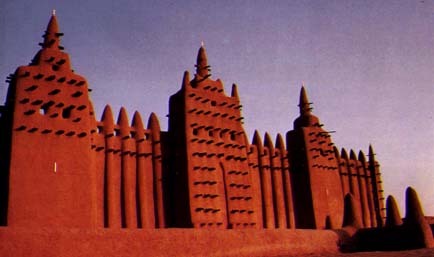
In response we've seen you claim that the Sankore Mosque and the Friday mosque in Djenne were 'mud huts' because they happened to be partly constructed of clay (a local material). Thus rendering them ineligible for 'wonder' status.
Based on that reductive slender criterion, we can safely say goodbye to any Mesopotamian ziggurats (clay and straw bricks).
The hypostyle and palace at Persepolis ? Too bad they used flammable wood as well as stone.
Scandinavian stave churches ? Japanese pavilions in Kyoto ? Chinese temples in Chang'an ?
All a bunch of old sticks.
As for the world famous university of Timbuktu, apparently Arch Duke didn't think that was of any account either.
Why?
Well, who could fathom those deep mysterious depths.
Not I.
quote:
Long dismissed by the Western art establishment as primitive and of interest only to ethnographers and anthropologists, African art has slowly come to be valued for its intrinsic beauty and artistic merit. A flurry of activity at major museums across Europe is evidence of its enhanced stature. After nearly 30 years in "temporary" accommodations, the British Museum's African collection returned triumphantly this spring to a new setting at the museum's London headquarters. The Sainsbury African Galleries can accommodate only 600 of the museum's inventory of more than 200,000 African objects, but some of these have been in the collection since the museum's founding in 1753, and the new showcase marks the first time they have enjoyed such prominence.
"An African should feel proud that his art, his heritage is being displayed in the Louvre," says Nureldin Satti, a senior official with the United Nations' cultural organization, unesco, in Nairobi and an enthusiast for the ancient arts of his own country, Sudan. "It helps raise awareness of the inventiveness and creativity of African man — that he is not the savage that people think."
Three-quarters of Mali's archaeological sites, including most of the graves built into the cliffs along the World Heritage-listed Bandiagara escarpment, have been looted. During the past decade thieves in Niger have damaged more than 90% of all known Bura sites, where 1,500-year-old terra-cotta figures have been found.
|
Ancient my Africa:
quote:
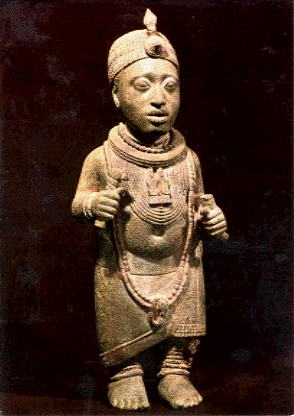
Among the Western Sudan's earliest forms of artistic expression are depictions of couples in terracotta and cast-alloy copper from Mali's Inland Niger Delta. These works have been related to the ancient urban center of Djenne-Jeno, three kilometers southwest of the contemporary city of Djenne. Archaeologists have determined that the site was settled about 250 B.C. and that it was continuously occupied by an ethnically diverse population for more than a millennium before its abandonment about A.D. 1500. It has been suggested that Djenne-Jeno's decline may have been related to the arrival of Islam and that a new urban settlement purged of traditional religious practices was established at Djenne once the community's leadership converted. |
Still someone values the civilization and culture of West and North West Africa:
quote:
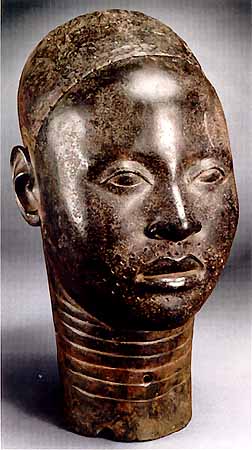
Yoruba, Ife, Nigeria
12th-15th Cenury
ZInc, Brass
31 x 9.5 cm
The National Commission for Museums and Monuments
Ife, Nigeria |
from the Stolen Treasures Index.
I'm loving this. I could get quite a feel for it.
Even more Africa in your eye:
 Attachment: ife.jpg Attachment: ife.jpg
This has been downloaded 98 time(s).
|
|
| |
|
| |
|
|
|
AeonOfTime
|
 |
Overclocking DOSBox
Nov 2000
time: 06:37
|
|
quote:
@Alexander01: I believe you are mistaken. The other Mali thread is the one that's supposed to die. This is its pitiful successor. |
Hell, most of the current threads don't really have any real purpose anymore with all the bashing going on. I wonder what's going to happen during the next four months while we all wait for Civ4 - without any new info, we don't have that much to say about it except getting stuck on trivial matters like whether Civ X really deserves to be in the game.
IMHO we are making mountains out of the small details we know about the game, and we're not really getting anywhere. I know it's nice to chat about what Civ4 can and cannot be, and like to contribute my opinion but it's getting really tiresome. But maybe that's just me...
quote:
@Xorbon: And speaking of the poll, it looks like people are pretty evenly divided on the issue. |
Which is a nice enough info, but only represents the posters here in the Civ4 forum, and I guess most of of the 'mainstream' players that will buy and play civ will not give any second thought as to whether the mali ought to be destroyed (or rather they will, but probably only while playing the game and not for the same reasons).
When I mentioned the mali being in the game to people around me with enough interest to play the game, they all said that they are a pretty cool choice. When I mentioned that there was quite a debate going on around their worthiness to be included at all and explained why, the general consensus was that they liked the image the mali give very much, that a Civ like the mali adds some mystery and a welcome touch of romance to game.
Of course you can always argue that 'mainstream' people don't have all the background they need to forge a good opinion on the matter, but even so their view counts as much as mine or yours. When I try to explain this to someone like my mother who doesn't play video games at all, she can't understand how someone can put so much weight on such a pitiful detail. She might also say something nasty like I should get a life as well as all game addicts 'out there' 
Conclusion: go ahead and bash some more, as I don't see any solution to the mali problem. There are those who like them, those who don't and even those who absolutely loathe their very being - and both sides have dug their trenches deep enough to last for years. Which makes me wonder why I am even writing this... maybe because I like you fools too much 
|
|
| |
|
| |
|
| |
|
|
|
Imran Siddiqui

|
 |
The Potterverse
Jan 1970
time: 00:37
|
|
quote:
Originally posted by Alexander01
Western prejudices of civs? I could just as easily accuse you of eastern prejudices of civs, but I haven't! Your thinly veiled insults are not warmly welcomed. |
Eastern prejudices?  And when have I advocated taken a European civ out in order to include an Asian one (I must have missed where I said the Germans should be replaced with the Tebetansi). The continent with the most civs is Europe, followed by Asia. They don't need another. And when have I advocated taken a European civ out in order to include an Asian one (I must have missed where I said the Germans should be replaced with the Tebetansi). The continent with the most civs is Europe, followed by Asia. They don't need another.
You wonder why someone 1/4th Turk, such as myself, would be against putting the Turks in at this time. The reason is that there is just so many Eastern European and Middle Eastern civs in the game already (Russia, Greece, Rome, Arabs, Egyptians, Persians), that sticking another is overkill when other valid civs are left by the wayside. Though I'd like to see them in another expansion. Some of us like to play the World Map and some of us like diversity in our choices of Civs so it doesn't seem like we are playing the same civ over and over.
As for my 'thinley veiled insults', if the shoe fits....
|
|
| |
|
| |
|
|
|
molly bloom
|
|
Lundenwic
Oct 2001
time: 15:37
|
|
quote:
Originally posted by Xorbon
Didn't you read? It's the "indigo dyed cotton cloth" that makes them unique.  |
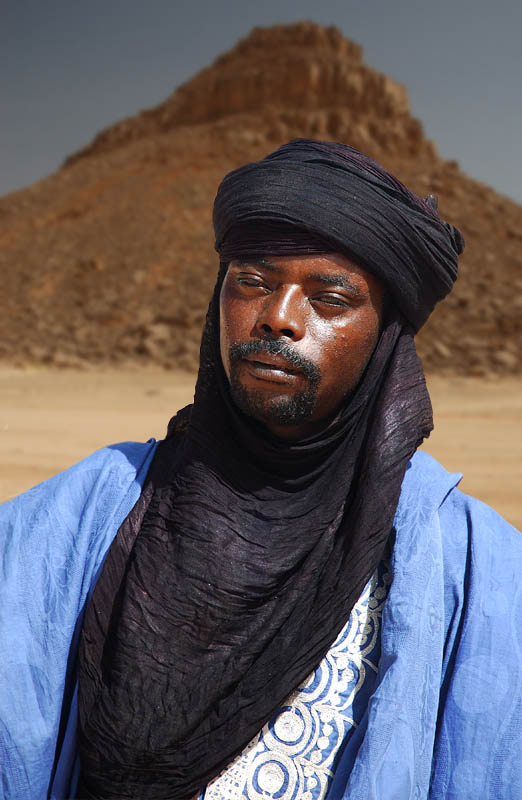
Ever heard of the blue men of the Sahara ?
Mali traded for indigo, and sold it on to the North African states. The colour blue is believed to have the fortunate capability of having a frequency that flies dislike mightily, which is why when you visit Morocco you'll also see those beautiful houses painted half indigo blue, half white.
quote:
not to be a downer, but a horseman with spear, short sword and chainmail armor is hardly unique. did they use any special sort of tactics or training with them? |
Kc7mxo
'T'ain't a stabbing short sword, it's a machete type slashing sword. The spear is what does the stabbing. Which Civ already in the game has a similar unique unit ?
It's either that or bowmen- and I believe there's already a unique unit archer in Civ.
quote:
Horses reached the savannah from the north during or even before the first millennium a.d. , but they apparently either lost size in a less favourable environment or were small ponies which gave their owners an advantage in mobility rather than combat, especially because they were ridden without saddles, stirrups, or bits. Larger breeds of war-horses with the necessary harness probably reached West Africa during the thirteenth century. The model may have been the Mameluke cavalry of Egypt, for their first use in the savannah is attributed to Mai Dunama Dibalemi (c. 1210-48) of Kanem, the state most in touch then with Egypt.
[...]
Yet war-horses conferred status everywhere, for their cost- between nine and fourteen slaves on the Senegambian coast in the 1450s- made their owners a relatively exclusive class new to West Africa. Their horsemanship was often dashing and ruthless. Their swords and thrusting-spears bred the cavalryman's contempt for missile weapons and their users:
" Our army pursued, killing and wounding, with swords and spears and whips, till they were tired of it. The enemy's cavalry spurred their horses, andleft theinfantry behind like a worn-out sandal abandoned and thrown away, and teher was no means of safety for thos eon foot save teh providence of God, or recovery from a wound after crouching in the darkness."
Ahmed ibn Fartua from 'The Kanem Wars', quoted in 'Sudanese Memoirs' by H.R. Palmer |
from:'Colonising Society in Western Africa', chapter 4 of 'Africans: The History Of A Continent' by John Iliffe publ. Cambridge University Press, 1995
quote:
MALI and SONGHAI armies were very similar with a high percentage of horsemen wearing chainmail and fighting with a long spear and sword. The cavalry relied on impact to break the dense formations of foot used by many of their enemies. Archers percentages may have been as high as 1/4 or 1/3. Native foot became more heavily armored as the empires grew. The forces used in campaigns were often custom designed for whether the target was Berbers in the steppes or a Mossi tribe located in a heavily wooded region.
Feudal levies and subject tribes still fought in local fashion, so should be light infantry or irregular loose or mass formations of mixed weapons. They were intentionally poorly trained and equipped to prevent revolts. The Songhai ghulams were a well -trained and equipped regular force. The long spear for both the cavalry and foot had a very wide blade and was considered very deadly. Therefore a player may want to rate his better infantry as either long spear or blade.
Mossi, Dogon, the early Fulani and other minor tribes had poorer quality equipment but could inflict defeats on the neighbouring empires.
|
http://www.fanaticus.org/DBA/armies...ahelafrica.html
Attachment: blueman.jpg
This has been downloaded 53 time(s).
Last edited by molly bloom on 05-08-2005 at 15:18
|
|
| |
|
|
|
molly bloom
|
|
Lundenwic
Oct 2001
time: 15:37
|
|
quote:
Originally posted by Kc7mxo
what stat bonus are they going to get?
and just about every horseman in history has used a slashing sword and a stabbing spear, i'm just trying to get a feel on what makes them unique. |
I'm not sure. Perhaps extra movement in desert or scrub land, and a defensive bonus against archers other than say, longbowmen or those using composite bows ?
And saying 'every horseman in history' et cetera is slightly inaccurate- you wouldn't use a stabbing spear on horseback unless you had stirrups, a saddle with pommel, or some other means of ensuring you didn't get knocked off whilst doing the stabbing, and so on.
So really it's every horseman in history except for the ones that didn't: the Huns, Parthians, Mongols, Celts et cetera.
No to mention other horsemen would have been armoured differently- leather, cotton or paper armour for steppe horsemen, metal breastplates for others.
Chainmail is more sensible for their climate, as the Fatimids and Mamelukes knew.
quote:
" Within the Ghana, Mali and Songhai Empires cavalry was used extensively, because the horses could survive in the smoldering grassland. With the right amount of funding, the empires could make very large regiments of cavalry. For instance, Ghana could field around 200,000 armed horsemen. These large forces of cavalry would secure trade across the savannah, and enabled the West African Kingdoms to conquer small regions easily, with the huge advantage. In western regions of Africa, not suitable for horses like the Gold Coast, tight armies that used handheld weapons, with the tactical aid of archers fought against outside rule. However for a very long time the cavalry dominated the majority of regions in Western Africa. "
" Each Empire to take control of the western savanna took advantage of cavalry. Those who mounted the horses of the great African cavalry had to be fairly great themselves. For instance, the cavalry of the Mali and Songhai Empire both primarily consisted of elite corps of the military, and membership was restricted to those of aristocracy."
|
'West African Wager: Houphouet versus Nkrumah'. The Scarecrow Press, Inc. Methuen, N.J. 1972
Jon Woronoff
' Beyond Chiefdoms: Pathways to Complexity in Africa'. Cambridge University Press. 1999
by Susan Keech McIntosh
http://www.plu.edu/~allenjjj/index.html
Attachment: djenne2.jpg
This has been downloaded 42 time(s).
|
|
| |
|
| |
All times are GMT. The time now is 05:37.
Apolyton Time is 00:37. |
top of page
|
|
|
Forum Rules:
You may not post new threads
You may not post replies
You may not post attachments
You may not edit your posts
|
HTML code is ON
vB code is ON
Smilies are ON
[IMG] code is ON
|
|
|
|
|
|






 01-08-2005 23:31


 )
) ) who care about minor issues like this. I think the 'casual' Civ gamer probably doesn't care what civs make the game.


 |
|