Apolyton Archive  |  Preserved copy of the Apolyton Civilization Site and its forums as they stood in September 2005. Read-only; nothing here can be posted to or replied to.  |  Forum index |  About this archive |  The 1998–2001 UBB forums
Today on Apolyton WARDELL INTERVIEW PROMO A.C.S. HISTORY CHAPTER 4 GET CIV4 /w FREE PLUS! A.C.S. PHOTO GALLERY GET A.O.M. V1.1
Apolyton Civilization Forums
main| civ2| civ3| civ4| smac| ctp2| ron| moo3| galciv| galciv2| alt| about|
ApolytonPLUS | register | search | faq | new posts | pm (-/-) | upload | members
hall of fame new! | civgroups | civgroups news | interviews | the column | radio | chat | directory | news | store | PLUS
Apolyton Civilization Forums : Powered by vBulletin version 2.0.3 Apolyton Civilization Forums > Miscellaneous > Off-Topic > All Hail the Glorious People's Revolution in Vietnam!
Show a Printable Version | Email This Page to Someone! | Receive updates to this thread | Report this to Apolyton news!
20.Sep: FOURTH CHAPTER IN `HISTORY OF...` PUBLISHED
13.Sep: NEWS ON THE FLY
06.Sep: APOLYTON DONATES TO HURRICANE RELIEF

bottom of page
   - CIVILIZATION 3 $9.99 - CIVILIZATION 2 from $6.95 - CIVILIZATION 2 from $4.25 - ALPHA CENTAURI + ALIEN CROSSFIRE (laptop collection) from $19.99 - ALPHA CENTAURI PC $9.99 -->
Author
Thread   
Pages (12): [ 1   2   3   4   5   6     >> ]
< Last Thread     Next Thread > Post New Thread     Post A Reply
Ted Striker is offline Ted Striker
Emperor
United States of America
Jan 1970
time: 21:18
  Old Post 01-05-2005 00:59 Visit Ted Striker's homepage!
Edit/Delete Message Reply w/Quote
#61 Report this post to a moderator
Support Apolyton, buy Civilization III: Complete

What is interesting is that the US is now Vietnam's biggest trading partner.

Agathon is offline Agathon
Prince
Leafs 4TW!! - CPA
Dec 2002
time: 00:18
  Old Post 01-05-2005 01:02
Edit/Delete Message Reply w/Quote
#62 Report this post to a moderator
Increase the size of your Attachments

quote:
Agathon, the pressure forced Gorbachev to seek changes, including arms reduction. Reagan responded to an extent. But still, he kept the pressure on his entire administration.


It had nothing to do with Reagan!!!! The problems of the Soviet Union antedated Reagan's administration.

More to the point, the Soviet Union didn't collapse until after Reagan, and most people were surprised.

Trying to say that Reagan slew the Soviet Union is revisionist history and does him a disservice.

Imran Siddiqui is offline Imran Siddiqui

Deity
The Potterverse
Jan 1970
time: 00:18
  Old Post 01-05-2005 01:06
Edit/Delete Message Reply w/Quote
#63 Report this post to a moderator
Support Apolyton, buy Alpha Centauri

quote:
It had nothing to do with Reagan!!!!


Ah the parroting of the left's dismissal of Reagan... they hope if they say it enough, it'll be true

It's funny, back in the 70s, they were talking about the Soviet strength... only to change their tune as the 80s went on, as Reagan pushed and pushed and then engaged in nuclear arms agreements with Gorby, but all the while not letting up.

Ask the Russians who they thought won the Cold War .

Last edited by Imran Siddiqui on 01-05-2005 at 01:12

BlackCat is offline BlackCat
Warlord

Jul 2004
time: 05:18
  Old Post 01-05-2005 01:12
Edit/Delete Message Reply w/Quote
#64 Report this post to a moderator
Support Apolyton, buy Civilization: The Boardgame

Actually Agathon has a point - the Soviet Unions problems can be dated back to approx 1920.

Imran Siddiqui is offline Imran Siddiqui

Deity
The Potterverse
Jan 1970
time: 00:18
  Old Post 01-05-2005 01:15
Edit/Delete Message Reply w/Quote
#65 Report this post to a moderator
Support Apolyton, buy Civilization 2

And North Korea's can date back to the late 1940s, but they are still keeping their stranglehold on power .

It's like saying the problems with South Africa were in place for decades and the sanctions in the 80s had absolutely nothing to do with ending apartheid. It seriously diminishes the effects the sanctions actually had.

It's similar to the lefties and Reagan. They want to diminish his effect on the collapse of the Soviet Union. They'd rather say it was a failed experiment than give the right wing its due .

chegitz guevara is offline chegitz guevara
King
Ft. Lauderdale, FL Communist Party of Apolyton
Jun 2000
time: 00:18
  Old Post 01-05-2005 05:35 Visit chegitz guevara's homepage!
Edit/Delete Message Reply w/Quote
#66 Report this post to a moderator
Help yourself to an AD-FREE life

quote:
Originally posted by Ned
Che, even if everything you say about the legitimacy of the Republic of Vietnam is true, what right did this give North Vietnam, with the material support of the USSR, to wage aggressive war to conquer it?


Once the United States invaded Vietnam, the North Vietnamese had every right to defend the people of Vietnam from imperialist aggression. If the U.S. hadn't invaded, the Viet Cong would have disposed of the puppet government by the end of the decade. In 1962, they were almost ready to declare a provisional government, but U.S. "advisors" were able to help keep the Southern dictatorship going a little longer.

Agathon is offline Agathon
Prince
Leafs 4TW!! - CPA
Dec 2002
time: 00:18
  Old Post 01-05-2005 05:40
Edit/Delete Message Reply w/Quote
#67 Report this post to a moderator
Increase Your PM Length

quote:
Ah the parroting of the left's dismissal of Reagan... they hope if they say it enough, it'll be true


Reagan followed policies that were put in place by Truman. It's not a dismissal of Reagan, just an acknowledgement of the facts. Reagan moved away from his confrontational stance in his second term and, with Gorbachev, did more than anyone to assure that the cold war ended peacefully when it did end. That is where he deserves credit, and I think that the left has been churlish in not granting it.

The neoconservative view of Reagan is a fabrication for political purposes. In many ways he wasn't that different from Bush Sr who was probably the last good president the US ever had.

You don't need to tell me this, I lived through it. I wasn't in diapers at the time.

Agathon is offline Agathon
Prince
Leafs 4TW!! - CPA
Dec 2002
time: 00:18
  Old Post 01-05-2005 05:41
Edit/Delete Message Reply w/Quote
#68 Report this post to a moderator
Full PM-box? Change here!

quote:
Once the United States invaded Vietnam, the North Vietnamese had every right to defend the people of Vietnam from imperialist aggression. If the U.S. hadn't invaded, the Viet Cong would have disposed of the puppet government by the end of the decade. In 1962, they were almost ready to declare a provisional government, but U.S. "advisors" were able to help keep the Southern dictatorship going a little longer.


The Green Berets is on telly in a few minutes. I might watch it just to gloat.

Agathon is offline Agathon
Prince
Leafs 4TW!! - CPA
Dec 2002
time: 00:18
  Old Post 01-05-2005 05:43
Edit/Delete Message Reply w/Quote
#69 Report this post to a moderator
Support Apolyton, buy Civilization: The Boardgame

And Imran, given that you weren't alive in 83-84 I doubt you remember just how ****-scared people were at the time. Older people have told me that it was the worst since the Cuban Missile Crisis.

The thaw between the USSR and the USA in the next few years was a welcome relief to everyone.

BlackCat is offline BlackCat
Warlord

Jul 2004
time: 05:18
  Old Post 01-05-2005 05:52
Edit/Delete Message Reply w/Quote
#70 Report this post to a moderator
Support Apolyton buy from Amazon

BS - I was certainly alive in 83-84 and people wasn't scared - quite opposite - people was optimistic.

Agathon is offline Agathon
Prince
Leafs 4TW!! - CPA
Dec 2002
time: 00:18
  Old Post 01-05-2005 05:55
Edit/Delete Message Reply w/Quote
#71 Report this post to a moderator
Lose 30 kilos (of popups)

quote:
BS - I was certainly alive in 83-84 and people wasn't scared - quite opposite - people was optimistic.


OK. Let's change that to intelligent people who knew what was going on...

Seriously, did you live in a hole? That was the time that there were umpteen million specials on the coming nuclear holocaust; the scare pic The Day After and a general worry that Reagan's militarism combined with the intractability of the post-Brezhnev Soviet leaders was going to end in a holocaust. For a couple of years it was all scaremongering all the time.

These were the heydays of the anti-nuclear movement, and for good reason.

BlackCat is offline BlackCat
Warlord

Jul 2004
time: 05:18
  Old Post 01-05-2005 06:05
Edit/Delete Message Reply w/Quote
#72 Report this post to a moderator
Support Apolyton, buy Call to Power 2

quote:
Originally posted by Agathon
quote:
BS - I was certainly alive in 83-84 and people wasn't scared - quite opposite - people was optimistic.


OK. Let's change that to intelligent people who knew what was going on...

Seriously, did you live in a hole? That was the time that there were umpteen million specials on the coming nuclear holocaust; the scare pic The Day After and a general worry that Reagan's militarism combined with the intractability of the post-Brezhnev Soviet leaders was going to end in a holocaust. For a couple of years it was all scaremongering all the time.

These were the heydays of the anti-nuclear movement, and for good reason.


Actually, my main concern was the buildup of nuclear weapons in eastern eourope - you know those deployed by soviet.

Ted Striker is offline Ted Striker
Emperor
United States of America
Jan 1970
time: 21:18
  Old Post 01-05-2005 06:06 Visit Ted Striker's homepage!
Edit/Delete Message Reply w/Quote
#73 Report this post to a moderator
Support Apolyton, buy Alpha Centauri

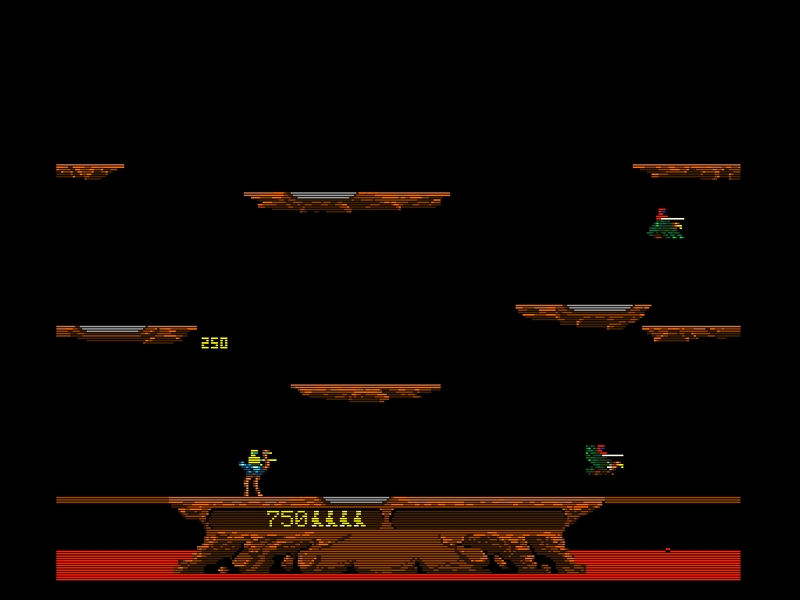
My major concern was seeing if I could get the high score on Joust!

Ted Striker is offline Ted Striker
Emperor
United States of America
Jan 1970
time: 21:18
  Old Post 01-05-2005 06:09 Visit Ted Striker's homepage!
Edit/Delete Message Reply w/Quote
#74 Report this post to a moderator
Remove this text

Dammit, I was doing an image search for "zany" screenshots of Joust, when I found that it is now available ONLINE as a Shockwave version.

My life is now over.

Agathon is offline Agathon
Prince
Leafs 4TW!! - CPA
Dec 2002
time: 00:18
  Old Post 01-05-2005 06:11
Edit/Delete Message Reply w/Quote
#75 Report this post to a moderator
Lose 30 kilos (of popups)

quote:
Actually, my main concern was the buildup of nuclear weapons in eastern eourope - you know those deployed by soviet.


No-one, least of all me, said it was all Reagan's fault. But you remember the times.

BlackCat is offline BlackCat
Warlord

Jul 2004
time: 05:18
  Old Post 01-05-2005 06:17
Edit/Delete Message Reply w/Quote
#76 Report this post to a moderator
Support Apolyton, buy Civilization 2

quote:
Originally posted by Agathon
quote:
Actually, my main concern was the buildup of nuclear weapons in eastern eourope - you know those deployed by soviet.


No-one, least of all me, said it was all Reagan's fault. But you remember the times.


Yes, and luckily first much later I leaned that Soviet and sattelites had plans for invasion including several nuclear weapons from day one.

Ted Striker is offline Ted Striker
Emperor
United States of America
Jan 1970
time: 21:18
Thumbs up  Old Post 01-05-2005 06:19 Visit Ted Striker's homepage!
Edit/Delete Message Reply w/Quote
#77 Report this post to a moderator
Support Apolyton, buy Civilization: The Boardgame

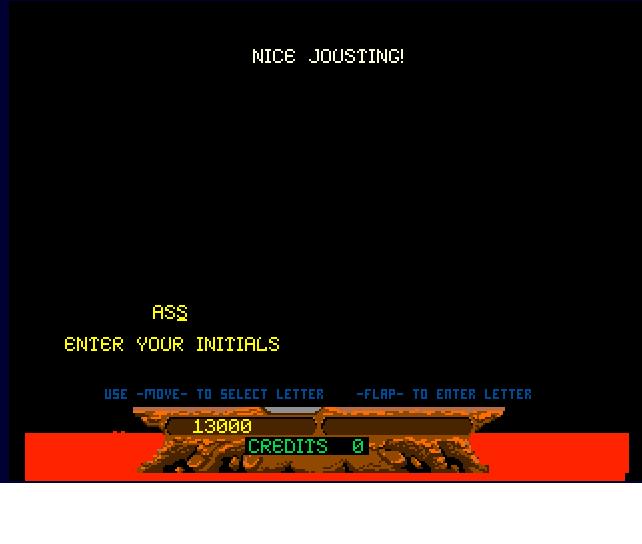
Just like old times.

Attachment: joust.jpg
This has been downloaded 74 time(s).

Agathon is offline Agathon
Prince
Leafs 4TW!! - CPA
Dec 2002
time: 00:18
  Old Post 01-05-2005 06:21
Edit/Delete Message Reply w/Quote
#78 Report this post to a moderator
Lose 30 kilos (of popups)

quote:
Yes, and luckily first much later I leaned that Soviet and sattelites had plans for invasion including several nuclear weapons from day one.


And what a period of sanity Reagan + Gorbachev turned out to be after Reagan + Andropov/Chernenko.

I think that Reagan was as terrified of nuclear war as anyone. Didn't he want to share SDI with the Russians once as a safety measure? I remember reading about that once.

and...

Every powerful nation has plans for invading almost everywhere. I imagine that the US has vague plans for invading Canada (they've probably even planned the donut stops).

Agathon is offline Agathon
Prince
Leafs 4TW!! - CPA
Dec 2002
time: 00:18
  Old Post 01-05-2005 06:23
Edit/Delete Message Reply w/Quote
#79 Report this post to a moderator
Support Apolyton

I just found this:

quote:
The Empire Strikes Out: Why Star Wars Did Not End the Cold War
By David Greenberg
From Foreign Affairs, March/April 2000


Way Out There in the Blue: Reagan, Star Wars and the End of the Cold War. Frances FitzGerald. New York: Simon & Schuster, 2000, 575 pp. $30.00.
When it comes to Cold War politics, the early 1980s appear, in retrospect, an embarrassment all around. The American left earnestly warned that with Ronald Reagan in the White House, nuclear annihilation was plausible or even likely. Self-styled Cassandras tried to roust a complacent public with overwrought doomsday polemics such as Jonathan Schell's The Fate of the Earth (recently described by Michael Kinsley as "the silliest book ever taken seriously by serious people") and the TV movie The Day After.

The right acquitted itself no better. Pointing to an alleged U.S. "window of vulnerability," Reaganites ranted as if Soviet world domination were imminent, matching the left's hysteria with their own bombastic rhetoric and films such as Red Dawn in, of all years, 1984. "I believe we are seeing the same situation as when Mr. Chamberlain was tapping the cobblestones of Munich," Reagan said, implausibly, during the 1980 presidential campaign. In dealing with the Soviet Union, both sides ignored John F. Kennedy's advice: the left wanted to negotiate out of fear, while the right feared to negotiate.

Today, thanks to the collapse of the Soviet empire, we know better. The Soviet Union, we have learned, was already in hopeless shape by the 1980s. As Americans aimed to counter what they perceived as expanding Soviet power, the Soviets, although waging war in Afghanistan, were beginning to retrench. In other words, the United States probably need not have let the early 1980s become, as Frances FitzGerald puts it in her new book, Way Out There in the Blue, "the worst period of friction in U.S.-Soviet relations since the Cuban missile crisis of 1962."

Way Out There in the Blue seeks to explain a troubled chapter in American history that now seems surprisingly distant -- tumbling backward as if it had fallen from a speeding truck. FitzGerald, the author of a prizewinning 1973 book about Vietnam, Fire in the Lake, focuses on three touchstones of the era: the role of Ronald Reagan; the debate over his proposed Strategic Defense Initiative (SDI, or "Star Wars," the plan to develop a laser-based system to protect the United States from nuclear missiles); and finally, the events that led Reagan, on leaving office in January 1989, to declare, "The Cold War is over." FitzGerald's overall view is disdainful. She portrays Reagan as an inept simpleton unqualified for the presidency. She considers Star Wars a silly pipe dream that caught on only because of the arrant cynicism of Reagan's coterie. And, most important, she rejects the now-widespread claim that Reagan's military buildup in general -- and Star Wars in particular -- forced the Soviet Union to bankrupt itself into extinction.

On this last count in particular, FitzGerald is quite right, but only toward the end of this ponderous and muddled tome does she get around to making her case. A historian's duty is to use her perspective on a bygone era to decide which events turned out to be significant and which insignificant, and to include the former and omit the latter. Instead, FitzGerald opts to be encyclopedic. She rehashes, in detail, every argument or story that bears remotely on her topic, from well-known news events such as the Iran-contra affair or David Stockman's travails as Reagan's budget director to sideshows such as the internecine squabbles among second-tier Reagan administration officials. Her approach does have at least one virtue: like a diligent research assistant, FitzGerald has gathered a lode of material (mostly from previously published books and articles) to use in making sense of Reagan, sdi, and the Cold War's passing -- and the modest impact of the first two on the third. The reader leaves Way Out There in the Blue feeling that the vaunted threat that Star Wars posed to Moscow was little more than a phantom menace.

GOING DUTCH

At the center of it all stands Reagan, the gee-whiz Midwestern boy and Hollywood leading man who became a tribune of the new right. For a central character, however, Reagan is a curiously ghostly presence. Like many observers before her, FitzGerald sees Reagan as an insubstantial man, a uniquely passive and disengaged chief executive, an innocent who coasted through life detached not just from policy debates but from reality itself. To support this view, she deftly enlists damning quotations from those who worked with him most closely, including John Sears, David Stockman, Alexander Haig, Michael Deaver, and many others. She quotes Martin Anderson, an economic adviser to the president, comparing Reagan to "an ancient king or Turkish pasha" who "just responded to whatever was brought to his attention and said yes or no, or I'll think about it."

Like previous Reagan-watchers, FitzGerald chalks up the president's detachment from reality to his Hollywood past. As a celebrity, she writes, he lived in "a magical realm somewhere between the real world and fiction." Reagan saw the presidency as one big movie. Again FitzGerald marshals incriminating corroboration from Reagan's associates, such as Chief of Staff Donald Regan, who says that Reagan viewed his daily schedule like a "shooting script" and rarely fretted about his presidential burdens because he had been "learning his lines, composing his facial expression, hitting his toe marks for half a century."

All this adds up to an unflattering portrait. Schizoid behavior ranks as a fairly serious defect in a man who purports to lead the free world. FitzGerald shows how Reagan's feeble grasp of policy could jeopardize efforts to achieve important goals and how his childlike penchant for telling frivolous anecdotes in momentous situations could dash his credibility with foreign leaders. During his December 1987 summit with Mikhail Gorbachev, for example, Reagan regaled the Soviet leader with a story, which he had read in People, of a 1,200-pound man who got stuck in a doorway. At another point in the "negotiations," Reagan recited threadbare anti-Soviet wisecracks, prompting Secretary of State George Shultz to chastise him afterward: "Mr. President, that was a disaster. That man is tough. He's prepared. And you can't just sit there telling jokes."

FitzGerald does not consider Reagan capable of generating practical ideas, so his successes, in her telling, occur only by accident. She mocks him for his belief that a summit consists of the two superpowers' leaders sitting down face to face, dispensing with niggling technical minutiae and fashioning common goals. As it happened, though, something like this actually occurred during Reagan's 1985 encounter with Gorbachev in Geneva: the two men left the stalled talks for a walk to a nearby pool-house, forging a bond of trust in the process. The summit yielded little substantive progress, but the psychological breakthrough was dramatic. Presented with this interpretation, FitzGerald cries foul, objecting that the leaders' sashay had been scripted. But so what? Sensing a thaw in the Cold War, the American public indulged in a little optimism and applauded Reagan's new flexibility, thereby generating more of it.

To explain Reagan's successful summitry, FitzGerald trots out a claim often made by his detractors: that the Great Communicator turned failure into triumph by dint of his magisterial public-relations operation. But she ignores the possibility that Reagan's personal approach to summitry turned out to be (at least in this instance) wise. By suggesting that Reagan's achievements were "only" the product of image-making, FitzGerald shortchanges them. Image is often a component of substance. For example, even if the Geneva summit produced no quantifiable gains, the perception of progress warmed the atmosphere between the superpowers, allowing trust to take hold and relations to improve. Such gains were real, not illusory. But those who scorn the role of perceptions in politics -- who think it is less important or legitimate or "real" than the role of, say, policy analysis -- will remain resentful of Reagan's achievements.

LOST IN SPACE

FitzGerald considers Star Wars the perfect issue to understand Reagan's presidency -- not because the program was of great policy consequence but because it makes a rich metaphor. FitzGerald views the notion that a laser-rigged space umbrella might someday protect the United States from nuclear missiles as pure fantasy. Her reasons will be well known to anyone who followed the Star Wars debate in the 1980s. For one thing, she asserts, most scientists believed that no such anti-ballistic missile system could ever be deployed. Further, even a working antimissile system would not render nuclear weapons "obsolete," as Reagan dreamed, since submarines and airplanes could still deliver apocalyptic payloads. Finally, merely considering deploying such weaponry was foolish, since it would upset the delicate balance of mutual assured destruction that had deterred nuclear strikes for 40 years.

These facts did nothing to impede Reagan's quest for such a system because, FitzGerald argues, the president lived in a celluloid dream-world. He had long been enchanted with the notion of a protective shield, despite the devastating scientific and strategic arguments against it, because he had seen it work in the movies -- specifically, in Alfred Hitchcock's 1966 Torn Curtain, in which Paul Newman's character speaks of an antimissile device that "will make all nuclear weapons obsolete and thereby abolish the terror of nuclear warfare." A variation of that very sentence, FitzGerald notes, appeared in the 1983 speech in which Reagan first floated the idea of Star Wars -- another instance of a president hopelessly in thrall to his fantasies.

According to FitzGerald, the 1983 speech "appalled defense experts in and out of the administration." So why did Star Wars go forward? FitzGerald suggests that different administration officials exploited Reagan's enthusiasm for their own purposes. Some, such as Shultz, saw it as a bargaining chip for arms-control talks with the Soviet Union; by abandoning a nascent SDI, the United States could secure more important Soviet concessions. Other officials, mainly at the Pentagon, envisioned not the shelter for the American populace that Reagan imagined but a limited system designed to defend just U.S. missiles (thus preserving the option of a wartime counterattack). Still others, including neoconservatives such as Richard Perle, hoped that SDI would undermine the 1972 Anti-Ballistic Missile Treaty, which they had always believed foolishly hamstrung the United States. All three groups, FitzGerald suggests, knew Star Wars was a chimera. But like the emperor's subjects afraid to say he had no clothes, each faction proceeded as if a viable system lay within reach because no one wanted to confront the president with the truth.

FitzGerald's explanation is clever, but it overlooks a more plausible reason for the momentum that Star Wars gathered: some people thought Reagan had actually come up with a good idea. In his memoir, An American Life, Reagan articulated his position succinctly:

I never viewed SDI as an impenetrable shield -- no defense could ever be expected to be one hundred percent effective. ...[But] if it worked and we then entered into an era when the nations of the world agreed to eliminate nuclear weapons, it could serve as a safety valve against cheating -- or attacks by lunatics who managed to get their hands on a nuclear missile. And, if we couldn't reach an agreement eliminating nuclear weapons, the system would be able to knock down enough of an enemy's missiles so that if he ever pushed a button to attack, he would be doing so in the knowledge that his attack was unable to prevent a devastating retaliatory strike.

FitzGerald quotes this passage to scoff at what she considers the incoherence of Reagan's position. But the above statement does represent a coherent position -- one that neither I nor, more important, many scientists endorse, but one that nevertheless must be taken seriously.

Perhaps the strongest proof of the viability of Reagan's position is that, after going underground for a decade, SDI is now making a comeback -- and the ailing Reagan has nothing to do with it. This spring the Clinton administration will decide whether to try to deploy a national missile defense system by 2005. No Hollywood dreamers are leading the charge. Rather, the strides that North Korea and Iran have made in developing long-range missiles remind us that rethinking nuclear strategy remains vital. Nor is the Cold War as over as we like to assume. Russia's future remains perilously uncertain, and it still harbors, lest we forget, a vast nuclear arsenal. There remain persuasive arguments for opposing SDI -- most important, the improbability that such a system can ever be realized, as underscored by January's unsuccessful test of antimissile technology -- but the arguments on its behalf should be rebutted, not ridiculed.

THE PHANTOM MENACE

Apart from its renewed policy relevance, the debate over sdi matters because of the historical question of what role (if any) it played in ending the Cold War. According to the conservative view, which seems to have acceded to the status of conventional wisdom, Reagan's refusal to barter away his cherished program at the 1986 summit in Reykjavik, Iceland, was the straw that broke the Soviet camel's back. Facing a cripplingly expensive arms race not only in offensive armaments but also in space-based defensive weapons, Gorbachev realized his country could not compete and folded.

There are several problems with this "vague and unexamined" thesis, as FitzGerald calls it, and the best part of her book is her thorough debunking of it. Most important, it attributes Gorbachev's revolutionary changes to American behavior. In fact, well before Reykjavik, many in the Soviet Union knew that their system needed a radical overhaul. Even Reagan, for all his early bellicosity, said in June 1982 that Soviet economic growth had been declining since the 1950s and might soon spell crisis. With the death of the hawkish Leonid Brezhnev in November 1982 came an opportunity for reform -- one seized upon only after two more senescent Soviet leaders came and went.

Gorbachev -- "a man in a hurry," as FitzGerald calls him -- took power in March 1985 and got right to work. A month later, he unilaterally suspended the deployment of Soviet intermediate-range nuclear forces (INF) in Europe, offering to make the cessation permanent if the United States did likewise. He began shifting government rubles away from the military, publicly assailed the failures of the socialist economy, and promised economic and political reform. The next year, at the Communist Party Congress, he renounced the doctrine of fundamental conflict between socialism and capitalism, calling for global cooperation to avoid nuclear and ecological disaster. For the rest of his tenure, he made news practically every few months with another bold reform in the areas of perestroika, glasnost, and arms control. He made it clear he wanted out of Afghanistan, his country's Vietnam-like quagmire. Based on even the incomplete knowledge we now possess about what was going on inside the Soviet Union, it is clear that in the history of the Cold War's end, the Soviet role was far more critical than the American.

Even on the American side, though, FitzGerald provides ample evidence to distrust the thesis that Star Wars and the early 1980s arms buildup (actually begun by President Carter in his post-Afghanistan anger) toppled the Soviet Union. Reagan campaigned in 1980 and began his presidency as the most hawkish of Cold Warriors, prompting the chilliest U.S.-Soviet relations in almost 20 years. Within the administration, hard-liners such as Defense Secretary Caspar Weinberger held sway, passing mammoth defense budgets and spewing martial rhetoric. But as early as 1982, when Shultz replaced Haig as secretary of state, that began to change. At that point, Shultz wrote, "Relations between the two superpowers were not simply bad; they were virtually non-existent." Shultz immediately pressed to make arms control a priority. As Reagan's 1984 reelection campaign approached, Shultz's conciliatory agenda won support from the White House image custodians, who worried about Reagan's reputation as a warmonger. As recently as 1983, after all, he had called the Soviet Union "the evil empire." But the new "Morning in America" Reagan happily revamped his oratory: "1984 is the year of opportunities for peace," he now promised, calling for "constructive cooperation" between the superpowers and "credible deterrence and peaceful competition" instead of menacing bluster.

After Reagan's reelection, Shultz, supported by National Security Adviser Robert McFarlane and the arms-control wise man Paul Nitze, revived the summitry that American and Soviet leaders had successfully practiced from the 1963 nuclear test-ban treaty through the 1970s strategic arms limitation talks. On the whole, the Americans found the new Kremlin surprisingly forthcoming. Geneva accelerated the progress. Then the 1986 Reykjavik summit produced an apparent setback. U.S. negotiator Max Kampelman fought back tears as a shaken Shultz revealed that a comprehensive agreement had foundered when Gorbachev insisted that Reagan abandon Star Wars and Reagan refused. But in retrospect, the talks were an important step -- not because Reagan drove a hard bargain on sdi but, to the contrary, because he proved willing to compromise on so much else. The real news of Reykjavik, buried under the headline of the last-minute collapse, was that the two nations were not so far apart.

The next key step came, FitzGerald recounts, when Gorbachev met in December 1986 with the dissident physicist Andrei Sakharov, whom he had recently released from exile. Sakharov told the Soviet leader not to worry about Star Wars, predicting that the impracticable technology would eventually "die on its own." Persuaded, Gorbachev offered in February 1987 to separate the Star Wars negotiations from arms-control talks. The 1987 INF treaty and continued improvement in U.S.-Soviet relations followed apace. Thus, it is fair to note that the United States made a contribution to the Cold War's end -- but in the area of arms control, that contribution was the revival of summitry, not the threat of Star Wars.

If Star Wars deserves scant credit for ending the Cold War, how about Reagan? FitzGerald, for whom Reagan's successes are always accidental and illegitimate, is stingy with her praise. Inveterate Reagan foes who dismiss him as a lightweight or a fantasist will remain baffled by his accomplishments. But for all his militancy, Reagan did come to recognize -- belatedly, yet sooner than most members of his administration -- that Gorbachev was for real, that negotiations could ease tensions, and that by the 1980s the United States had little reason to fear Soviet expansion. Whether it was perspicacity or dumb luck, Reagan appreciated that there was a new world dynamic and managed to break from the dogmas he had long propagated. On that score, he was acting not fancifully but with the utmost realism.


www.foreignaffairs.org is copyright 2002--2005 by the Council on Foreign Relations. All rights reserved.

joncha is offline joncha
Emperor
North of FOPOG
Jan 2003
time: 21:18
  Old Post 01-05-2005 06:25
Edit/Delete Message Reply w/Quote
#80 Report this post to a moderator
Support Apolyton, buy Civilization 2

quote:
Originally posted by Ted Striker
Just like old times.


Joust

Agathon is offline Agathon
Prince
Leafs 4TW!! - CPA
Dec 2002
time: 00:18
  Old Post 01-05-2005 06:29
Edit/Delete Message Reply w/Quote
#81 Report this post to a moderator
Browse Apolyton AD-FREE

I think the book that is being reviewed is probably too hard on Reagan, but it's a good article nonetheless.

And... Reagan did publicly say that SDI would be shared with the Soviets at least once. It seems he viewed it as a means of protecting everyone, not as an offensive measure (unlike some of his advisers).

BlackCat is offline BlackCat
Warlord

Jul 2004
time: 05:18
  Old Post 01-05-2005 06:32
Edit/Delete Message Reply w/Quote
#82 Report this post to a moderator
Support Apolyton or Terrorists Win

quote:
Originally posted by Agathon
quote:
Yes, and luckily first much later I leaned that Soviet and sattelites had plans for invasion including several nuclear weapons from day one.


And what a period of sanity Reagan + Gorbachev turned out to be after Reagan + Andropov/Chernenko.

I think that Reagan was as terrified of nuclear war as anyone. Didn't he want to share SDI with the Russians once as a safety measure? I remember reading about that once.

and...

Every powerful nation has plans for invading almost everywhere. I imagine that the US has vague plans for invading Canada (they've probably even planned the donut stops).


Actualy, no. was not satisfied with the meeting in Reykjavik. I had hope, but Gorbachev wasn't reasonable at that point.


Oh, shure, I guess that many countries has fantasy plans, but I don't doubt that for a imperialistic regime as the soviet union, it was just a question of it was possible to attack and win or not.

Agathon is offline Agathon
Prince
Leafs 4TW!! - CPA
Dec 2002
time: 00:18
  Old Post 01-05-2005 06:39
Edit/Delete Message Reply w/Quote
#83 Report this post to a moderator
Support Apolyton, buy Galactic Civilizations: Deluxe Edition

quote:
Actualy, no. was not satisfied with the meeting in Reykjavik. I had hope, but Gorbachev wasn't reasonable at that point.


Really? Both of them agreed on the elimination of nuclear weapons. SDI was the only sticking point. As the article above says, Reykjavik was a successful failure. No agreement was reached, but the prospects of such an agreement were increased, and the level of trust between the two nations skyrocketed (it had been abysmal in previous years).

In the end, that was enough and Reagan deserves credit for his part in it.

quote:
Oh, shure, I guess that many countries has fantasy plans, but I don't doubt that for a imperialistic regime as the soviet union, it was just a question of it was possible to attack and win or not.


Both of them were as bad as the other. But in the end neither was stupid enough to try it.

Ted Striker is offline Ted Striker
Emperor
United States of America
Jan 1970
time: 21:18
Cool  Old Post 01-05-2005 07:30 Visit Ted Striker's homepage!
Edit/Delete Message Reply w/Quote
#84 Report this post to a moderator
Browse Apolyton AD-FREE

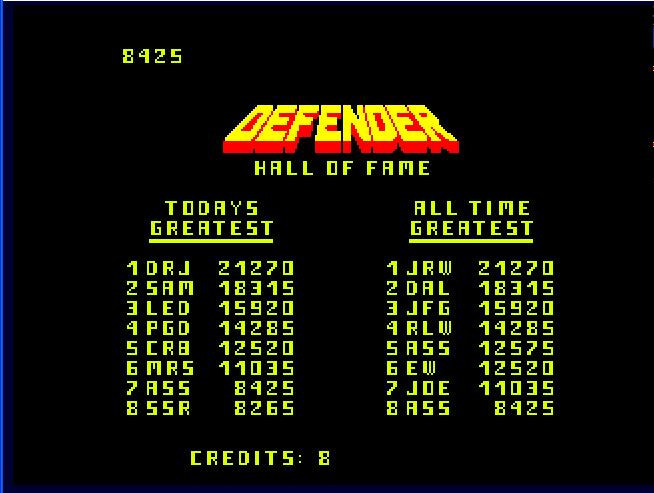
Ted Striker PWNZZ!!!

Attachment: defender.jpg
This has been downloaded 68 time(s).

MrFun is offline MrFun
King
of Iowa
Nov 2000
time: 23:18
  Old Post 01-05-2005 08:24 Visit MrFun's homepage!
Edit/Delete Message Reply w/Quote
#85 Report this post to a moderator
Support Apolyton

quote:
Originally posted by Ned


We know the plan, Agathon.

What is interesting is that very few credit Reagan's resisting of these commie insurgencies worldwide with the collapse of Soviet Communism. Before Reagan was elected, the march of communism did seem "inevitable."


Ah -- an example of self-congratulatory history over objective, scholarly history.

MrFun is offline MrFun
King
of Iowa
Nov 2000
time: 23:18
  Old Post 01-05-2005 08:26 Visit MrFun's homepage!
Edit/Delete Message Reply w/Quote
#86 Report this post to a moderator
Support Apolyton or Terrorists Win

quote:
Originally posted by Imran Siddiqui
quote:
It had nothing to do with Reagan!!!!


Ah the parroting of the left's dismissal of Reagan... they hope if they say it enough, it'll be true


We don't dismiss Raegan's involvement in everything -- we certainly acknowledge his involvement with the massacres and unjust imprisonment of dissidents in Latin American countries.

And we also acknowledge Raegan's contribution to worsening the early AIDS crisis.

Agathon is offline Agathon
Prince
Leafs 4TW!! - CPA
Dec 2002
time: 00:18
  Old Post 01-05-2005 08:38
Edit/Delete Message Reply w/Quote
#87 Report this post to a moderator
Full PM-box? Change here!

Attachment: picture 1_.jpg
This has been downloaded 67 time(s).

Imran Siddiqui is offline Imran Siddiqui

Deity
The Potterverse
Jan 1970
time: 00:18
  Old Post 01-05-2005 10:43
Edit/Delete Message Reply w/Quote
#88 Report this post to a moderator
Support Apolyton, buy GURPS/ Alpha Centauri

quote:
Originally posted by Agathon
quote:
Ah the parroting of the left's dismissal of Reagan... they hope if they say it enough, it'll be true


Reagan followed policies that were put in place by Truman. It's not a dismissal of Reagan, just an acknowledgement of the facts. Reagan moved away from his confrontational stance in his second term and, with Gorbachev, did more than anyone to assure that the cold war ended peacefully when it did end. That is where he deserves credit, and I think that the left has been churlish in not granting it.

The neoconservative view of Reagan is a fabrication for political purposes. In many ways he wasn't that different from Bush Sr who was probably the last good president the US ever had.

You don't need to tell me this, I lived through it. I wasn't in diapers at the time.


And the Truman philosophy hadn't been in place for decades. Detente was the name of the game and Reagan pushed for containment. The point was to push the Soviets (and worked far better than Nixon's "madman" strategy). The Soviets were NOT looking good and turned to Gorbachev to deal with Reagan and his rhetoric.

Just because the Soviet system was on its knees didn't mean it was going to die. Look at Cuba and North Korea for examples to the contrary.

Gorbachev realized that another arms race would kill the country. He knew that the Soviets couldn't keep up with SDI, so was willing to mortgage the farm (and SDI was always a negotiating ploy according to the CIA Director in charge at the time).

It allowed Reagan to negotiate from a position of strength. And like Nixon was the only one who could go to China, Reagan was the only one who could go to Moscow. Could you imagine working with Cherneko or Andropov? Especially without showing you were serious?

It was a brilliant gambit, IMO. I don't think the successes of the late 80s could have come about without the bellicosity of the early 80s. And Eastern Europeans always like to talk about how Reagan's backing of their struggle helped them to get out from under the Communist boot.

Oh, and Bush Sr

Kuciwalker is offline Kuciwalker
Emperor
of Schmooism
Feb 2001
time: 00:18
  Old Post 01-05-2005 12:16
Edit/Delete Message Reply w/Quote
#89 Report this post to a moderator
Enter the AD-FREE zone

Did Aggie just complement Bush Sr?

Ted Striker is offline Ted Striker
Emperor
United States of America
Jan 1970
time: 21:18
  Old Post 01-05-2005 12:47 Visit Ted Striker's homepage!
Edit/Delete Message Reply w/Quote
#90 Report this post to a moderator
Avatar Enlargement: We've got the solution

Good lawd, I think that Defender probably has the best AI of any game I've ever played. Those dudes will swarm your ass, shoot to where you are going NEXT, and send out that damn thing that's very ahrd to destroy if you don't move fast enough.

Games today are so much easier than the 1980s games.

 
Pages (12): [ 1   2   3   4   5   6     >> ]
< Last Thread     Next Thread > Post New Thread     Post A Reply
All times are GMT. The time now is 05:18.
Apolyton Time is 00:18.
    top of page
Rate This Thread:
Forum Jump:
Forum Rules:
You may not post new threads
You may not post replies
You may not post attachments
You may not edit your posts
HTML code is ON
vB code is ON
Smilies are ON
[IMG] code is ON


Contact Us - Apolyton Civilization Site - Support Us!

Building a better Apolyton through better information. Click here and take our poll!
Non-US visitors, click here!

Powered by: vBulletin Version 2.0.3
Copyright ©2000, 2001, Jelsoft Enterprises Limited.

Page generated in 0.0836 seconds (92.69% PHP - 7.31% MySQL) with 30 queries
Page Loading Time:

Support Apolyton: Amazon USA | Amazon UK | Amazon DE | Amazon FR |
Support Apolyton and get FREE PLUS, Buy from Chips&Bits: Galactic Civilizations | Galactic Civilizations: Deluxe Edition | Call to Power 2 | Civilization: The Boardgame | GURPS/ Alpha Centauri | Alpha Centauri | Civilization IV | Civilization III: Complete |


Front Page | Civilization IV | Civilization III | Civilization II | Call to Power II | Alpha Centauri | Master of Orion III
Rise of Nations | Galactic Civilizations | Galactic Civilizations II | Misc
Alt.Civs | Civ I | C:CtP I | About | News | Directory | Apolyton Store | Forums | Chat | Columns | Interviews | Newsletter
Scenario League | CSC | Clash of Civs | Spanish Site | CtP Maps | Cradle of Civ | WesW's Ctp1/2 Site | Civ3 Haven

apolyton.net | apolyton.com | civilization2.net | civilization3.net | civilization4.net | civilizationiv.info | calltopower.net | galciv.net | galciv2.net | moo3.net